Best Toothpaste for Dogs (2026 Guide): Vet-Backed Safety, Ingredients & What Actually Works
Choosing the best Toothpaste for dogs is not just a cosmetic decision, and it is definitely not only about fresher breath. It is a long-term health choice that can influence your dog’s comfort, dental hygiene, appetite, and even your future vet bills. A clean mouth matters because plaque does not stay soft forever. Left alone, it hardens into tartar, and tartar becomes a gateway to gum inflammation, oral pain, tooth loss, and more serious dental disease.
That is why this guide goes beyond product lists.
Most pages online only show a few toothpaste brands and leave it at that. They do not teach you how to evaluate safety, how to choose the right formula for a puppy versus a senior dog, what ingredients are helpful, which ingredients are risky, or how to build a brushing routine that actually lasts. This article fixes that gap.
By the end, you will know exactly what a dog toothpaste should contain, what it should never contain, how enzymatic toothpaste works, why some products are more trusted than others, and how to brush your dog’s teeth in a way that feels manageable instead of overwhelming.
This is written for real life: for busy owners, nervous dogs, picky eaters, new puppy parents, older dogs with sensitive gums, and anyone who wants a safer, smarter oral care routine.
Why Your Dog Needs Toothpaste
A lot of dog owners assume that dental chews, bones, or oral treats are enough to keep teeth clean. These items can help reduce debris or provide some surface friction, but they are not a substitute for proper brushing. Think of them as support tools, not the main strategy.
Here is What Usually Happens in a Dog’s Mouth:
Plaque begins forming daily on the tooth surface.
If plaque is not removed, it mineralizes into tartar.
Tartar sits firmly along the gumline.
The gums become irritated, inflamed, and more vulnerable to infection.
Over time, this can progress into periodontal disease.
That chain matters because once dental disease advances, it becomes harder and more expensive to reverse. In many cases, prevention is much easier than treatment.
The simplest and most reliable way to reduce plaque buildup is regular brushing with a toothpaste made specifically for dogs. This is the main reason dog toothpaste exists. It is not meant to replace veterinary dentistry, but it is one of the best daily tools for keeping your dog’s mouth healthier between vet visits.
A good toothpaste does more than just “clean” in a general sense. It supports consistent brushing by improving taste, helping loosen plaque, and making the whole routine more tolerable for both you and your dog. That matters because the best oral care product is the one you can actually use repeatedly.
What a Good Dog Toothpaste Does
A well-made dog toothpaste should support oral health in several practical ways.
First, it should help reduce plaque accumulation. Plaque is sticky, biofilm-like, and constantly rebuilding on the teeth. A toothpaste designed for dogs can help disrupt that buildup when used regularly with brushing.
Second, it should support gum health. Healthy gums are firm, pink, and less prone to irritation. A toothpaste alone does not cure gum disease, but it can be part of a daily routine that reduces risk.
Third, it should make brushing easier. That may sound minor, but it is actually a major factor. Flavor matters. Texture matters. Safety matters. If your dog enjoys the taste or at least tolerates it, brushing sessions become less stressful and much more repeatable.
There is one thing many owners misunderstand: even the best toothpaste for dogs will not work miracles if brushing is rare or inconsistent. The product is only part of the process. The habit matters just as much, and often more.
You can buy a premium formula, but if it stays in the cabinet, it will not help. A modest product used consistently is far more useful than an expensive one used once a month.
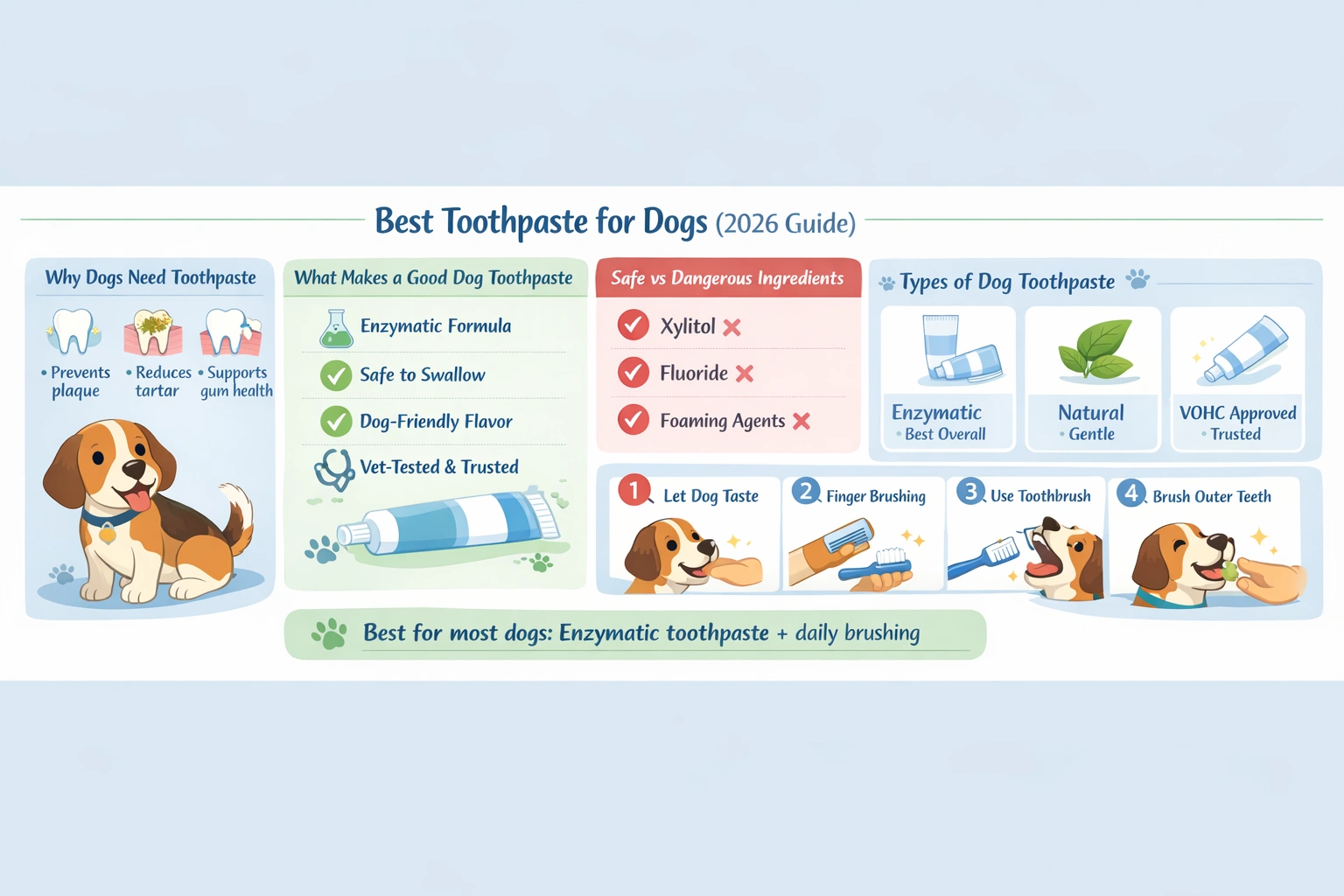
What Makes the Best Toothpaste for Dogs?
When evaluating toothpaste for dogs, do not get distracted by glossy packaging or marketing phrases that sound impressive but do not tell you much. Focus on the four factors below.
1. Enzymatic Formula
This is the most important feature for many dogs.
An enzymatic toothpaste uses enzymes that support the breakdown of plaque-related bacteria and help improve the cleaning process. These formulas are often recommended because they do more than simply sit on the teeth. They are designed to assist oral hygiene more actively.
Why do so many vets and dental-conscious owners prefer enzymatic toothpaste for dogs?
Because it can help control plaque more effectively than very basic formulas.
Because it supports regular home care.
Because it can still be useful even when brushing is not perfect every single time.
That does not mean it replaces the brushing technique. It means it gives the brushing habit a stronger foundation.
2. Safe to Swallow
This is essential.
Dogs do not spit toothpaste into the sink the way humans do. Most of the product stays in the mouth and is swallowed. That means dog toothpaste must be created with pet safety in mind.
The safest products are made specifically for dogs, with ingredients that are intended to be swallowed in small amounts. Human formulas are not built for that purpose. They may contain ingredients that are fine for people but dangerous or irritating for pets.
3. Good Taste
Taste is not a luxury. It is a training tool.
If your dog hates the flavor, you will fight resistance every time you try to brush. That leads to frustration, skipped sessions, and a broken routine.
Many dog toothpastes are flavored with options such as chicken, beef, peanut butter, or other pet-friendly tastes. The best choice is not the flavor that sounds best to you. It is the one your dog is willing to accept without stress.
A toothpaste your dog likes is more likely to become part of your routine, and routine is what produces results.
4. Trusted or Tested
Independent validation can add confidence.
Some products are recognized by organizations that evaluate dental-care products for effectiveness. That does not mean every non-approved toothpaste is bad, but it does mean approval can be a helpful signal when you are narrowing down options.
If a toothpaste has independent testing or veterinary credibility behind it, that can make it easier to trust. For many owners, that extra layer of reassurance is valuable, especially when they are choosing a product for the first time.
Types of Dog Toothpaste (Which One Is Right?)
Not every dog toothpaste serves the same purpose. Some formulas are built for stronger plaque support, while others prioritize simplicity, sensitivity, or convenience.
Enzymatic Toothpaste for Dogs
This is usually the best starting point for most dogs. It is designed to support plaque control while remaining practical for regular use.
Best for: most dogs
Strengths: effective support, easy daily routine
Limitations: Some dogs dislike certain flavors
Natural Dog Toothpaste
These formulas often focus on simpler ingredient lists and may appeal to owners who prefer a more minimal approach.
Best for: sensitive dogs or ingredient-conscious owners
Strengths: simple composition, gentle feel
Limitations: may not be as strong for plaque control as enzymatic formulas
VOHC Approved Dog Toothpaste
Products with independent dental acceptance can be reassuring for owners who want more confidence in a product’s credibility.
Best for: owners prioritizing tested options
Strengths: trusted validation, strong confidence factor
Limitations: fewer choices, sometimes less variety in flavor or texture
Dental Gels
These are often used when brushing is difficult, or when a dog is resistant to a toothbrush.
Best for: hard-to-brush dogs
Strengths: easy application
Limitations: usually less effective than proper brushing with toothpaste
For most households, enzymatic toothpaste remains the strongest all-around option because it balances safety, usability, and oral care support.
Dog Toothpaste Safe Ingredients (What to Look For)
Understanding what belongs in a dog toothpaste is just as important as understanding what should stay out.
Good Ingredients to Look For
Enzymes
These are the standout ingredients in many higher-quality formulas. Common examples include glucose oxidase and lactoperoxidase. They help support oral hygiene and are a major reason enzymatic toothpaste is so widely recommended.
Pet-safe flavoring
Flavoring matters for compliance. If the toothpaste tastes acceptable to your dog, brushing becomes much easier.
Mild cleaning agents
A toothpaste can include gentle abrasives or cleaning components that help lift residue from the tooth surface without being harsh.
Non-foaming formulas
Dogs do not rinse and spit like humans, so a non-foaming product is generally more appropriate for canine use.
What These Ingredients Do
Taken together, these ingredients support the daily cleaning process without making the product overly harsh or unpleasant. The goal is not to strip the mouth aggressively. The goal is to help remove plaque, support the gums, and make brushing sustainable.
A safe dog toothpaste should be functional, palatable, and designed for repeated use.
Dangerous Ingredients to Avoid at All Costs
This section matters a lot.
Many owners accidentally assume that human toothpaste is harmless in small amounts. It is not. Dogs are not tiny humans. Their mouth structure, swallowing behavior, and ingredient tolerance are different.
1. Xylitol
Xylitol is extremely dangerous for dogs.
It can trigger a sharp drop in blood sugar, which may lead to weakness, disorientation, collapse, seizures, or worse. In some cases, it can also contribute to liver failure. Even small exposures can be serious.
This ingredient is one of the clearest reasons dog toothpaste must be pet-specific. A product that is safe for you may be dangerous for your dog.
2. Fluoride
Fluoride is commonly used in human oral-care products, but that does not make it ideal for dogs. Because dogs swallow toothpaste, repeated exposure to fluoride-containing products is not the same as using a pet-safe formula designed for ingestion.
3. Foaming Agents
Foaming agents can make toothpaste feel “effective” to humans because we associate foam with cleaning. But dogs are not supposed to use human-style toothpaste. Foaming ingredients are part of human oral-care design, not canine oral-care design.
4. Other Human-Oriented Additives
Flavor enhancers, whitening ingredients, and certain detergents may not be appropriate for a dog’s mouth. A formula can look familiar to humans while still being unsuitable for pets.
The core rule is simple:
If a toothpaste is made for people, do not use it on your dog.
Can I Use Human Toothpaste for Dogs?
No. Never.
This is one of the most important answers in the entire article.
Human toothpaste is not designed for dogs. Dogs do not rinse and spit like humans. They swallow the product. That means ingredients that are tolerable for people can become harmful to pets.
The most serious concern is xylitol, which can be toxic. But even beyond that, the overall formula is simply not intended for canine use.
If there is only one takeaway from this article, let it be this:
Use toothpaste made specifically for dogs.
It is the safest and most appropriate choice.
Best Toothpaste for Dogs: Popular Options in 2026
Different products fit different needs. Instead of chasing one “perfect” brand, it helps to think in terms of match quality.
Virbac C.E.T.
This is often recognized for its enzymatic support and practical daily use. It is a common choice for owners who want a dependable formula that fits a routine.
Best for: daily brushing
Why people like it: trusted enzymatic approach, widely used
Vet’s Best
This option often appeals to owners looking for a gentler or more natural-feeling formula.
Best for: Dogs that do better with softer formulas
Why people like it: gentle profile, easy for some sensitive dogs
Sentry Petrodex
This can be a budget-friendly choice for owners starting a dental routine.
Best for: beginners or cost-conscious buyers
Why people like it: accessible, straightforward
Petsmile
This is often discussed by owners who want a more confidence-driven, tested option.
Best for: safety-focused owners
Why people like it: credibility, premium positioning
Vetoquinol Enzadent
This is another enzymatic option that may appeal to dogs that respond well to flavor and consistency.
Best for: picky dogs
Why people like it: taste appeal, oral-care support
The key point is not which brand has the prettiest packaging. The right product is the one your dog accepts, your vet is comfortable with, and you are able to use consistently.
How to Choose the Right Toothpaste
A good toothpaste for one dog may not be ideal for another. Age, sensitivity, habits, and temperament all matter.
For Puppies
Puppies need a gentle introduction. Their mouths are still developing, and the goal is to create a positive association early.
Choose a mild, pet-safe, enzymatic toothpaste.
Pick a soft flavor that does not feel intense.
Keep brushing sessions short and calm.
The best toothpaste for puppies is one that feels simple, gentle, and easy to accept.
For Adult Dogs
Adult dogs usually benefit from standard enzymatic formulas. At this stage, the main goal is habit-building and maintenance.
Focus on consistency.
Choose a toothpaste that your dog tolerates well.
Make the routine predictable.
For Senior Dogs
Older dogs may already have gum sensitivity, worn teeth, or preexisting dental issues. A softer approach is often better.
Use a gentle formula.
Be mindful of discomfort.
Check with a vet if you notice pain, bleeding, or chewing resistance.
For Sensitive Dogs
Sensitive dogs often need a slower introduction.
A natural-feeling formula may help.
Flavor changes can make a huge difference.
Introduce brushing in tiny steps.
For Dogs With Bad Breath
Bad breath is often a sign that plaque and bacteria are accumulating.
The best toothpaste for dogs with bad breath is usually an enzymatic one used consistently alongside brushing. Bad breath may improve when plaque control improves, but persistent odor can also point to deeper dental issues.
If breath gets worse instead of better, a vet check is important.
How to Brush a Dog’s Teeth Correctly
A lot of owners do not fail because they picked the wrong toothpaste. They struggle because the introduction process is too fast, too forceful, or too inconsistent.
Here is a better method.
Step 1: Let Your Dog Taste the Toothpaste
Start outside the brushing routine. Put a tiny amount on your finger and let your dog lick it.
This first step is about comfort.
It reduces fear.
It creates familiarity.
When the toothpaste becomes a known and pleasant experience, the rest of the process becomes easier.
Step 2: Start with Finger Brushing
Before introducing a toothbrush, gently rub a little toothpaste on the teeth and gums with your finger. Keep it light.
Your goal here is not perfect cleaning.
Your goal is trust.
Step 3: Introduce the Toothbrush
Once your dog accepts the toothpaste, introduce a soft-bristle toothbrush or dog-specific brush. Do not force a long session.
A short, calm session is far more valuable than a stressful one. Many dogs will tolerate more over time if the first experiences are peaceful.
Step 4: Focus on the Outer Teeth
The outside surfaces of the teeth are usually the easiest and most practical place to start.
Pay attention to the gumline.
Work around the back teeth.
Do not ignore the canines.
You do not need to do everything perfectly on day one. Some brushing is better than none, and routine matters more than perfection.
Step 5: Keep It Short
For new routines, short sessions are best. Start with around 30 seconds if needed.
Then gradually increase.
A calm minute is better than a chaotic five minutes.
Step 6: Reward Your Dog
After brushing, praise your Dog. Offer encouragement. Use a small reward if that helps reinforce the habit.
Positive reinforcement is powerful. It helps your dog connect brushing with something predictable and safe.
How Often Should You Brush Your Dog’s Teeth?
The ideal frequency is daily.
That is the best target for plaque control and habit consistency.
If daily brushing is not realistic, aim for 3 to 4 times per week. That is still useful and far better than brushing only occasionally.
Once a week is the minimum you should aim for if that is all you can manage, but the benefits are much stronger when brushing becomes part of the routine.
The main rule is simple:
Consistency matters more than perfection.
A short, repeatable routine will beat an ambitious routine that never happens.
Common Mistakes Dog Owners Make
A lot of oral-care trouble comes from avoidable errors.
Using Human Toothpaste
This is the biggest mistake. Human toothpaste is not appropriate for dogs and may contain dangerous ingredients.
Brushing Too Hard
Teeth and gums do not need aggressive scrubbing. Too much pressure can make your dog dislike the process and may irritate sensitive gums.
Skipping Routine
Brushing “sometimes” is not nearly as effective as brushing regularly. Oral health is built through repetition.
Choosing the Wrong Flavor
If your dog rejects the flavor, they will resist the routine. Taste can strongly affect success.
Thinking Toothpaste Alone Is Enough
Toothpaste helps, but it is not a stand-alone solution. Brushing technique, frequency, dental checkups, and overall oral hygiene all matter.
Pros and Cons of Dog Toothpaste
Like any product, dog toothpaste has advantages and limitations.
Pros
It helps reduce plaque buildup.
It supports oral cleanliness.
It can improve breathing when used consistently.
It is safer when it is made specifically for dogs.
Cons
It requires consistency.
Some dogs dislike brushing at first.
It is not a replacement for vet care.
Results depend on routine, not just product choice.
That balance is important. Dog toothpaste is valuable, but it works best as part of a larger dental-care plan.
Real-Life Routine That Actually Works
The simplest routines are often the ones that survive in a busy home.
Keep the toothbrush and toothpaste in a visible place.
Brush at roughly the same time each day.
Use only a small amount of toothpaste.
Focus first on the areas that are easiest to reach.
The more your routine feels automatic, the less resistance you will face. Habit design matters. Dogs respond well to predictability, and owners stick with routines that are easy to repeat.
Think of it like a small daily ritual rather than a complicated task. The easier you make it, the more likely it is to happen.
Special Situations
Apartment Living
If you live in a small space, keep the setup minimal. You do not need a special room or a complicated process. A bathroom or quiet corner is enough.
Simple routines are often the best routines.
Multi-Dog Homes
If you have more than one dog, consistency matters even more. A shared routine can help, but each dog may still have a different comfort level.
One flavor may work for all, but individual preferences can vary. Keep the process calm and organized.
Busy Owners
Busy schedules do not eliminate the need for dental care. Even short brushing sessions are valuable. A brief routine done often is much better than waiting for the “perfect” time.
When to See a Vet
Dog toothpaste can help with maintenance, but it cannot solve advanced dental disease.
See a vet if you notice:
Bleeding gums
Persistent bad breath that keeps getting worse
Loose teeth
Difficulty eating
Visible pain when chewing
These signs may point to a deeper issue that toothpaste cannot fix on its own. A dental exam may be necessary, and in some cases, professional treatment is the safest next step.
Practical Buying Checklist
Before choosing a toothpaste, ask yourself a few simple questions.
Is it made specifically for dogs?
Does it avoid xylitol and other unsafe ingredients?
Is it enzymatic or otherwise designed for oral care support?
Will my dog accept the taste?
Can I use it regularly?
If the answer to these questions is “yes,” you are usually on the right track.
The best toothpaste for dogs is not necessarily the most expensive, the most popular, or the most heavily advertised. It is the one that is safe, practical, and sustainable in your real life.
FAQs
A toothpaste made specifically for dogs is the safest option. Look for a pet-formulated product without xylitol and without ingredients designed for human use. The best choice is one that is safe to swallow and intended for canine oral care.
Yes, in many cases it is. Enzymatic toothpaste for dogs is widely preferred because it supports plaque control and helps improve the brushing process. It is especially useful when used consistently as part of a regular dental routine.
No. Human toothpaste is not safe for dogs. It may contain xylitol, fluoride, foaming agents, or other ingredients that are inappropriate for pets. Dogs swallow toothpaste, so human formulas should not be used.
The best dog toothpaste for bad breath is usually an enzymatic toothpaste used regularly with brushing. Bad breath often improves when plaque and bacteria are better controlled. If the odor is severe or persistent, a vet should evaluate your dog’s mouth.
Start slowly. Let your dog taste the toothpaste first, then introduce finger brushing, then a toothbrush. Use gentle motions, focus on the outer teeth and gumline, and keep the sessions short and positive. Repetition matters more than perfection.
The best toothpaste for puppies is a mild, pet-safe, enzymatic toothpaste with a gentle flavor. Puppies do best with short, low-pressure sessions that help them build trust and familiarity.
Conclusion
The best Toothpaste for dogs is not the one with the biggest marketing claims. It is the one that is safe, dog-specific, easy for your pet to accept, and realistic for you to use again and again.
That is the real formula:
Safe ingredients + enzymatic support + dog approval + daily consistency = healthier teeth. If you focus on those four things, you will make a much smarter choice than most buyers online. More importantly, you will build a dental-care habit that protects your dog’s comfort, breath, and long-term health. The right toothpaste is not just a product. It is part of a routine that helps your dog live better, eat better, and stay happier for longer.