Introduction
Picking the Best Dog Harness matters way beyond what most owners think. You could assume it’s merely another item – maybe pretty, on-trend, or handy. Yet here’s the truth: picking the correct harness shapes how comfortable your pup feels, how their body holds up, how fast they learn new behaviors, their chances of staying safe each day, their sense of calm and trust, and life in general.
More people who care for dogs now choose harnesses over old-style collars, especially as advice from vets grows clearer. Not simply a trend – it leans on studies of how dogs move, animal behavior patterns, and updated teaching methods too. Pressure spreads through sturdy parts of the body, skipping the sensitive neck area. That change helps lower harm chances while making handling smoother.
Take someone trying to cross busy city streets – people like dog walkers in places like London or Berlin – who must stay alert through constant traffic, loud noises, and interruptions. On another note, when exploring tough outdoor spaces – say the Swiss Alps – the gear has to be tough too, built to withstand harsh weather and rough terrain without failing.
A thoughtfully chosen harness can:
- Protect the cervical spine and trachea
- Improve leash communication clarity
- Support effective behavioral conditioning
- Reduce escape attempts
- Increase comfort during long walks
- Enhance handler confidence
This comprehensive 2026 buyer guide explains everything you need to know:
- Harness categories and structural differences
- Fabric, padding, and ergonomic considerations
- Behavioral training integration
- Weather and climate compatibility
- Purchasing mistakes to avoid
- Professional recommendations from experts
When it’s done, choosing the right dog harness will seem naturally fitting – shaped by how your pet moves, acts, and lives.
Why Choosing the Best Dog Harness Truly Matters
Pressure in collars hits one spot only – the neck – but a harness spreads it wider, touching shoulders, ribs, and torso evenly. Built right, these zones can absorb stress better because they’re made to bear weight. That shift lowers risks of suffocation, breath trouble, and harm to the spine. Structure matters when safety is on the line.
Key Benefits
- Minimizes neck tension and tracheal stress
- Provides enhanced directional control
- Supports leash-training consistency
- Improves safety for brachycephalic breeds
- Reduces anxiety-driven escape incidents
- Encourages relaxed walking posture
More pet owners now hear advice from vet pros, dog movement experts, and animal handlers – using leashes made of sturdy webbing during walks.
Veterinary & Welfare Perspective
Groups like the Federation Cynologique Internationale stress using the right tools when looking after dogs. Choosing good walking supplies helps keep pet’s movements safe, reduces injury risks from constant strain, which leads to better conditions overall.
For instance, groups such as the European Pet Food Industry Federation point out that a dog’s overall well-being comes from combined factors – how it moves, what it eats, how much energy it gets, along with features of its living space.
People who own dogs often hear tips from a familiar organization that cares about pet safety. On foot during outings or trips, thick neck straps or support belts work well – they hold pets close when shifting places.
Reminder: Always prioritize safety and comfort over price or appearance.
Types of Dog Harness (Complete Buyer Overview)
Understanding harness variations helps you make an informed decision. Each design addresses specific behavioral patterns, body structures, and environmental needs.
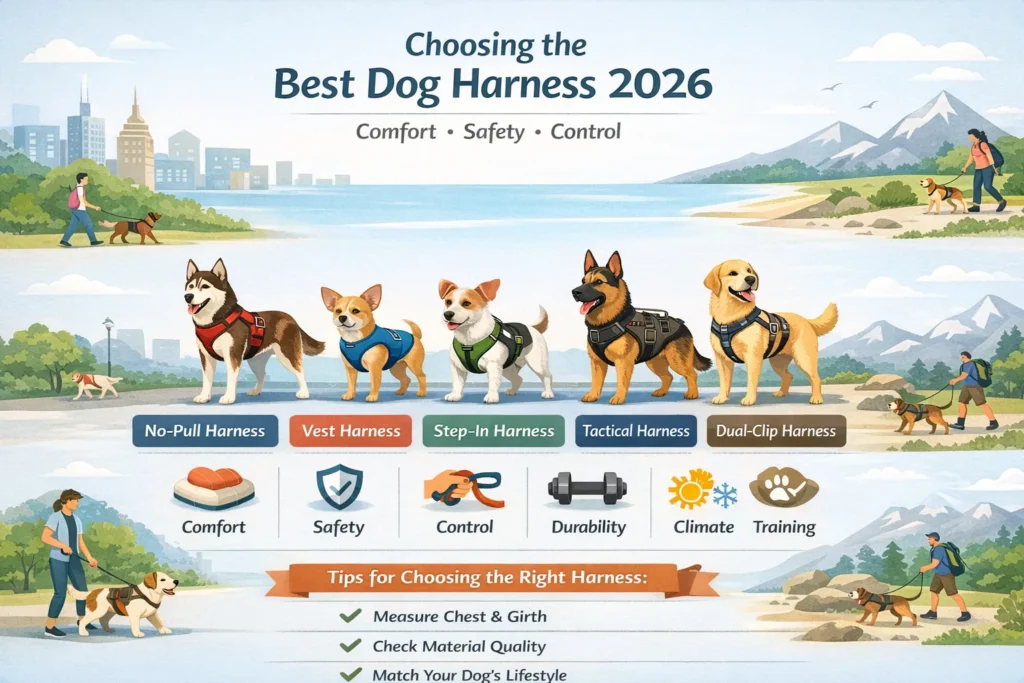
No-Pull Dog Harness
Ideal for: Strong pullers, energetic breeds, urban walkers.
Often, these leads have a spot up front where movement gets rerouted – not harsh, just guiding. That shift quietly reminds dogs to stay close without strain.
Advantages:
- Supports loose-leash training
- Improves handler communication
- Enhances walking control
Drawbacks:
- Training consistency is still required
- Incorrect fitting may reduce effectiveness
Great option for active breeds needing structured guidance.
Vest Harness
Best suited for: Small dogs, puppies, sensitive breeds.
Pressure spreads wider in vest styles, thanks to larger fabric sections. Breathable panels mix with padding, built with mesh for comfort.
Pros:
- Comfortable prolonged wear
- Reduced friction and chafing
- Gentle pressure distribution
Cons:
- May retain heat in hot climates
- Slightly bulkier than minimalist designs
Step-In Harness
Recommended for: Nervous dogs or quick fitting routines.
Dogs simply step into the harness before fastening. This reduces head-handling anxiety.
Benefits:
- Easy to wear
- Lightweight construction
- Suitable for toy breeds
Limitations:
- Less control for powerful dogs
- The adjustment range may be limited
Tactical Dog Harness
Designed for: Large breeds, working dogs, and outdoor adventurers.
Made tough, some harnesses hold up thanks to thick stitching alongside solid grips and flexible links that adapt easily.
Strengths:
- Extremely robust
- Ideal for hiking or training
- Excellent handler control
Weaknesses:
- Heavier than standard harnesses
- May be excessive for casual walks
Dual-Clip Harness (Often Best Overall)
Combining front and back attachment points, dual-clip Harnesses provide versatility.
Advantages:
- Flexible training applications
- Balanced pressure distribution
- Adaptable to multiple activities
Considerations:
- Slightly higher cost
- Requires correct adjustment
Many professionals consider this the most balanced choice.
Harness Type Comparison Summary
| Harness Type | Best For | Control | Comfort | Durability | Climate Suitability |
| No-Pull | Strong pullers | High | Moderate | High | All climates |
| Vest | Small dogs | Moderate | High | Moderate | Cooler climates |
| Step-In | Easy wear | Moderate | Moderate | Moderate | Warm weather |
| Tactical | Outdoor dogs | Very High | Moderate | Very High | Cold/adventure |
| Dual-Clip | Versatile use | High | High | High | All climates |
How to Choose the Best Dog Harness (Expert Checklist)
Selecting the correct harness involves anatomical, behavioral, environmental, and material considerations.
Size & Fit — The Most Critical Factor
Measure carefully:
- Chest girth (widest rib area)
- Neck base circumference
- Body weight range
A poorly fitted harness can cause:
- Skin irritation
- Escape risks
- Reduced mobility
- Ineffective training signals
General rule: Two fingers should fit comfortably under straps.
Material Considerations
Nylon
- Affordable
- Durable
- Suitable everyday option
Mesh
- Breathable
- Ideal warm climates
- Lightweight comfort
Leather
- Stylish
- Long-lasting
- Requires maintenance
Material choice affects durability, ventilation, and comfort.
Comfort Feature Checklist
Look for:
- Adjustable straps
- Soft padding
- Reflective elements
- Breathable panels
- Ergonomic shaping
Comfort reduces injury risk and encourages positive walking behavior.
Best Dog Harness by Dog Type & Lifestyle
One thing about every pup – they each stand apart. Mixed into that mix: background habits, built-in behaviors, how much movement they show, plus where they live – all shaping what works best in a harness.
For Pulling Dogs
Recommended:
- Front-clip harness
- Reinforced chest padding
- Strong stitching
Energetic breeds often benefit most.
For Puppies
Ideal features:
- Lightweight construction
- Adjustable sizing
- Soft materials
Avoid heavy tactical harnesses during growth.
For Small Dogs
Suitable choices:
- Step-in harness
- Vest-style harness
- Breathable materials
Especially helpful for apartment living in cities like Paris or Amsterdam.
For Large Dogs
Look for:
- Dual-clip systems
- Wide supportive straps
- Heavy-duty buckles
These provide control and stability.
Climate & Lifestyle Considerations
Environmental conditions significantly influence harness comfort.
Hot Weather Regions
Examples include Spain, Italy, and Australia.
Best features:
- Breathable mesh
- Light colors
- Minimal padding
Cold Regions
Such as Sweden and Switzerland.
Recommended:
- Insulated padding
- Reflective strips
- Durable materials
Urban Apartment Living
Prioritize:
- Easy fastening
- Quiet buckles
- Lightweight design
Outdoor Adventure Dogs
Ideal harness traits:
- Water resistance
- Grab handles
- Reinforced construction
Training Tips With a Dog Harness
A harness helps manage behavior, but consistent training remains essential.
Practical Tips
✔ Reward calm walking
✔ Keep leash slack
✔ Practice short daily sessions
✔ Avoid sudden leash jerks
✔ Use positive reinforcement
Consistency produces lasting behavioral improvement.
Safety & Health Considerations
Regularly inspect your dog for:
- Skin irritation
- Restricted shoulder movement
- Overheating signs
- Hair loss beneath straps
Dogs benefiting most from harness use:
- Arthritis sufferers
- Respiratory-sensitive Breeds
- Tracheal collapse cases
Always consult a veterinarian if unsure.
Common Dog Harness Mistakes
1. Incorrect Size
Most frequent issue. Always measure accurately.
2. Expecting Instant Results
Equipment supports training — it doesn’t replace it.
3. Choosing Low-Quality Materials
Cheap harnesses may:
- Break suddenly
- Cause chafing
- Wear out quickly
4. Poor Adjustment
Loose harnesses increase escape risk.
5. Ignoring Climate Needs
Thick harnesses may cause overheating.
Pros & Cons of Dog Harnesses
Pros
- Better leash control
- Reduced neck strain
- Increased safety
- Useful training aid
- Travel-friendly
Cons
- Requires proper fitting
- Adjustment learning curve
- Usually pricier than collars
Expert Tips From Pet Professionals
- Measure chest instead of neck
- Check fit monthly
- Replace worn gear promptly
- Clean the harness regularly
- Introduce gradually
Many professionals rotate harness styles depending on activity.
Dog Harness vs Collar (Quick Comparison)
| Feature | Harness | Collar |
| Neck Safety | High | Lower |
| Pulling Control | Better | Limited |
| Training Support | Strong | Moderate |
| Comfort | Higher | Variable |
| Escape Risk | Lower | Higher |
FAQs About the Best Dog Harness
Yes. Busy urban areas need better safety and control.
Usually, yes, but leash control is required.
Breathable mesh harnesses work best.
Two fingers should fit under the straps.
No. Training is still necessary.
Usually every 6–12 months.
Only if dog size and activity justify them.
Final Verdict — Which Is the Best Dog Harness?
There isn’t a universal “perfect” harness. The right choice depends on:
- Dog size and breed
- Behavior and training stage
- Climate conditions
- Lifestyle activity level
- Comfort priorities
Quick Recommendations
- Best overall: Dual-clip harness
- Best for pullers: No-pull harness
- Best comfort: Vest harness
- Best durability: Tactical harness
Investing in a quality harness significantly enhances daily safety, comfort, and confidence.
Conclusion — Expert Advice for Dog Owners
Picking the right Dog Harness? It isn’t about looks – safety comes first, then fit, and how well it works with your pet’s daily life. When put on correctly, a harness may avoid harm while helping good behavior training happen naturally. Even small changes in how you walk your dog can turn routine outings into moments you both look forward to.
Always prioritize:
- Proper anatomical fit
- Comfortable breathable materials
- Climate suitability
- Behavioral needs
- Durability and reliability
A thoughtful choice today leads to healthier, happier walks tomorrow — for both you and your dog.