Introduction
Yes, Dogs Can Eat squash when it is served plain, cooked, and prepared the right way. The important part is not just whether squash is safe, but how it is served. AKC says squash is safe for dogs when the seeds, skin, and rinds are removed, and PetMD adds that most squash varieties are safe and beneficial in moderation. PetMD also recommends keeping treats, including squash, to about 10% of daily calories, while PDSA advises contacting a vet if a dog develops vomiting, watery diarrhea, blood in the stool, lethargy, or a painful abdomen after eating something new.
That means squash can absolutely fit into a dog’s diet, but only as a small, well-prepared treat. The best article on this topic should not stop at “yes.” It should show owners which types are safest, how much to serve, what raw squash means for dogs, how to avoid stomach upset, and when a simple snack becomes a reason to call the vet. That is where this guide goes deeper.
Quick Answer: Can Dogs Eat Squash?
Yes. Most dogs can eat plain squash in small amounts, especially when it is cooked, seedless, skinless, and free from seasoning. AKC specifically lists butternut squash, pumpkin, zucchini, and acorn squash as the best-known dog-friendly options, while PetMD also includes yellow squash, spaghetti squash, and summer squash as acceptable when prepared properly.
The safest rule is simple: serve squash as a treat, not a meal replacement. Keep the portion small, start slowly, and watch your dog for stool changes or stomach upset after the first few servings.
Which Types of Squash Are Safe for Dogs?
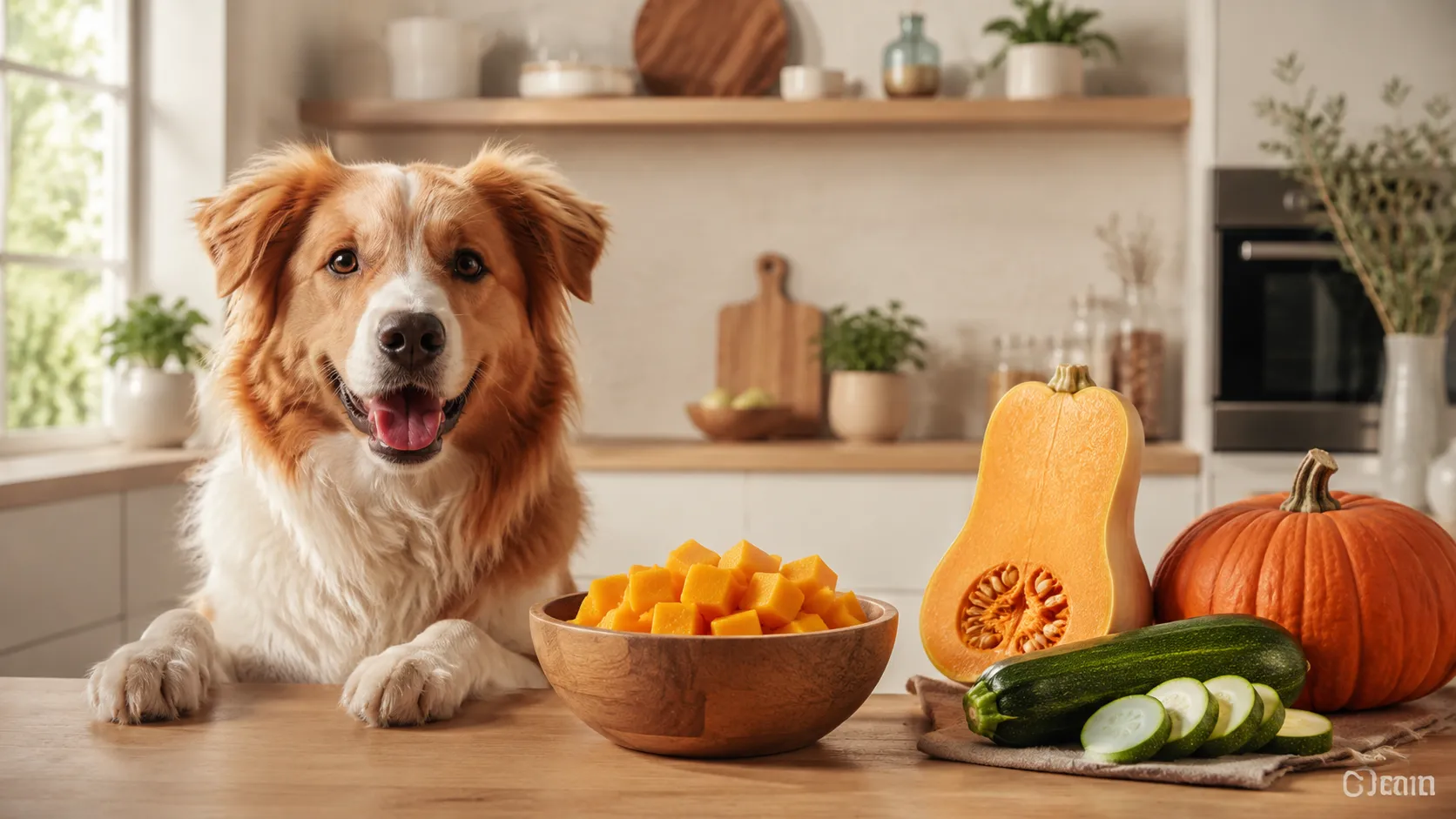
Safe squash varieties are broader than many owners realize. AKC names butternut squash, pumpkin, zucchini, and acorn squash as the top picks, and PetMD also says yellow squash, spaghetti squash, and summer squash can be safe when cooked and served plain. Zucchini is often the easiest to digest among the group.
Safe squash types at a glance
| Squash type | Dog-friendly? | Best way to serve |
| Butternut squash | Yes | Cooked, plain, peeled, and seeded |
| Pumpkin | Yes | Plain cooked or 100% plain puree only |
| Zucchini | Yes | Raw, steamed, or cooked in small pieces |
| Acorn squash | Yes | Cooked, plain, seeded, skin removed |
| Yellow squash | Yes | Cooked and cut into small |
| Spaghetti squash | Yes | Cooked and shredded into soft strands |
| Summer squash | Yes | Plain and moderate portions |
AKC and PetMD are consistent on the core rule: squash is fine only when the seeds, skin, and rinds are removed, and plain preparation matters more than the variety itself.
Is Squash Good for Dogs?
Squash can be a useful treat because it is low in fat and can provide fiber plus nutrients like vitamins A and C, and in some varieties, potassium and antioxidants. AKC highlights fiber, beta-carotene, and vitamin A as part of squash’s appeal, while PetMD points to digestion support and stool regularity when squash is fed correctly.
That said, “good for dogs” does not mean “feed freely.” PetMD warns that too much squash can trigger gas, bloating, constipation, or diarrhea, especially if it is introduced too quickly. So squash is best treated like a smart topper or snack, not a vegetable you pile into the bowl every day.
Mini summary
Squash can be a healthy treat, but the value comes from the right portion and right preparation. The moment you overserve it or season it like a human dish, the benefit starts to drop, and the risk rises.
How Much Squash Can Dogs Eat?
There is no single perfect amount for every dog. PetMD recommends using the 10% treat rule, meaning all treats combined, including squash, should stay under 10% of daily calories. It also says small dogs should get only a few small cubes, while larger dogs can handle a little more, but not enough to crowd out balanced dog food.
Conservative first-serving guide
Use this as a starter amount, not a fixed dose. It is meant to be a conservative first-taste guide based on the 10% treat rule and PetMD’s size-based advice.
| Dog size | First serving suggestion | Notes |
| Toy / very small dog | 1–2 teaspoons | Start at the lower end |
| Small dog | 1–2 teaspoons to 1 tablespoon | Watch stools closely |
| Medium dog | 1–2 tablespoons | Keep it plain |
| Large dog | 2–3 tablespoons | Do not turn it into a meal |
| Giant breed | Up to 1/4 cup | Still count it as a treat |
The safest method is to introduce squash slowly over several days. If your dog gets loose stool, extra gas, vomiting, or seems uncomfortable, stop feeding it and contact your vet if the problem persists or worsens. PDSA says blood in stool, continuous watery diarrhea, vomiting, reduced appetite, lethargy, or a painful abdomen deserve veterinary attention.
How to Prepare Squash for Dogs Safely
The prep matters more than the vegetable. AKC says to remove seeds, skin, and rinds before serving. PetMD says to wash the squash, remove seeds or tough skin, cut it into small bite-sized pieces, and cook it lightly.
Best preparation steps
- Wash the squash thoroughly.
- Remove seeds, rind, and any tough skin.
- Cook it plain until soft.
- Cut it into small pieces.
- Let it cool before serving.
- Start with a tiny amount.
Do not add these ingredients.s
Do not mix squash with onion, garlic, leeks, chives, salt-heavy seasoning, butter, gravy, or sugar-free ingredients containing xylitol. RSPCA, Blue Cross, and PDSA all warn that alliums such as onions and garlic are toxic to dogs, even when cooked, and RSPCA and Blue Cross also warn that xylitol is highly poisonous to dogs.
Mini summary
Plain squash is the goal. Anything that turns it into a human side dish can turn a safe snack into a risk.
Raw Squash vs. Cooked Squash: What Is Better?
For most squash varieties, cooked is the safer choice. PetMD’s vegetable guidance says pumpkin, squash, and sweet potatoes should be thoroughly cooked before feeding them to dogs, and its squash article says to cook squash lightly and serve it in manageable pieces.
There is one useful nuance: zucchini is an exception. AKC and PetMD both say plain raw or cooked zucchini is safe in moderation, as long as it is served without seasoning and cut into small pieces. So if you are feeding zucchini specifically, raw slices can work. For other squash types, cooking first is the cleaner and safer habit.
Best practical rule
If you are feeding butternut, acorn, yellow squash, pumpkin, or spaghetti squash, cook it first. If you are feeding zucchini, raw or cooked can both work, but plain and bite-sized is still the rule.
Can Puppies Eat Squash?
Yes, puppies can eat small amounts of squash if it is cooked, plain, and prepared carefully. PetMD says puppies can have small amounts as a low-calorie treat, as long as the seeds and rind are removed.
Puppies deserve extra caution because their digestion is still developing, and they are more likely to gulp food quickly. A tiny portion is enough for a first trial. If the stool softens, skip the next serving and keep treats simple until the tummy settles. PDSA’s guidance on diarrhea and vomiting still applies if symptoms become persistent or severe.
Can Dogs Eat Squash Seeds or Skin?
It is better to avoid both. AKC says squash is safe only when the seeds, skin, and rinds are removed, and PetMD warns that skin and seeds can be hard to digest and may cause stomach upset. PDSA’s gut blockage guidance also matters here, because swallowed pieces that are hard, large, or poorly chewed can become a choking or blockage risk.
Why this matters
Seeds and skin are not just “extra texture.” In some dogs, they can be difficult to chew, difficult to digest, or simply too rough for a sensitive stomach. That is why the safest version is soft flesh only.
What to Do If Your Dog Ate Seasoned Squash
If the squash was seasoned with onion, garlic, leeks, chives, or xylitol, treat it as a real safety concern. RSPCA, Blue Cross, and PDSA all warn that these ingredients are dangerous or toxic to dogs, and xylitol can cause severe poisoning.
If your dog simply ate a plain but overly large serving of squash, watch for vomiting, diarrhea, bloating, lethargy, or a painful abdomen. PDSA says ongoing vomiting, bloody diarrhea, or diarrhea lasting more than 24 hours in a young or unwell dog should prompt veterinary advice. If the dog looks worse instead of better, do not wait.
Emergency warning signs
Contact a vet immediately if your dog has any of these after eating squash or any new food:
- continuous vomiting
- blood in vomit or stool
- watery diarrhea that does not settle
- lethargy or collapse
- painful abdomen
- trouble breathing
- signs of dehydration
When Squash Is Not a Good Idea
Squash is not the right choice for every dog or every situation. Avoid it if the recipe contains dangerous ingredients, if your dog has a sensitive stomach, or if your dog tends to swallow food too quickly and choke on larger pieces. PDSA explains that gut blockages are serious and can require emergency treatment, and it says younger dogs are especially prone to swallowing things they should not.
You should also be more careful with first-time servings. PetMD recommends starting slowly and watching for vomiting, diarrhea, or lethargy, because a new food can reveal a sensitivity that was not obvious before.
Squash and Digestion: Can It Help With Constipation?
Squash can sometimes help keep stools regular because it contains fiber. PetMD says squash fiber may support digestive issues, and AKC also highlights fiber as part of squash’s digestive benefits. But fiber is useful only when the amount is small, and the dog tolerates it well. Too much can swing the other way and cause gas, bloating, constipation, or diarrhea.
That is why squash should be used like a digestive helper, not like a treatment plan. If your dog already has repeated constipation, diarrhea, vomiting, or appetite loss, treat squash as a side note, not the solution. PDSA’s digestive guidance is a better trigger for contacting a vet.
European and Western Owner Advice: What Matters in Real Homes
In UK and European households, squash often appears in autumn meals, holiday dishes, soups, or roast trays. That is where mistakes happen. RSPCA, Blue Cross, and PDSA all warn that onions, garlic, leeks, chives, and xylitol-containing foods are unsafe, so the main risk is not squash itself but the human recipe around it.
For that reason, owners in Europe should get into a simple habit: if the squash is not plain, assume it is not dog-safe until you check the ingredients. This is especially useful for leftovers, ready-made soups, pies, stuffing, and “healthy” sauces that may still contain alliums or sweeteners.
Apartment living tip
In apartments or smaller homes, it helps to prep squash in advance. Cook a small batch, store it in sealed containers, and keep peels, seeds, and rinds in a bin your dog cannot reach. AKC specifically reminds owners to dispose of seeds and rinds safely so dogs cannot get into them later.
Cold-weather and seasonal tips
Squash is common in cooler months, but colder weather is also when people serve richer dishes. Keep your dog’s portion plain and separate, especially during autumn and winter gatherings. The food may be seasonal, but the safety rules do not change.
Common Mistakes Dog Owners Make
- Serving squash with salt, butter, seasoning, or gravy.
- Feeding pumpkin pie filling instead of plain pumpkin.
- Leaving seeds, rind, or tough skin on the squash.
- Giving too much too fast.
- Assuming raw squash is always fine.
- Forgetting that onions, garlic, and xylitol can be hidden in human food.
Expert Tips for Feeding Squash Safely
- Offer squash only as a treat.
- Start with a few small bites.
- Choose soft, plain, cooked flesh.
- Watch the stool for 24 hours after the first serving.
- Keep the total treat allowance under the 10% rule.
- Stop immediately if vomiting, diarrhea, or lethargy appear
A practical owner habit is to pair squash with your dog’s normal mealtime routine rather than handing over a random bowlful. PetMD recommends introducing a few bites gradually, then increasing only after you know your dog tolerates it well.
Pros and Cons of Squash for Dogs
| Pros | Cons |
| Low in fat | Too much can upset digestion |
| Can add fiber | Seeds and skin can be hard to digest |
| May support stool regularity | Human recipes often contain unsafe ingredients |
| Easy to portion into small bites | Some dogs will gulp it and choke |
| Works as a low-calorie treat | Not suitable as a meal replacement |
The advantage of squash is simple: when it is plain and portioned correctly, it is a convenient, gentle treat. The downside is also simple: once it is overfed or mixed with human ingredients, the risks rise quickly.
People Also Ask
Yes. AKC and PetMD both include butternut squash among the dog-safe options, as long as it is cooked, plain, and served without skin or seeds.
For most squash types, cooked is the better choice. PetMD says pumpkin, squash, and sweet potatoes should be thoroughly cooked before feeding, although raw zucchini is an exception that both AKC and PetMD consider safe in moderation.
It is better not to. AKC says the seeds should be removed, and PetMD warns they can be hard to digest and may cause stomach upset.
Sometimes, yes. The fiber in squash may help keep stools regular, but too much can also cause gas or diarrhea, so it should only be used in small amounts.
Yes, but only in small amounts and only if it is cooked, plain, and properly prepared. PetMD says puppies can have small servings with seeds and rind removed.
Check the ingredients immediately. If onion, garlic, leeks, chives, xylitol, or other unsafe ingredients were included, contact a vet right away. RSPCA, Blue Cross, and PDSA all warn that these ingredients are dangerous for dogs.
It is better to remove it. AKC says squash is safe only once the skin and rinds are removed, and PetMD says skin can be difficult to digest.
No. AKC warns that pumpkin pie filling is not the same as plain pumpkin and may contain xylitol, which is toxic to dogs.
Final Verdict
Can dogs eat squash? Yes — but only when it is plain, cooked, seedless, skinless, and served in Moderation. AKC and PetMD agree on the core safety message, and the veterinary warning signs are just as clear: if your dog develops vomiting, diarrhea, lethargy, blood in stool, or a painful abdomen after eating squash or any new food, call a vet.
The best version of squash for dogs is the boring version: soft, simple, and unseasoned. That may not sound exciting, but it is exactly what keeps your dog safe and makes this treat worth using. Bookmark this guide, share it with another dog owner, and use it as your quick reference any time squash shows up in your kitchen.