Introduction
If your dog is constantly scratching, licking paws, getting ear infections, or dealing with loose stools, food may be part of the problem. But food is not always the culprit. Veterinary references note that airborne allergies are more common than food allergies, and the only reliable way to confirm a true food allergy is a strict elimination diet trial.
That is why the Best Dog Food for Allergies is not a single brand or a trendy ingredient list. It is the right therapeutic diet for the right dog, matched to the actual trigger and fed with full discipline. In most confirmed cases, veterinarians rely on either a novel protein diet or a hydrolyzed protein diet, because both are designed to reduce immune reactions and support a proper diagnostic trial.
This guide gives you the full picture: what food allergies really are, which diets make sense, which ingredients are most often linked to reactions, how to run an elimination trial correctly, and how European dog owners should think about labels, regulations, and nutrition quality.
Mini summary: If the itching is truly food-related, the answer is usually not “grain-free.” The answer is a controlled, complete, vet-guided diet trial.
What “Dog Food Allergy” Really Means
A food allergy is an immune reaction to something in the diet, usually a protein. It is different from a food intolerance, and it is also different from flea allergy or environmental allergy. Merck notes that food allergies are less common than airborne allergies, and signs often include itching, paw licking, ear problems, and sometimes digestive upset.
The tricky part is that food allergy symptoms can look like many other problems. Dogs can scratch their face, feet, ears, or belly, and some develop recurring otitis externa or skin infections. Merck also notes that food allergy signs often show less seasonal variation than airborne allergy signs, which is one reason a food trial is needed rather than guessing from symptoms alone.
Any breed can develop food allergies, although Merck lists Labrador Retrievers, West Highland White Terriers, and Cocker Spaniels as breeds with increased risk. That said, no breed is immune, and the diagnosis still depends on diet response rather than breed alone.
Mini summary: Food allergy is a reaction to diet, not a label problem. The diagnosis comes from a strict diet trial, not from a blood test or a guess.
The Best Dog Food Types for Allergic Dogs
The two most important diet categories are novel protein diets and hydrolyzed protein diets. In some cases, a carefully formulated home-prepared diet may also work, but only with veterinary nutrition support. Merck explains that elimination trials are typically done with novel protein, hydrolyzed, mixed novel/hydrolyzed, or elemental diets.
Comparison Table: Best Diet Types for Allergic Dogs
| Diet type | Best for | Main advantage | Main caution | Evidence |
| Novel protein diet | Dogs that have eaten many common proteins before | Uses a protein source the dog has not eaten previously | Must avoid all previously fed ingredients | Merck and VCA describe novel diets as a core elimination-trial option. |
| Hydrolyzed protein diet | Dogs needing the strictest diagnostic control | Proteins are broken into fragments too small to trigger recognition as easily | Not every hydrolyzed diet works for every dog | Merck and VCA explain hydrolyzed proteins this way. |
| Limited ingredient diet | Mild cases or dogs with fewer triggers | Simpler recipe, easier to understand | Retail limited-ingredient diets can have cross-contamination | VCA warns OTC limited-ingredient foods may still contain hidden proteins. |
| Vet-formulated home-cooked diet | Dogs that cannot tolerate standard commercial options | Highly customizable | Must be balanced by a veterinary nutritionist | VCA says home-cooked diets should be balanced and guided by a board-certified veterinary nutritionist. |
1) Novel Protein Diets
A novel protein diet uses ingredients the dog has not eaten before. That may include proteins such as rabbit, venison, duck, or other uncommon sources, but the key idea is not the “exotic” ingredient itself. The key is that it must be new to that dog. Merck warns that cross-reactivity can be a problem, so the best novel Best Dog Food for Allergic Dogs protein is one that is genuinely outside the dog’s past diet history.
This option works well when you have a clear feeding history, and the dog has been exposed to many common proteins over time. It is often more palatable than older-style therapeutic diets, and VCA notes that a novel diet may be selected for reasons such as price, availability, or taste.
2) Hydrolyzed Protein Diets
Hydrolyzed diets are designed to make the protein fragments so small that the immune system is less likely to recognize them. Merck explains that hydrolyzed proteins are broken into smaller fragments, and that extensively hydrolyzed diets are less likely to cause clinically meaningful reactions than partially hydrolyzed ones.
This is often the most useful choice when the dog’s history is messy, when multiple foods have been fed, or when the owner needs the strictest possible diagnostic path. VCA says hydrolyzed diets are especially helpful when you do not know exactly what the dog has eaten before.
3) Limited Ingredient Diets
Limited ingredient diets can help, but they are not automatically “hypoallergenic.” The problem is that many retail limited-ingredient foods are not manufactured with the same cross-contamination controls as veterinary diets. VCA specifically warns that contamination from previous products made in the same facility can confuse the trial and trigger symptoms.
That means “fewer ingredients” is not enough by itself. What matters more is controlled sourcing, clean manufacturing, and a recipe that truly excludes the suspected trigger. A limited-ingredient diet can be useful, but it should be chosen Best Dog Food for Allergic Dogs with the same level of caution as any other elimination diet.
Mini summary: The strongest options are usually novel protein and hydrolyzed protein diets. Limited ingredient foods may help, but retail versions can be too risky for strict trials.
Ingredients Commonly Linked to Reactions
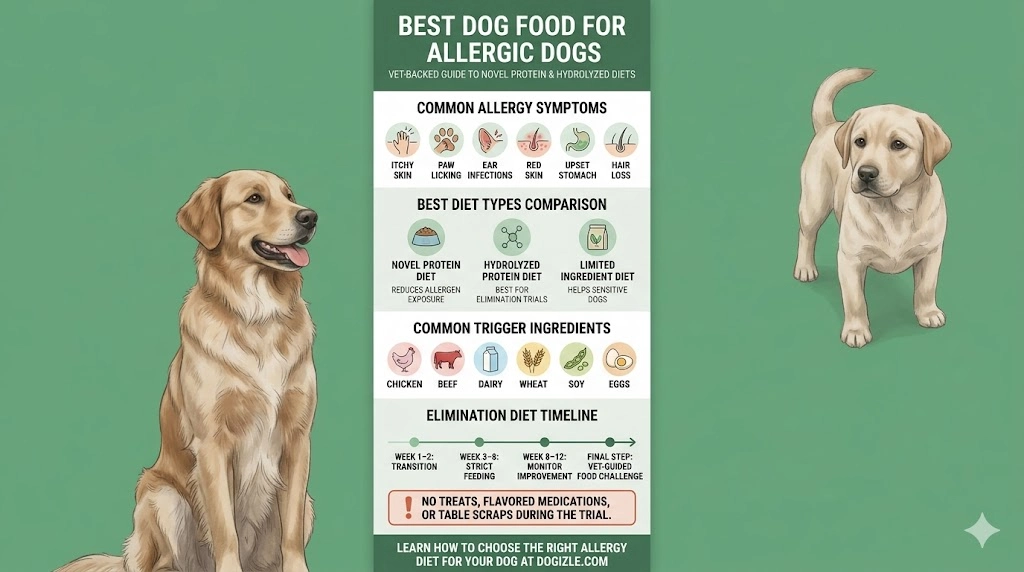
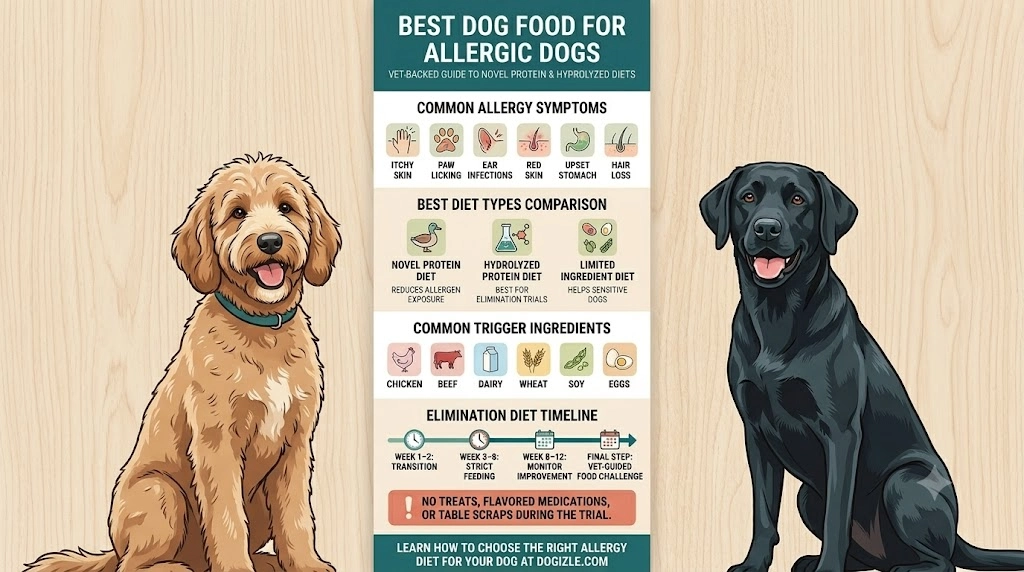
In dogs, the most commonly reported food allergens include beef, dairy products, chicken, wheat, and lamb. Merck also lists soy, corn, egg, pork, fish, and rice among less common allergens, while VCA highlights dairy, beef, chicken, eggs, soy, and wheat gluten as frequent culprits.
That does not mean a dog is automatically allergic to chicken just because chicken is common. It means the article should teach readers to stop guessing and to identify the actual trigger. A dog can react to a protein, a carbohydrate, or even hidden sources such as flavored medications, supplements, treats, and chewables. Merck specifically Best Dog Food for Allergic Dogs calls out those hidden sources as a common reason diet trials fail.
What to avoid while troubleshooting allergies
- Treats that are not part of the trial diet
- Table scraps
- Flavored medications
- Dental Chews
- Pill pockets
- Flavored toothpaste
- Supplements with animal proteins
- Other pets’ food and snack access
Mini summary: The most common allergens are usually Best Dog Food for Allergic Dogs ordinary proteins, not rare buzzwords. The hidden danger is accidental exposure from treats, meds, and supplements.
How to Choose the Right Food for Your Dog
The right food depends on five things: the dog’s feeding history, symptom pattern, life stage, body condition, and whether you are trying to diagnose a problem or simply manage a known allergy. VCA says the diet should be complete and Best Dog Food for Allergic Dogs balanced for the dog’s life stage, and WSAVA stresses that pets should be fed according to an individually tailored nutrition plan.
A simple decision framework
- If the diet is for diagnosis, choose a prescription-grade novel or hydrolyzed diet.
- If the trigger is known, choose a diet that fully avoids that ingredient.
- If the history is unclear, hydrolysis is usually safer than guessing.
- If the dog is a puppy, senior, or large breed, the food must still be complete and balanced for that life stage.
- If the dog has severe symptoms, do not keep trial-and-error switching without veterinary input.
Feeding Guide Table
| Situation | Best food strategy | Why it works | Notes |
| Puppy with suspected allergy | Vet-approved complete and balanced elimination diet | Growth needs cannot be ignored | VCA notes puppy diets must be complete and balanced for puppies. |
| Adult dog with itchy skin and ear infections | Hydrolyzed or novel protein diet | Helps identify true food triggers | Merck and VCA both support elimination trials. |
| A dog with many previous diets | Hydrolyzed diet | Less dependent on a perfect feeding history | VCA says hydrolyzed is a better choice when the prior foods are unknown. |
| A dog with a known chicken allergy | A diet with no chicken or chicken by-products | Removes the suspected trigger completely | Hidden sources still matter. |
| Dog in a multi-pet home | Controlled veterinary diet with separate feeding | Reduces contamination risk | VCA and Merck warn that other foods can ruin the trial. |
Mini summary: Choose the food based on the dog’s history and the goal of the trial, not on a trendy marketing term. Complete nutrition matters just as much as ingredient exclusion.
How to Run an Elimination Diet the Right Way
This is the section that most competing pages under-explain, and it is one of the best opportunities for a ranking article. The elimination trial must be strict, exclusive, and long enough to give a real answer. Merck says dietary elimination trials Best Dog Food for Allergic Dogs remain the reference standard for diagnosis, and VCA says the trial should use only the chosen diet with no other foods.
Elimination Diet Timeline Table
| Phase | What to do | Time frame | Why it matters | Source |
| Start | Pick one vet-approved novel or hydrolyzed diet | Day 1 | Establish a clean baseline | Merck/VCA |
| Strict feeding | Feed only that diet | 8–12 weeks | Symptoms often need time to improve | AKC and VCA say 8 weeks minimum and often 12 weeks. |
| No extras | Remove treats, chews, table scraps, flavored meds, and toothpaste | Entire trial | Tiny exposures can invalidate the result | Merck and AKC both warn about hidden exposures. |
| Improvement check | Track itching, ears, stools, paws, and skin | Weekly | Let’s see patterns instead of guessing | VCA and Merck list these as common signs. |
| Challenge phase | Reintroduce the old food only with vet guidance | After improvement | Confirms the real trigger | VCA describes this as the diagnostic next step. |
Step-by-step elimination trial
- Choose the diet with your vet.
Use a complete and balanced veterinary diet appropriate for the dog’s life stage. - Write down every food the dog has ever eaten.
Include treats, chews, scraps, supplements, and flavored medications. VCA says this history helps select the right diet. - Feed only the selected diet.
No table scraps, no snack exceptions, no “tiny bites,” and no flavored extras. Merck and AKC both stress that even small exposures can break the trial. - Keep the trial long enough.
AKC notes that elimination trials should last at least 8 weeks, and many veterinarians prefer 12 weeks. - Track symptoms weekly.
Watch scratching, ear redness, paw licking, body odor, stools, and energy level. These are common food allergy signs in dogs. - Do the challenge phase only if advised.
If the dog improves, reintroducing the old food can confirm the trigger. VCA says a flare after challenge can definitively support the diagnosis. - Stay consistent after diagnosis.
Once the trigger is known, the dog should remain on a diet that avoids it. VCA says there is no cure for food allergies; avoidance is the treatment.
Mini summary: A food trial fails most often because of inconsistency, not because the diet was “bad.” Strict means strict.
Signs the Problem May Not Be Food
Food allergies do happen, but they are not the only reason a dog scratches. Merck says airborne allergies are less commonly confused Best Dog Food for Allergic Dogs with food allergies, and many dogs show seasonal patterns when the cause is environmental rather than dietary.
Clues that point away from food
- Symptoms spike in certain seasons
- Flea exposure is present
- Itching is mild some months and severe in others
- The dog improves and worsens with outdoor exposure
- There are repeated environmental triggers rather than food-linked flare patterns
When to call the vet sooner
- Recurrent ear infections
- Raw, broken skin from scratching
- Vomiting or diarrhea that does not settle
- Rapid weight loss
- Marked lethargy or worsening discomfort
Mini summary: Not every itchy dog has a food allergy. The more seasonal the symptoms, the more important it is to consider flea or environmental allergy too.
Pros and Cons of the Main Diet Strategies
Novel Protein Diets
Pros
- Simple logic: avoid what the dog already knows
- Often very effective when history is clear
- Can be more palatable for some dogs
Cons
- Requires a reliable feeding history
- Cross-reactivity can still happen
- Retail versions may not be strict enough for diagnosis
Hydrolyzed Protein Diets
Pros
- Better for unclear histories
- Strong diagnostic value
- Proteins are broken into fragments that are harder for the immune system to detect
Cons
- Can be more expensive
- Some dogs still need a different hydrolyzed option
- Not every over-the-counter “hypoallergenic” claim is equivalent to a veterinary diet
Limited Ingredient Diets
Pros
- Easier to read and understand
- Can work in milder cases
- Helpful for some long-term feeding plans
Cons
- Cross-contamination risk is real
- “Limited ingredient” is not the same as medically controlled
- Less dependable for a strict diagnostic trial
Europe-Specific Practical Advice
For European dog owners, the biggest buying mistake is assuming all premium-looking pet food labels are equally trustworthy. The European Commission says animal feed is tightly regulated in the EU and that feed materials and compound feed are governed by Regulation 767/2009. It also emphasizes that feed must be safe and traceable.
That matters because labels can be persuasive without being medically helpful. WSAVA notes that ingredient lists can be misleading and that owners should focus on more important nutritional information when selecting pet food. WSAVA also provides separate nutrition label guides for Europe, which is especially useful for owners comparing products Best Dog Food for Allergic Dogs across countries such as the UK, Germany, France, Italy, Spain, the Netherlands, Sweden, Switzerland, and Canada-style export products sold in Europe.
Practical Europe buying rules
- Look for a complete and balanced food, not just a trendy recipe
- Check whether the diet is designed for adult maintenance or another life stage
- Be cautious with marketing words like “premium,” “natural,” or “holistic.”
- Use veterinary diets when you are doing a real elimination trial
- In multi-country shopping, compare the label details, not just the front of pack
Mini summary: In Europe, the safest buying mindset is “complete, traceable, and veterinary-aware,” not “cute label and best ad copy.”
Apartment Living, Urban Life, and Seasonal Care
Apartment dogs often face two problems at once: tighter routines and more accidental food exposure. That means feeding consistency becomes even more important. Keep the trial food stored separately, feed on schedule, and make sure every person in the home knows the dog is on a strict plan.
Cold weather can also confuse owners, because dry air, indoor heating, and muddy winter walks can make skin look worse even when food is not the only issue. In urban homes, leash walks, daycare, and shared spaces can make it easier for dogs to pick up random snacks from friends, children, or visitors. The practical fix is simple: lock down the feeding plan and keep the trial boring.
Apartment-friendly allergy routine
- Feed in one designated place
- Keep treats in a clearly labeled container
- Use measured portions every day
- Tell guests not to share food
- Separate pets during feeding time
- Log skin changes with dates and photos
Cold-weather caution
- Do not assume winter itching is automatically food-related
- Watch paw licking after salted sidewalks
- Keep the elimination diet consistent, even during holidays
- Avoid “just one bite” from festive food tables
These are practical ownership habits, not medical claims, but they make the diet trial much more likely to work.
Common Mistakes Dog Owners Make
- Switching foods too quickly
A real trial takes weeks, not days. AKC and VCA both stress the need for a proper time frame. - Using treats without checking ingredients
Hidden exposures can ruin the result. Merck specifically warns about treats, supplements, and flavored medications. - Choosing a retail limited-ingredient food and assuming it is therapeutic
VCA warns about cross-contamination in OTC diets. - Stopping the trial when symptoms improve too early
Improvement is encouraging, but it does not confirm the diagnosis by itself. The challenge phase matters. - Forgetting that food may not be the main issue
Environmental and flea allergies are often more common than true food allergy.
Expert Tips That Make the Article More Useful
- Use a single-source feeding log so readers can track every bite.
- Add a small checklist box for treats, chews, toothpaste, and meds.
- Explain that “hypoallergenic” is not a magic word unless the diet is truly controlled.
- Separate diagnosis from maintenance: the best diagnostic diet is not always the best forever diet, but the dog still needs a complete long-term plan.
Safety and Health Notes
Food allergy management should be handled carefully, especially if the dog is young, senior, underweight, or already dealing with skin infections or digestive upset. VCA says the trial diet should be complete and balanced for the dog’s life stage, and home-cooked feeding should be guided by a board-certified veterinary nutritionist.
Blood and skin tests are not reliable stand-alone diagnosis tools for canine food allergy, according to Merck. That is why a supervised Best Dog Food for Allergic Dogs elimination trial remains the reference standard.
If the dog has severe vomiting, persistent diarrhea, open sores, major lethargy, or rapid worsening, veterinary care should come before content experimentation. The goal of a pillar article is to guide owners responsibly, not to encourage guessing.
People Also Ask
The most reliable method is a strict elimination diet trial under veterinary guidance. Merck says elimination trials are the reference standard, and VCA says the dog must eat only the selected diet during the trial.
Not automatically. The important question is which ingredient the dog is actually reacting to. Common allergens in dogs include beef, dairy, chicken, wheat, and lamb, so the right answer is to avoid the trigger, not blindly remove grains.
AKC says trials should last at least 8 weeks, and many veterinarians prefer 12 weeks. VCA also describes an 8–12 week elimination-trial window.
Yes. Treats, chews, flavored medications, supplements, toothpaste, and even other pets’ food can invalidate the trial. Merck and AKC are both explicit about this.
Hydrolyzed diets are usually better when the feeding history is unclear, or the trial needs to be very controlled. Novel protein diets can work well when you know exactly what the dog has already eaten.
Conclusion
The Best Dog Food for Allergic Dogs is not a marketing slogan. It is a complete, controlled, vet-guided diet that removes the real trigger and supports a proper elimination trial. In most cases, that means a novel protein or hydrolyzed protein diet fed with total consistency for long enough to give a trustworthy answer.
The biggest mistake dog owners make is switching foods randomly and hoping the itch disappears. The smarter path is to document the feeding history, remove all hidden exposures, choose the right therapeutic diet, and track the results like a pro. That approach protects your dog, saves time, and gives you a real Best Dog Food for Allergic Dogs diagnosis instead of a guessing game.
For Dogizle, this topic is a perfect pillar page because it connects nutrition, veterinary guidance, label reading, and practical home care. It also builds long-term trust with readers who want answers they can actually use. Bookmark it, share it, and keep building a smarter feeding routine for your dog.
This content is for educational and informational purposes only and does not replace professional veterinary advice. Always consult a licensed veterinarian for medical concerns regarding your dog.