Is Feeding Raw Chicken to Dogs Really Safe?
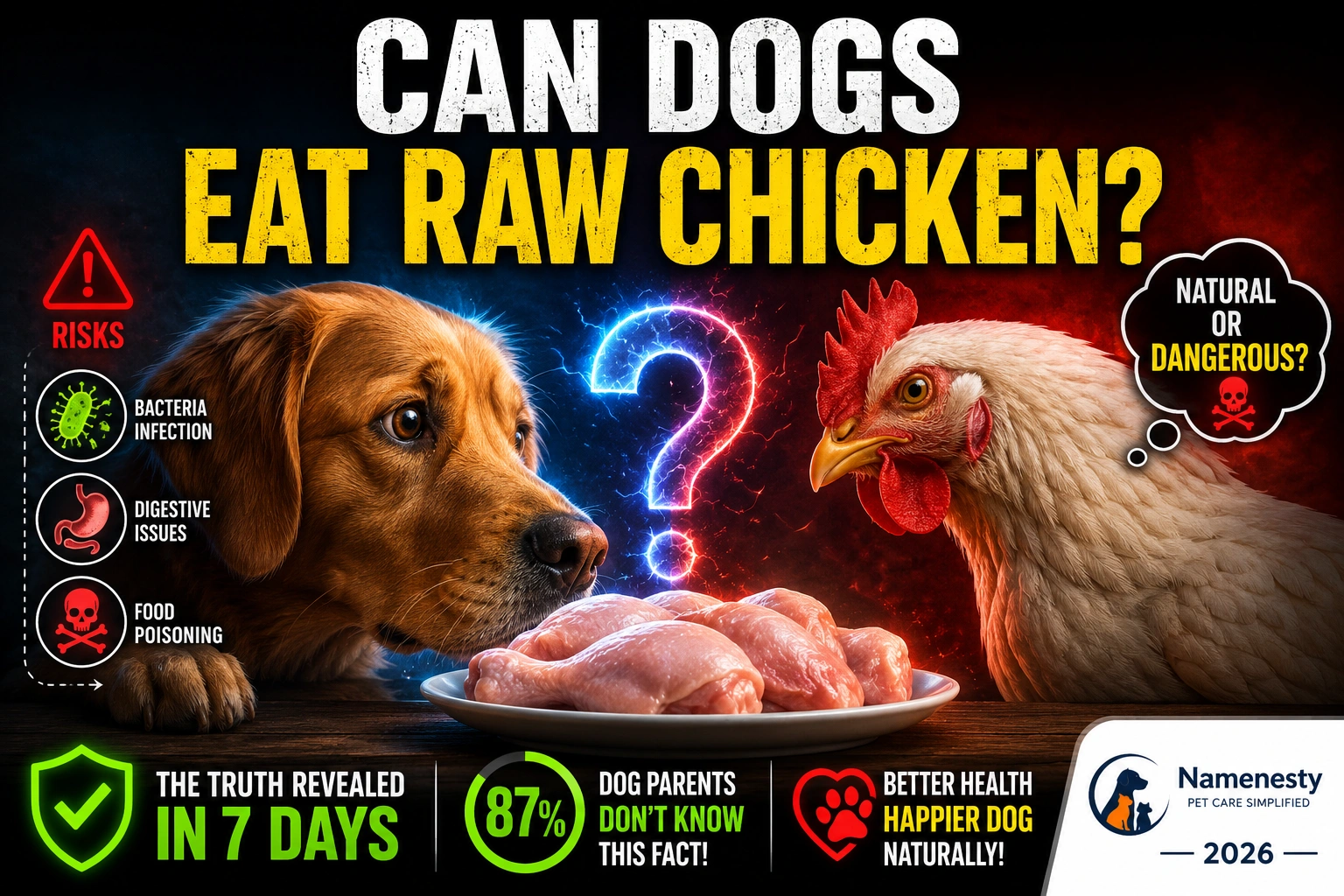
Can dogs eat raw chicken? This question stays popular because it sits right at the intersection of nutrition, convenience, and safety. Some owners are drawn to raw feeding because it feels more natural. While others worry about Foodborne pathogens. Household contamination and long-term diet balance. Modern veterinary guidance remains cautious. The AVMA discourages raw or undercooked animal-sourced proteins for dogs and cats. The CDC does not recommend raw pet food or treats. Because they can spread germs such as Salmonella and Listeria in both pets and people.
The short answer is nuanced. Can Dogs Eat Raw Chicken may be able to digest raw chicken. But digestion is not the same thing as safety. Whether raw chicken is a reasonable choice depends on your dog’s age and immune status. Medical history, diet balance, storage practices, and your household’s ability to manage hygiene with care. Recent FDA actions in 2026 also continued to flag raw pet foods for harmful bacteria.including Salmonella and Campylobacter. This reinforces why this topic still deserves a careful, evidence-based answer.
In this guide, you will get a balanced breakdown of what raw chicken means for dogs, what the main risks are, which dogs should avoid it, how to respond if your dog has already eaten it, and why many veterinarians still prefer cooked, complete, and balanced meals instead.
Can Dogs Eat Raw Chicken?
Yes, dogs can physically consume raw chicken, but that statement alone can be misleading. The real question is not whether a dog can chew and swallow raw poultry. The real question is whether that food is safe, nutritionally sound, and appropriate for the individual dog and household. Official veterinary and public-health guidance consistently warns that raw animal-sourced foods carry a contamination risk and may also expose humans in the home to the same pathogens.
That is why a better answer is this: some dogs may tolerate raw chicken without obvious immediate illness, but many veterinary organizations still discourage it because the margin for error is narrow. Raw feeding can be managed by some owners, yet the food itself does not become automatically safe simply because a dog appears to handle it well.
Why Some Owners Choose Raw Chicken
Raw feeding appeals to many owners because it promises simplicity and a more “whole-food” approach. WSAVA notes that raw meat-based diets are usually built around meat, bones, and organ meats, and that they may be high in fat and lower in carbohydrates, but they are not all equal in ingredient quality or nutritional profile. In other words, “raw” is not a guarantee of nutrition.
Some owners also like raw feeding because it feels less processed than commercial kibble, and because they hope it will support coat condition, stool quality, or appetite. Those claims are common in the raw-feeding community, but they are not the same as proof. Modern veterinary nutrition guidance emphasizes that a pet’s diet should be complete, balanced, and individualized rather than defined by trend or philosophy.
Is Raw Chicken Safe for Dogs?
The honest answer is: it depends, but the default stance from major veterinary and public-health bodies is caution. The AVMA discourages feeding raw or undercooked animal protein to dogs and cats because of the risk to pets and people. The CDC also says raw pet food can make pets and families sick, especially when germs spread from food to bowls, hands, surfaces, saliva, or feces.
FDA testing and advisories have repeatedly shown that raw pet foods can be contaminated with Salmonella, Listeria, and sometimes Campylobacter. In 2026, the FDA again warned pet owners about raw dog food lots that tested positive for harmful bacteria. That matters because contamination is not just a theory; it remains a recurring real-world issue.
Why Raw Chicken Can Be Risky
Raw chicken can carry disease-causing bacteria, and dogs can become infected or become carriers without obvious symptoms. FDA Guidance notes that pets with Salmonella may show lethargy, vomiting, diarrhea, bloody diarrhea, fever, decreased appetite, or abdominal pain, while some animals show no signs at all but still shed bacteria in their saliva and feces. That is one reason raw feeding can quietly become a household problem instead of only a pet problem.
The risk extends beyond the dog. CDC and AVMA both stress that contamination can move from food to hands, prep areas, counters, bowls, floors, and even family members. This is especially important in homes with children, older adults, pregnant people, or anyone with a weakened immune system. In those homes, a raw-food handling mistake can become a public-health issue.
Dogs That Should Avoid Raw Chicken
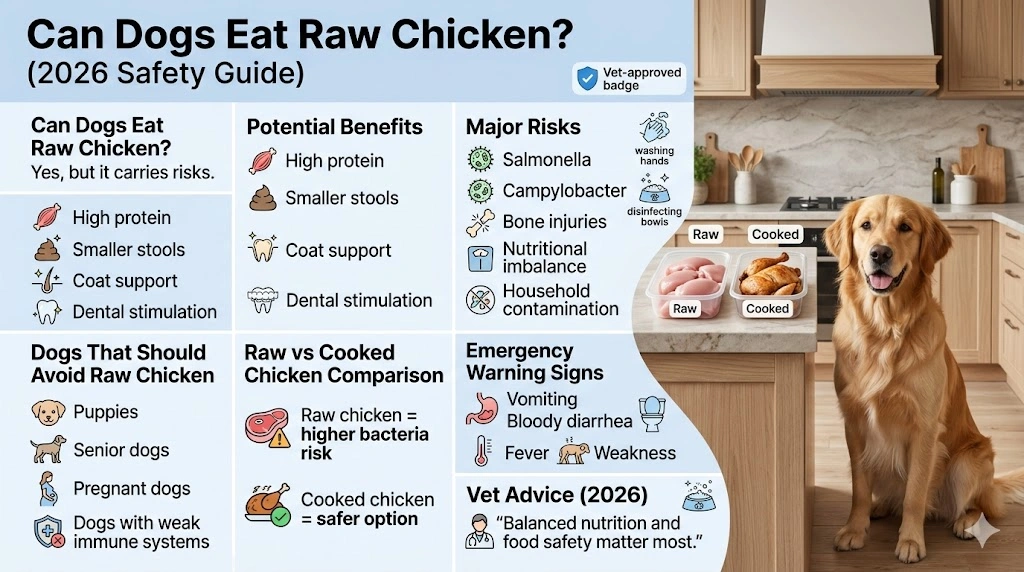
Some dogs are much more vulnerable than others. Puppies, seniors, pregnant dogs, dogs receiving chemotherapy, dogs with immune compromise, and dogs with digestive or metabolic disease are all poorer candidates for raw poultry because they have less physiological reserve if something goes wrong. A dog that already has a fragile GI tract or a complex medical history may not tolerate a bacterial load, diet transition, or nutritional inconsistency as well as a healthy adult dog.
That caution also applies to dogs with a history of pancreatitis or food sensitivity. WSAVA emphasizes that diets should be chosen according to the individual pet and that nutritional assessment is part of responsible care. For dogs with known medical conditions, raw feeding should not be treated as a casual experiment.
What Raw Feeding Supporters Say
Supporters of raw feeding often argue that it feels biologically appropriate and may support improved appetite or stool consistency. WSAVA acknowledges that raw diets can be highly digestible, but it also makes clear that digestibility does not equal superiority and that raw foods vary widely in ingredients and nutrient profile. In other words, even if a dog seems to “do well” on raw chicken, that observation does not prove the diet is safer or better than a properly formulated cooked diet.
This distinction matters because many raw-Feeding conversations blur anecdote and evidence. A glossy coat, smaller stool volume, or enthusiastic mealtime behavior may reflect better overall feeding practices, a richer protein source, or simply a change away from a lower-quality previous food. Those outcomes do not automatically validate raw chicken as the healthiest option.
Potential Benefits of Raw Chicken for Dogs
If raw chicken is discussed at all, it should be framed carefully. Chicken is a protein-rich ingredient, and some owners prefer it because it can be palatable and simple to portion. In a properly designed diet, animal protein can support maintenance, activity, and recovery. The keyword is properly designed. A single ingredient by itself is not a complete feeding plan.
Another reason some owners like raw chicken is that it feels minimally processed. That preference is understandable, but it is not evidence that raw is safer or more appropriate. Nutrition experts repeatedly emphasize the same principle: the best diet is one that is complete, balanced, safe to handle, and tailored to the dog in front of you.
The Biggest Risks of Feeding Raw Chicken
The most prominent risk is bacterial contamination. The CDC warns that raw pet food can contain germs like Salmonella and Listeria, and the FDA has repeatedly documented contamination in raw pet food recalls and advisories. Recent FDA alerts in 2026 also included Campylobacter among pathogens found in raw dog food. That is a strong signal that raw poultry should be handled as a biological risk, not as a harmless natural food.
The second major risk is cross-contamination. A dog can appear fine while still carrying bacteria in saliva or feces, and those organisms can spread to bowls, floors, human hands, and kitchen surfaces. AVMA and CDC both stress safe handling because raw pet food can affect the whole household, not just the animal.
The third risk is nutritional imbalance. WSAVA emphasizes the importance of complete and balanced nutrition, and the organization notes that raw diets vary considerably. A home-prepared raw plan built mostly around chicken can easily miss essential nutrients, especially calcium, trace minerals, and a correct energy balance. Over time, that can undermine growth, muscle maintenance, and overall health.
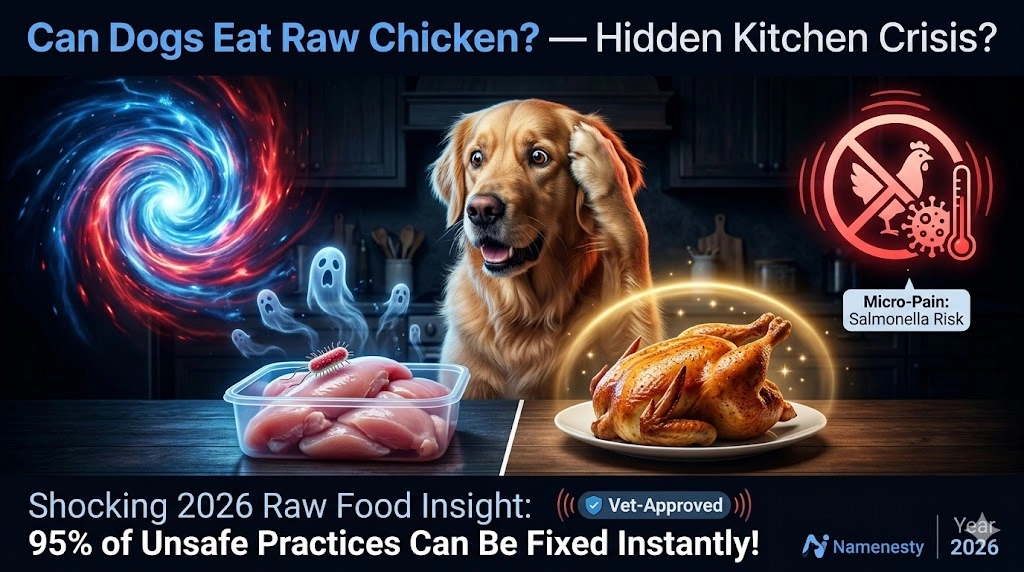
Can Dogs Get Salmonella From Raw Chicken?
Yes. That risk is real. The CDC explicitly says raw pet food can make dogs and cats sick, and the FDA warns that pets infected with Salmonella may have GI signs or no symptoms at all while still shedding bacteria. AVMA also discourages raw animal protein because of the risk to both animals and people.
This is one of the most important takeaways for owners who ask whether raw chicken is “fine if the dog seems healthy.” A healthy appearance does not eliminate bacterial shedding. A dog can look normal and still contaminate a home environment.
What About Campylobacter?
Campylobacter matters because it is another common poultry-associated pathogen. FDA has specifically flagged Campylobacter jejuni in raw dog food advisories, which shows that this is not just a theoretical warning. Like Salmonella, it can create illness risk for pets and human handlers if the food is contaminated or improperly managed.
This is another reason the answer to “can dogs eat raw chicken?” cannot be reduced to a simple yes. Even when a dog tolerates the meal, the food may still be carrying organisms that endanger other pets or people in the home.
Raw Chicken Bones: Safe or Dangerous?
Raw chicken bones are often marketed by enthusiasts as more natural than cooked bones, but they are not risk-free. Bones can still create obstruction, choking, oral injury, or digestive upset. FDA warns that bones can lodge in the esophagus, stomach, or intestines, and that swallowed bone fragments can cause blockages or injuries requiring veterinary intervention.
Cooked bones are even more hazardous because they can break into sharp pieces. FDA specifically notes that bones may fragment and injure the mouth, esophagus, stomach, or intestines, potentially leading to punctures, infection, or obstruction. So the safer rule is simple: do not assume bone is a harmless chew just because it is tied to a raw-feeding idea.
Can Puppies Eat Raw Chicken?
Puppies are a poor match for raw chicken in most situations. Their immune systems are still developing, their digestion can be more reactive, and their nutritional requirements are precise because growth is so sensitive to imbalance. WSAVA’s nutrition guidance underscores the need for tailored, complete diets, and puppies need that even more than adults do.
Because of that, most veterinary guidance leans strongly toward commercially formulated puppy food or a professionally designed veterinary diet rather than raw chicken. A puppy that gets the wrong balance of calcium, phosphorus, calories, or pathogens may pay for that mistake later in growth, development, or GI resilience.
Dog Ate Raw Chicken — What Should You Do?
If your dog accidentally ate raw chicken, do not assume disaster immediately. Some dogs may show no ill effects at all. Still, the event should be taken seriously because symptoms can appear later, and contaminated food can expose both the dog and the household to bacteria.
The most practical response is to monitor your dog closely and contact your veterinarian if anything seems off. FDA notes that signs of infection can include vomiting, diarrhea, bloody stool, fever, reduced appetite, decreased activity, and abdominal pain. If raw chicken contained bones, watch for gagging, constipation, abdominal discomfort, or signs of obstruction.
If the chicken was spoiled, if your dog is very young or old, or if the dog already has a chronic illness, the threshold for calling your vet should be lower. In these cases, the risk is not only what the dog ate but also how well the dog can recover if bacteria or a bone fragment becomes a problem.
Signs Your Dog May Be Sick After Eating Raw Chicken
When a dog does react badly to contaminated raw chicken, the Symptoms often resemble foodborne illness: vomiting, loose stool, bloody diarrhea, reduced appetite, fever, lethargy, or abdominal pain. FDA and CDC both note that infected pets may also shed bacteria without looking very sick, which makes observation important even when the first few hours seem uneventful.
Timing matters as well. Symptoms may not start right away, and a dog that seems normal at breakfast could become unwell later in the day or even the following day. If you notice a pattern of repeated vomiting, worsening diarrhea, weakness, or dehydration, that is not a “wait and see” situation.
Raw Chicken vs Cooked Chicken for Dogs
For most dogs, cooked chicken is the safer option. Plain, properly cooked chicken is generally easier to manage from a food-safety standpoint because heat reduces bacterial risk far more reliably than raw handling practices alone. That is one reason cooked animal protein is more widely accepted in veterinary nutrition than raw poultry.
Cooked chicken also gives you more control over seasoning, texture, and portioning. Raw feeding requires strict handling, careful storage, and ongoing attention to nutrient balance, while a cooked, complete diet is easier for most households to execute safely.
Safest Ways to Feed Chicken to Dogs
If your goal is to give your dog chicken without creating unnecessary risk, plain cooked chicken is the simplest and most practical route. Keep it unseasoned, avoid onions, garlic, heavy salt, and sauces, and use it as part of a broader diet rather than as the entire nutritional foundation. WSAVA’s nutrition guidance repeatedly stresses that feeding should be complete and balanced, not based on isolated ingredients alone.
If you still choose a raw approach, the handling standard should be exceptionally strict. Separate utensils, careful refrigeration, rapid cleanup, handwashing, and attention to your dog’s stool quality and appetite become part of the routine. The CDC specifically advises hygienic practices around raw pet food because contamination can spread through the home even when the pet itself looks healthy.
A raw feeding plan also should not be built on chicken alone. WSAVA highlights the need for nutrient completeness, and a raw meat-based diet can vary widely in its profile. If a raw regimen is being considered, it is best done with veterinary nutrition support rather than guesswork from internet forums.
What Veterinarians Say About Raw Feeding
The veterinary position is still largely cautious in 2026. AVMA discourages raw or undercooked animal protein for dogs and cats, CDC does not recommend raw pet food or treats, and WSAVA emphasizes individualized, nutritionally complete feeding plans rather than food trends. That consensus is important because it reflects both pet-health and public-health concerns.
At the same time, the raw-feeding debate persists because some owners feel strongly about their experiences, and some nutrition professionals are willing to work with carefully designed raw plans in limited situations. Even then, the emphasis stays on safety, supervision, balance, and hygiene. The issue is not whether raw chicken is fashionable. The issue is whether it is safe enough and balanced enough for the individual dog and home.
Common Mistakes Dog Owners Make
One major mistake is treating raw chicken as a complete diet. It is not. Feeding chicken alone can leave nutritional gaps that become more serious over time. WSAVA’s guidance on nutrition assessment exists precisely because pet diets need to be evaluated as a whole, not by one ingredient in isolation.
Another mistake is underestimating hygiene. People often focus on whether the dog gets sick and forget that the home can become contaminated even if the dog stays asymptomatic. That is why AVMA and CDC repeatedly emphasize safe handling of raw pet food.
A third mistake is assuming bones are automatically beneficial. FDA warns that bones can cause choking, obstruction, or injury, and that bone-related problems may not be immediate. That means a dog can seem normal right after chewing and still develop a problem later.
Pros and Cons of Feeding Raw Chicken to Dogs
The main perceived advantages are convenience for some raw feeders, high palatability, and the appeal of a minimally processed diet. However, those upsides are outweighed for many households by the practical burdens of cold storage, sanitation, and the chance of bacterial contamination. WSAVA and AVMA both stress that nutritional completeness and safety matter more than food philosophy.
The Disadvantages are clearer and better documented: contamination risk, possible bacterial shedding, household exposure, diet imbalance, and bone injury. CDC and FDA guidance make it plain that raw pet food is not a neutral choice; it is a product category that demands serious caution.
Expert Tips for Safer Feeding
The most practical tip is to choose a diet that is complete, balanced, and easy to manage consistently. If you prefer fresh food, a cooked, veterinarian-formulated plan is usually far easier to keep safe than raw chicken. WSAVA’s nutritional guidance supports individualized feeding over trend-driven decisions.
If raw feeding is still on the table, keep it highly structured: source from reputable suppliers, maintain refrigeration discipline, sanitize surfaces, and speak with a veterinary nutrition professional before making it a long-term routine. CDC and AVMA both highlight that safe handling is critical because the risks extend beyond the dog itself.
People Also Ask
Not as a casual habit and not safely by default. A raw diet would need to be professionally balanced, carefully handled, and appropriate for the dog’s medical needs. Even then, major veterinary organizations still discourage raw animal proteins because of contamination concerns.
Some dogs may digest it without immediate problems, but digestion does not remove the possibility of bacterial contamination or household spread. CDC and FDA both caution that raw pet food can carry germs that make pets and people sick.
Yes. Salmonella is one of the main concerns with raw poultry, and the FDA has repeatedly warned that infected pets may appear normal or show vomiting, diarrhea, fever, appetite loss, or low energy. Some infected pets show no signs while still shedding the bacteria.
Yes. Plain cooked chicken is generally safer because heat reduces bacterial risk and removes the handling burden associated with raw meat. That is one reason cooked protein is much easier to recommend in everyday pet feeding.
Small dogs are physically able to eat it, but they are not necessarily good candidates. Smaller dogs have less tolerance for choking hazards, abrupt digestive upset, and inconsistent portion control, so the safety margin is often narrower.
Not automatically. The better comparison is complete and balanced nutrition versus incomplete or unsafe feeding. WSAVA emphasizes that nutritional adequacy, not trend, should guide the choice. A well-formulated diet matters more than whether it is raw or processed.
Conclusion
So, can dogs eat raw chicken?
Yes, many dogs can physically consume and digest raw chicken, but that does not automatically make it the safest or healthiest choice. Raw chicken still carries real risks, including salmonella, campylobacter contamination, nutritional imbalance, choking hazards, and household cross-contamination.
Some healthy adult dogs may tolerate carefully managed raw diets under professional supervision. However, puppies, senior dogs, pregnant dogs, and dogs with weak immune systems face a much higher risk of complications.
For most pet owners, plain cooked chicken remains the safer and more veterinarian-supported option because it reduces bacterial exposure while still providing high-quality protein.