The Shocking Truth Behind This Popular Dog Treat
If you are sitting down to a plate of ham and your dog is staring at you with those irresistible begging eyes, you are definitely not the only pet owner in that situation. The question “Can Dogs Eat Ham?” is one of the most searched dog nutrition questions because ham looks harmless on the surface, but in veterinary nutrition, it sits in a risky category: not “poison” in the classic sense, yet still not a smart food to share regularly. Both the AKC and PetMD note that ham is not toxic, but it is still a poor choice as a treat because it is high in sodium and fat.
The simplest honest answer is this: dogs can sometimes eat a tiny accidental bite of plain ham, but ham should not be treated as a normal snack or reward. A small piece that falls to the floor is usually not a crisis for a healthy adult dog, but repeated feeding can create bigger problems over time. Veterinary sources consistently point to the same issues: too much salt can contribute to dehydration and salt toxicosis, and too much fat can increase the risk of pancreatitis.
In other words, ham is not the kind of food you want to build into your dog’s diet. It is a processed human food, not a canine-friendly protein. The safest approach is to treat it as an occasional accidental exposure, not a planned treatment.
What Is Ham Made Of? And Why It Matters for Dogs
Ham is not just “meat.” It is usually processed pork that has been cured with salt, often smoked or cooked, and sometimes flavored with sugar, glazes, seasonings, or preservatives. That processing changes the nutrition profile in ways that matter a lot more for dogs than for humans. The biggest concerns are the sodium load, the fat content, and the possibility of added ingredients that dogs should not eat.
For dogs, the problem is not just that ham is “meaty.” It is usually too salty, too rich, and too processed. Many dogs are perfectly capable of digesting plain cooked lean meat, but ham is different because it is prepared for human taste, not canine health. That is why veterinarians generally prefer plain, unseasoned proteins over cured meats.
Can Dogs Eat Ham? The Honest Veterinary Answer
Here is the clearest version of the answer:
Can dogs eat ham?
Yes, in very small accidental amounts.
Should dogs eat ham regularly?
No.
Should ham be used as a treat, topper, or reward?
No.
That position is consistent across veterinary pet nutrition guidance: ham is not a classic poison, but it is still a high-risk processed food because of sodium, fat, and seasoning concerns. AKC states that a small piece may be okay, while PetMD says a tiny accidental piece that falls on the floor is usually fine for many dogs. That does not make it healthy; it simply means it is usually not an immediate emergency in tiny amounts.
A useful way to think about ham is this: the dose, the dog, and the ingredients all matter. A very small plain bite may pass without issue, but a large serving, repeated servings, or ham that contains seasoning, glaze, or bone can become dangerous quickly.
Why Ham Is Dangerous for Dogs
1) High Sodium Is the Biggest Problem
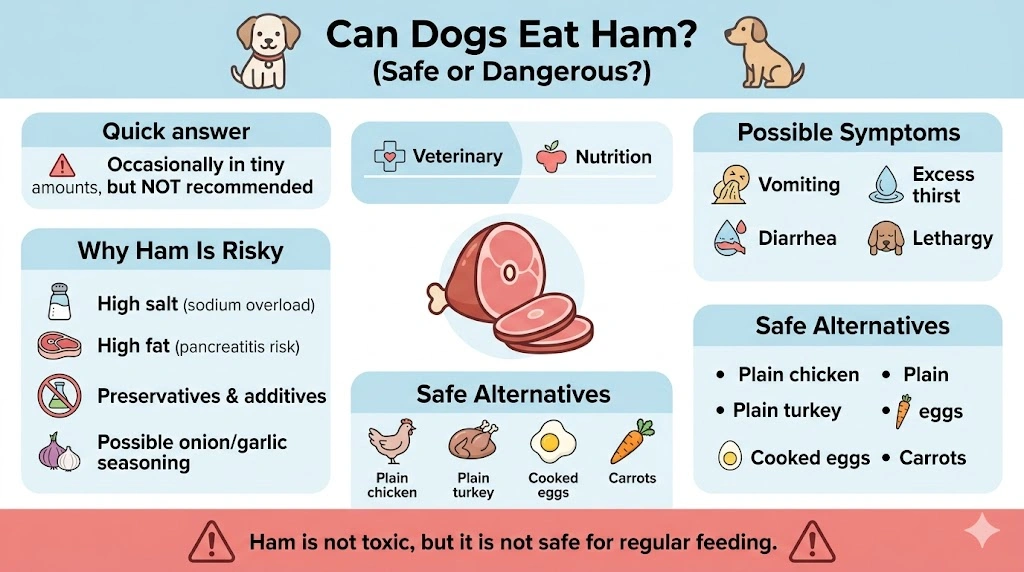
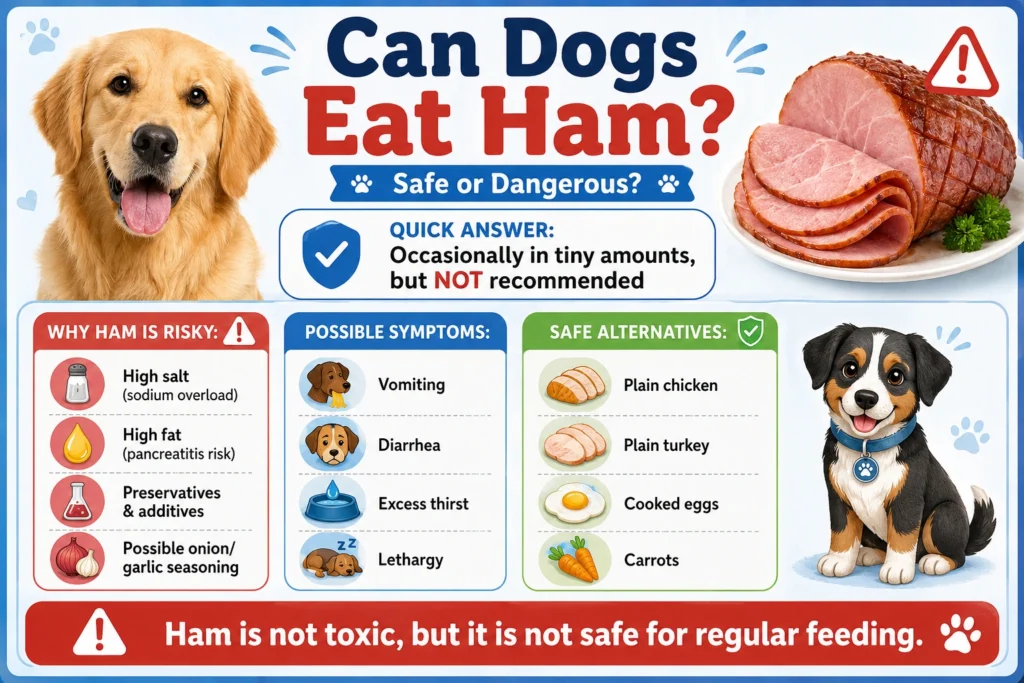
Ham is usually very high in salt because curing depends on sodium. Dogs need sodium in their diet, but only in appropriate amounts. Too much sodium can cause excessive thirst, dehydration, vomiting, diarrhea, weakness, tremors, incoordination, and in severe cases seizures. Merck Veterinary Manual notes that salt toxicosis can occur when animals ingest too much salt, especially when they do not have enough water, and signs can include weakness, ataxia, muscle tremors, gastroenteritis, and seizure-like activity.
That is why ham is more than a “salty snack.” It can actually push a dog toward a dangerous electrolyte imbalance if enough is eaten or if the dog already has limited access to water. Fresh water reduces risk, but it does not make salty food a safe choice. The more ham the dog eats, the more salt enters the body.
2) High Fat Can Trigger Pancreatitis
Ham is often fatty, and fat is one of the biggest nutritional red flags for dogs when it comes to table scraps. AKC notes that ham’s fatty richness makes it difficult for dogs to digest, and too much fat can lead to pancreatitis and digestive upset. Merck Veterinary Manual also emphasizes low-fat feeding in dogs with pancreatitis, underscoring how serious fat-related pancreatic disease can be.
Pancreatitis is inflammation of the pancreas, and it can be painful, sudden, and expensive to treat. Common signs include vomiting, abdominal pain, weakness, and loss of appetite. Rich holiday foods and table scraps are widely recognized as common triggers for digestive trouble in dogs, especially when the food is greasy or fatty.
3) Preservatives and Processing Add Extra Risk
A lot of ham is not just pork and salt. It may include nitrates, nitrites, flavor enhancers, smoke flavor, or sweet coatings. Those additives are designed for human food production and taste, not for dog digestion. PetMD and AKC both warn that processed meat is not a healthy regular food for dogs because of the way it is prepared and seasoned.
The concern here is not always immediate poisoning. More often, it is chronic wear and tear on the dog’s system: extra sodium, extra fat, extra digestive strain, and extra calories with little nutritional benefit. That is one reason veterinarians consistently recommend plain, simple foods over processed deli-style meats.
4) Hidden Seasonings Can Be Much More Dangerous Than the Ham Itself
Some ham products are glazed or seasoned with ingredients that are bad for dogs. Garlic and onion are the big ones. Merck Veterinary Manual states that raw, cooked, or concentrated forms of onion and garlic can cause Heinz body hemolytic anemia in dogs and cats. ASPCA also lists onions as toxic to dogs and notes clinical signs such as vomiting, weakness, rapid heart rate, and anemia-related issues.
That means a piece of ham with onion powder, garlic powder, or a seasoned glaze can be much riskier than plain ham. In practical terms, seasoned ham is not something to “trim off and serve anyway.” The seasoning itself may be the real hazard.
Is Ham Toxic to Dogs?
Ham is not usually classified as a classic toxic food in the way onions, garlic, or xylitol are. AKC and PetMD both state that ham is not toxic to dogs, but they also stress that it is not a healthy treat.
The more accurate way to say it is this: ham becomes dangerous because of what it contains and how much a dog eats. The risk rises with large servings, frequent feeding, seasonings, high-fat cuts, and smaller body size. So ham is not instantly toxic in the usual sense, but it can absolutely cause a toxic or emergency-level situation if the sodium load is too high or if the dog has a sensitive stomach, pancreatitis risk, or other health problems.
What Happens If a Dog Eats Ham?
What happens next depends on the amount eaten, the dog’s size, the type of ham, and whether the ham was plain or seasoned.
A small accidental bite may cause no symptoms at all, or just a bit of thirst or mild digestive upset. PetMD says a little piece that falls on the floor is generally fine for many dogs.
A moderate amount may lead to vomiting, diarrhea, restlessness, bloating, or excessive drinking as the body reacts to the salt and fat. Signs of sodium poisoning and digestive irritation can appear within hours and should be taken seriously, especially if they worsen or continue.
A large amount can create a real emergency. The concern becomes pancreatitis, dehydration, electrolyte imbalance, salt toxicosis, or even obstruction if bones are involved. In severe cases, neurological signs like tremors, seizures, or collapse can appear.
Symptoms of Ham Overconsumption in Dogs
Watch your dog closely for signs such as vomiting, Diarrhea, increased thirst, weakness, lethargy, loss of appetite, shaking, incoordination, or a painful hunched posture. These signs fit the known pattern for salt poisoning, GI upset, and pancreatitis risk after rich or salty foods.
For many dogs, symptoms may start as “just a tummy issue,” but that can be misleading. Pancreatitis can worsen quickly, and salt toxicosis can also become a serious medical issue, especially if the dog keeps vomiting or cannot keep water down. Severe cases may involve tremors, seizures, disorientation, or collapse.
If symptoms are mild but do not improve, that still matters. Persistent vomiting, ongoing diarrhea, marked thirst, or increasing lethargy are all reasons to contact a veterinarian promptly.
Can Dogs Eat Ham Bones?
No. Absolutely not.
Cooked ham bones are dangerous because bones can splinter, break teeth, cause choking, injure the digestive tract, or create an intestinal blockage. VCA explains that bones can splinter into shards and cause choking, gastrointestinal damage, or obstruction, and that swallowed fragments may require surgical removal.
This is one of the biggest mistakes people make during holiday meals. A bone might look harmless once the meat is gone, but to a dog it is a chew hazard with multiple failure points: sharp edges, splinters, blockage risk, and possible perforation. Cooked bones are especially problematic because cooking makes them more brittle.
How Much Ham Is Safe for Dogs?
The safest practical answer is: there is no truly “safe” amount of ham to recommend as a regular treat. Veterinary guidance does allow that a tiny accidental piece may be tolerated by many healthy dogs, but that is very different from endorsing ham as a snack. AKC says a small piece is all right occasionally, while PetMD says a tiny accidental piece is usually fine. Neither source suggests ham should become a habit.
A helpful rule is this: the smaller the dog, the more dangerous the same piece of ham becomes. Small dogs have less body mass to buffer sodium and fat loads, which means less room for error. Dogs with kidney disease, heart disease, a history of pancreatitis, obesity, or a sensitive stomach should be treated as higher-risk and should avoid ham entirely.
So instead of asking, “How much ham can I feed?” the better question is, “What safer protein can I use instead?” In most homes, the answer is a plain, unseasoned alternative such as cooked chicken or turkey.
What To Do If Your Dog Eats Ham
If your dog eats a small amount of plain ham and seems normal, monitor closely and keep fresh water available. A mild one-time exposure often passes without incident, especially in a healthy adult dog.
If the amount was large, the ham was heavily seasoned, or your dog is a puppy, senior, or medically fragile, contact your veterinarian for advice. That is especially important if the ham included onion, garlic, or a bone, because those details significantly affect the risk.
A simple response plan looks like this in real life: stop further access to the food, check how much was eaten, offer water, and watch for Vomiting, diarrhea, weakness, increased thirst, trembling, or pain. If symptoms appear or worsen, veterinary care is the right next step. Salt-related emergencies are not something to “wait out” if the signs are developing.
Common Myths About Can Dogs Eat Ham
Myth 1: “Ham is just meat, so it must be fine.”
Not quite. Ham is processed meat, not plain fresh meat. The curing, salting, seasoning, and fat content are exactly what make it less suitable for dogs than plain cooked protein.
Myth 2: “Cooking makes ham safe.”
Cooking does not remove sodium or magically lower the fat content. If anything, the main concerns remain after cooking because the salt and richness are still there. That is why cooked ham is still not a good treat.
Myth 3: “Deli ham is the same as home-cooked ham.”
Deli ham can be even more problematic because it is often more heavily processed and may contain extra preservatives or seasonings. Processed meat is still processed meat, no matter how thin the slice is.
Myth 4: “If my dog begs for it, that means they need it.”
Begging is not a nutritional test. Dogs will often request salty or fatty human foods because they smell appealing, not because they are beneficial. Veterinary nutrition guidance still favors balanced dog food and limited treats over table scraps.
Breed-Specific and Health-Specific Risks
Some dogs are less forgiving of ham than others. Small breeds such as Chihuahuas and Yorkshire Terriers can be more vulnerable simply because even a modest amount of sodium or fat is a larger proportional load. Dogs with obesity, heart disease, kidney disease, or a history of pancreatitis are also more likely to suffer consequences from salty or fatty foods.
Senior dogs and dogs with a sensitive digestive system may also struggle more with rich table food. What looks like “just a little ham” to a person can be enough to trigger vomiting, diarrhea, or a flare-up in a medically delicate dog.
That is why the safest policy is consistency: no ham as a routine treat, and extra caution if your dog belongs to a higher-risk group.
Healthier Alternatives to Ham
If you want to share food with your dog, choose plain, low-sodium, unseasoned options instead of ham. Plain cooked chicken is widely considered a safe dog treat when it is thoroughly cooked and unseasoned. Cooked turkey can also be a suitable occasional snack when it is skinless, unseasoned, and free of bones, butter, gravy, or seasoning.
Good alternatives include plain chicken, plain turkey, cooked eggs, lean beef in small amounts, carrots, and apple slices without seeds. These choices are generally better than ham because they avoid the salt-heavy processing and seasoning issues that make ham problematic.
If your goal is to reward your dog, dog-specific treats are still the most practical choice. They are designed to fit canine nutrition better than human leftovers, and they reduce the chance of turning a pleasant snack into a vet visit.
Feeding Guide Chart: Simple Overview
Ham: Unsafe for regular feeding
Ham bone: Never safe
Plain chicken: Safe in small amounts
Plain turkey: Safe in small amounts
Cooked eggs: Safe in moderation
Processed deli meat: Unsafe as a habit
Vet Tips for Dog Owners
Keep processed meats off the routine menu. Read ingredient labels carefully, because onion powder, garlic powder, heavy salt, and sugary glazes can turn a simple-looking food into a problem. Avoid using holiday leftovers as training treats, and keep dog-safe options ready in the fridge so you are not tempted to share ham or other salty scraps.
It also helps to remember that table food is not automatically “bad,” but it must be chosen carefully. Plain, simple, low-fat, unseasoned foods fit much better into a dog-friendly plan than cured meats do.
Real-Life Example Scenario
Imagine you are making sandwiches, and two slices of ham drop on the floor before you can stop your dog. Your dog swallows them quickly.
If your dog is large, healthy, and normally eats a balanced diet, the most likely outcome is mild thirst or a little stomach upset. That your dog is small, has a sensitive stomach, or has a history of pancreatitis, the risk is higher, and the situation deserves closer monitoring. If the ham was seasoned or included a bone, the concern rises further.
That one example shows why prevention matters so much. A tiny casual bite may be harmless, but ham is still not a food to normalize.
Final Answer: Can Dogs Eat Ham?
Here is the most accurate conclusion:
Can dogs eat ham?
Yes, in tiny accidental amounts sometimes.
Should dogs eat ham as a regular treat?
No.
Is ham safe for dogs long-term?
No.
The reason is straightforward: ham is processed, salty, and often fatty. Those qualities make it much less suitable for dogs than plain, fresh, unseasoned proteins. It is not usually a classic poison, but it is still a food that can create real problems, especially when fed often or in large amounts.
The best habit is simple: avoid ham, avoid ham bones, avoid seasoned deli meats, and choose safer proteins like plain chicken or turkey instead. That gives your dog a much better chance of staying healthy, comfortable, and out of the emergency clinic.
People Also Ask
No, Ham is not safe as a regular food or treat because it is high in salt and fat, even though small accidental amounts are often not toxic.
No. Cooking does not remove the sodium, fat, or seasoning concerns that make ham a poor choice for dogs.
Puppies should avoid ham. Their bodies are smaller, their digestive systems are more sensitive, and salty or fatty foods are a bad fit for growth and development.
No. Deli ham is usually more processed and may contain extra preservatives, salt, and seasonings that make it even less suitable.
A small amount may cause nothing more than mild thirst or stomach upset, but a larger amount can lead to vomiting, diarrhea, pancreatitis, dehydration, or salt poisoning.
No. Cooked ham bones can splinter, cause choking, damage the digestive tract, or create intestinal blockage that may need surgery.
Plain, thoroughly cooked, unseasoned chicken or turkey is generally a much better choice than ham.
Conclusion
So, can dogs eat ham?
The honest veterinary-backed answer is:
Dogs can technically eat a very small accidental piece of ham, but it should never be Treated as a safe or regular food option.
Ham is not classified as a direct poison, but it is still a high-risk processed meat because of its:
- High sodium (salt overload risk)
- High fat (pancreatitis trigger)
- Preservatives and additives
- Possible harmful seasonings like onion or garlic
Even small amounts can cause mild digestive upset in some dogs, while larger portions—especially in small or sensitive dogs—can lead to serious health issues such as vomiting, dehydration, or pancreatitis.