Introduction
Few words have traveled across cultures as successfully as Namaste. From yoga studios in New York to temples in India, millions of people use this ancient greeting every day. Yet despite its global popularity, many people misunderstand what Namaste actually means.
Some believe Namaste literally translates to “the divine in me honors the divine in you.” Others think it simply means hello. The truth is more nuanced and far more interesting.
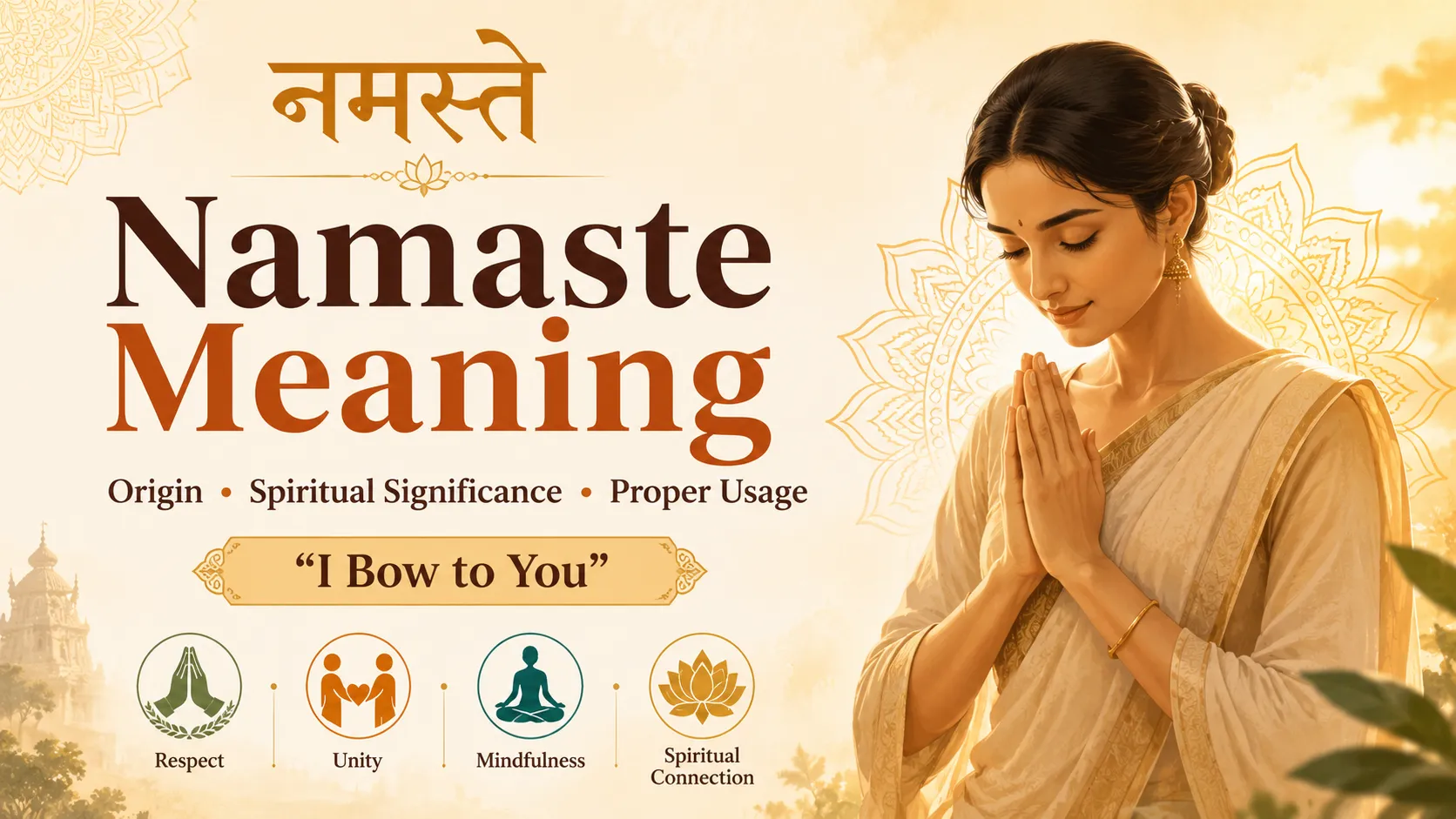
Namaste is an ancient Sanskrit greeting that literally means “I bow to you” or “salutations to you.” Over thousands of years, it has evolved into a symbol of respect, humility, spirituality, and human connection.
In this complete guide, you’ll discover the true meaning of Namaste, its Sanskrit origins, spiritual interpretations, pronunciation, cultural significance, yoga connection, and how to use it respectfully in today’s world.
What Does Namaste Mean
Featured Snippet Answer
Namaste is a traditional Sanskrit greeting that literally translates to “I bow to you” or “salutations to you.” It is used to express respect, honor, gratitude, and goodwill. The greeting is commonly accompanied by placing the palms together in front of the chest and slightly bowing the head.
Quick Meaning Summary
| Aspect | Meaning |
| Literal Meaning | I bow to you |
| Language | Sanskrit |
| Origin | Ancient India |
| Pronunciation | Nuh-muh-stay |
| Gesture | Folded hands (Anjali Mudra) |
| Spiritual Meaning | Respect for shared humanity |
| Usage | Greeting, farewell, respect |
Namaste Meaning in Sanskrit
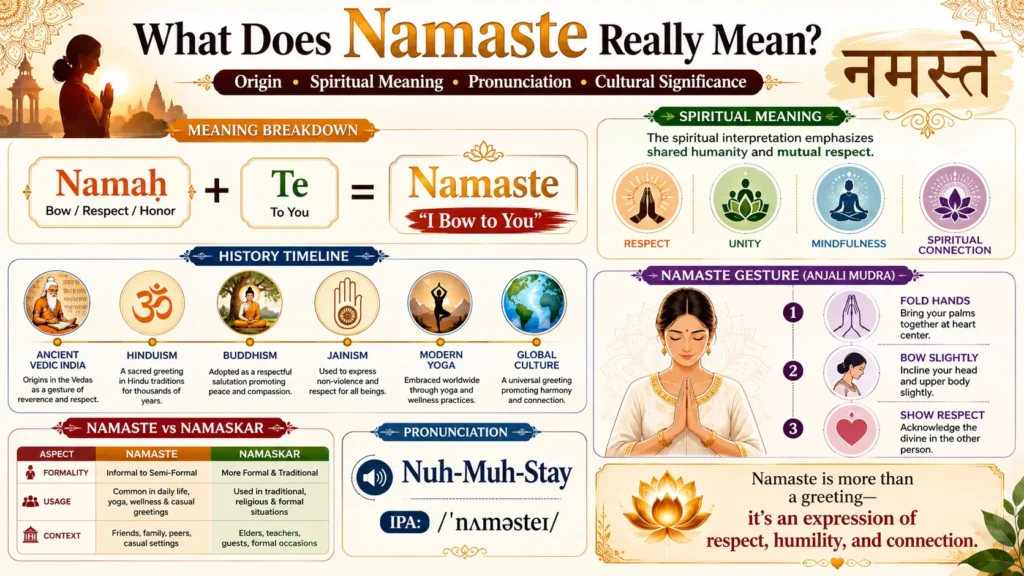
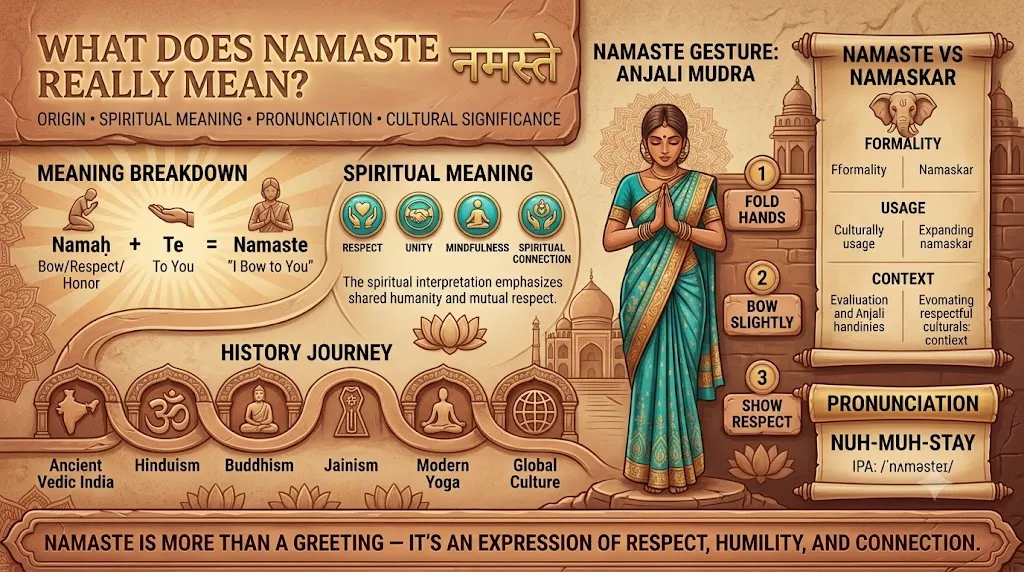
The word Namaste comes from two Sanskrit words:
| Sanskrit | Meaning |
| Namaḥ | Bow, honor, reverence |
| Te | To you |
Combined:
Namaste = “I bow to you”
This literal translation differs from the modern spiritual interpretation commonly heard in yoga communities.
The word expresses humility, respect, and acknowledgment of another person’s dignity.
What Is the Spiritual Meaning of Namaste?
The spiritual meaning of Namaste developed over centuries within Indian philosophical and yogic traditions.
Many spiritual teachers explain Namaste as:
“The divine light within me honors the divine light within you.”
While this is not the literal Sanskrit translation, it beautifully represents the philosophical principles of unity, consciousness, and interconnectedness.
The spiritual interpretation emphasizes:
- Respect for all living beings
- Recognition of shared humanity
- Humility and gratitude
- Inner peace
- Spiritual connection
- Universal consciousness
This interpretation became especially popular through modern yoga traditions and global spiritual movements.
Origin and History of Namaste
The history of Namaste dates back thousands of years to ancient India.
Historical Timeline
| Period | Development |
| Vedic Period | Early Sanskrit greetings emerge |
| Ancient India | Namaste becomes a formal greeting |
| Hindu Traditions | Used in worship and social interaction |
| Buddhist Traditions | Adopted as a respectful salutation |
| Jain Traditions | Used in spiritual practice |
| Modern Era | Spread globally through yoga and spirituality |
| 2020 Pandemic | Adopted worldwide as a no-contact greeting |
Over centuries, Namaste evolved from a respectful social greeting into a globally recognized symbol of mindfulness and respect.
Why Do People Say Namaste?
People use Namaste for many reasons:
- Greeting someone respectfully
- Saying goodbye
- Showing gratitude
- Beginning prayer
- Ending meditation
- Completing yoga practice
- Greeting elders
- Showing humility
- Expressing spiritual connection
Unlike casual greetings, Namaste carries an emotional and cultural depth that emphasizes respect and mutual recognition.
How Is Namaste Used in India?
In India, Namaste remains a common and respected greeting.
Common Situations
- Greeting parents
- Greeting elders
- Meeting teachers
- Welcoming guests
- Religious ceremonies
- Formal occasions
- Festivals
- Professional settings
However, usage varies by region, age group, and language.
Many Indians also use:
- Namaskar
- Pranam
- Ram Ram
- Sat Sri Akal
- Adaab
- Hello
depending on cultural and regional traditions.
Why Do Yoga Teachers Say Namaste?
Many yoga instructors say Namaste at the end of class to express:
- Gratitude
- Respect
- Mindfulness
- Shared practice
- Teacher-student connection
However, modern discussions have raised questions about cultural context and respectful use.
The key principle is understanding the cultural roots of the term and using it with genuine respect rather than treating it as a trend or stereotype.
Is Namaste Religious?
Namaste has religious origins but is not exclusively religious today.
| Religion | Usage |
| Hinduism | Yes |
| Buddhism | Yes |
| Jainism | Yes |
| Secular Society | Yes |
| Modern Yoga | Yes |
Today, Namaste functions as both a cultural greeting and a spiritual expression.
How to Perform the Namaste Gesture
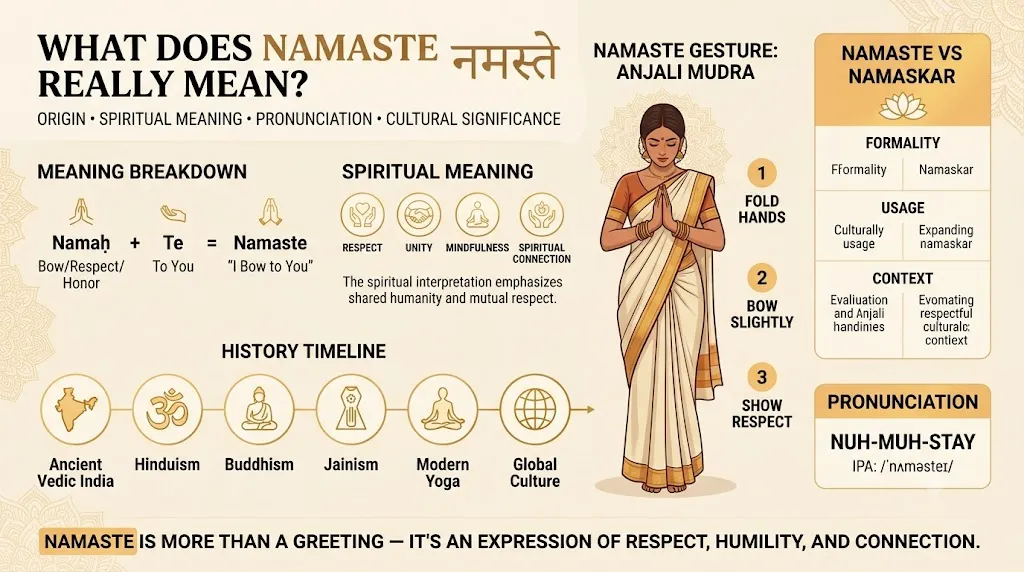
The traditional gesture accompanying Namaste is called Anjali Mudra.
Step-by-Step
- Stand or sit comfortably.
- Bring your palms together.
- Place your hands near your heart center.
- Keep fingers pointing upward.
- Slightly bow your head.
- Smile gently.
- Say “Namaste.”
This gesture symbolizes respect, gratitude, and unity.
Common Misconceptions About Namaste
| Myth | Reality |
| Namaste only means hello | It can mean greeting, respect, or farewell |
| Only Hindus use Namaste | Multiple traditions use it |
| Only Indians can say Namaste | Anyone may use it respectfully |
| It is always religious | It can also be secular |
| It literally means “the divine in me…” | That is a later spiritual interpretation |
Interesting Facts About Namaste
- Namaste is over 2,000 years old.
- It originated in ancient Sanskrit.
- It is used in several religions.
- The gesture is called Anjali Mudra.
- It became globally popular through yoga.
- It was widely adopted during COVID-19.
- It symbolizes humility and respect.
- It appears in classical Indian literature.
- It can be both formal and informal.
- It is recognized worldwide.
Modern Uses of Namaste
Today, Namaste appears in:
- Yoga studios
- Meditation retreats
- Social media
- Travel culture
- Wellness communities
- International diplomacy
- Corporate mindfulness programs
- Online spirituality communities
People Also Ask
Namaste literally means “I bow to you” or “salutations to you.” It derives from the Sanskrit words namah (bow) and te (to you).
Namaste can function as both a greeting and a farewell, depending on context.
It has religious roots but is commonly used in secular settings as well.
They use it to express gratitude, respect, mindfulness, and shared connection.
Yes. Anyone can say Namaste respectfully and with cultural awareness.
Namaskar is generally considered more formal, while Namaste is often used in everyday interactions.
Yes. Millions of people across India continue to use Namaste daily.
Conclusion
Namaste is much more than a simple greeting. Its literal meaning—“I bow to you“—reflects thousands of years of cultural, linguistic, and spiritual tradition. Whether used in India, yoga studios, meditation practices, or everyday life, Namaste represents respect, humility, gratitude, and human connection.
Understanding its history and cultural significance allows us to use this powerful expression thoughtfully and respectfully.