- AYE Meaning in Text: 7 Hidden Uses You Need to Know (2026)
- Ever gotten a text that just says “aye” and paused, wondering what it actually means? You’re not alone — AYE Meaning IN Text is one of the most searched slang confusions out there, and the answer isn’t as simple as a plain “yes.” Depending on who sent it, how it’s punctuated, and where you saw it, “aye” can mean agreement, a casual greeting, pure hype, or even something a little flirty. In this guide, you’ll uncover exactly what it means in every context — texting, social media, gaming, even its surprising Scottish and naval roots — so you never have to guess how to reply again.
1. What Does AYE Mean
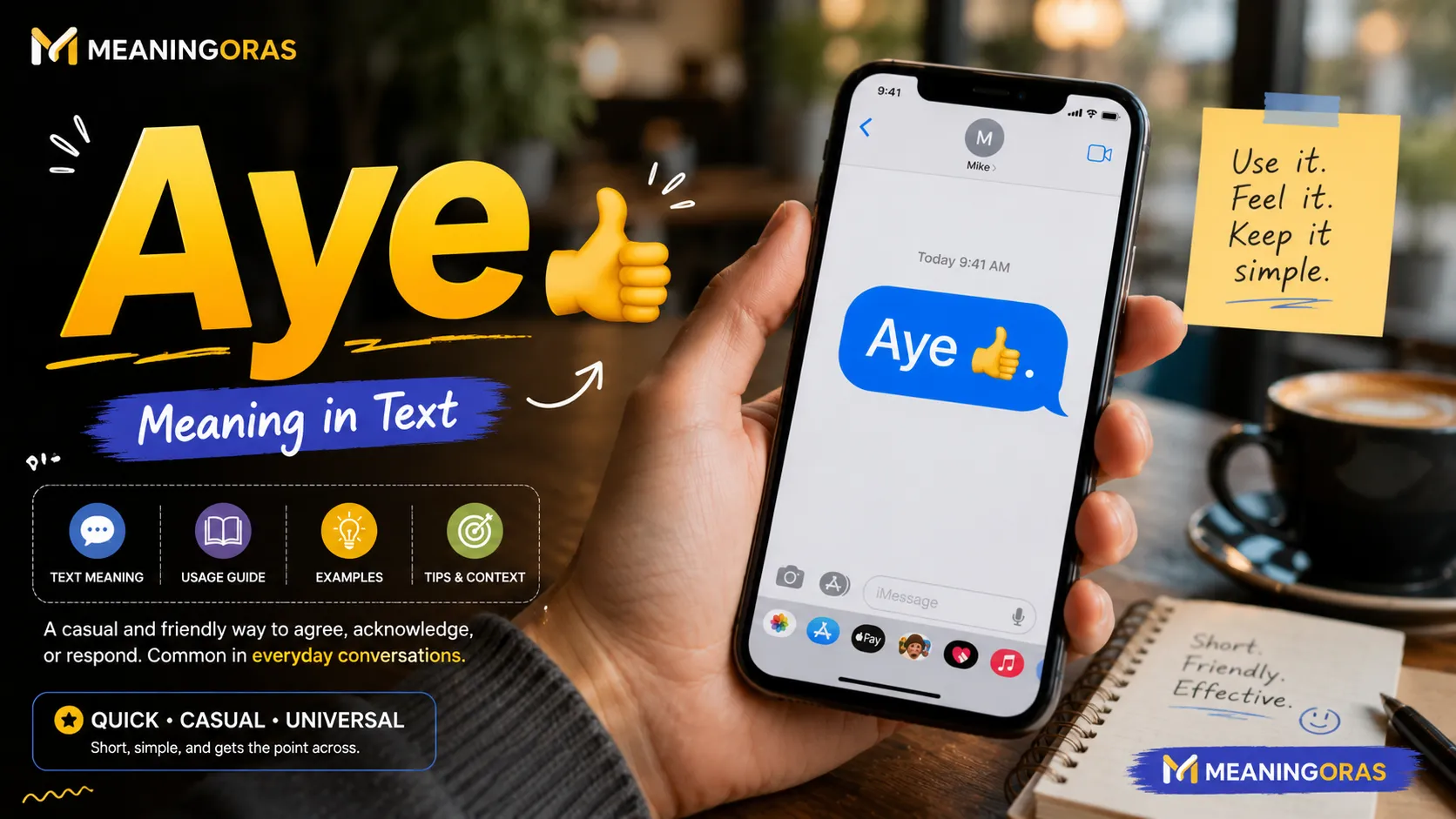
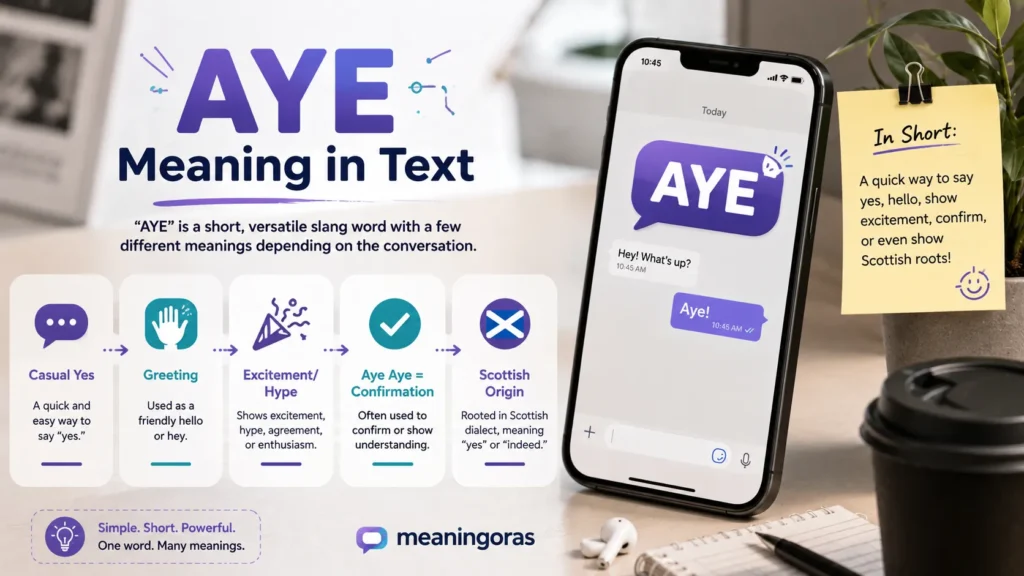
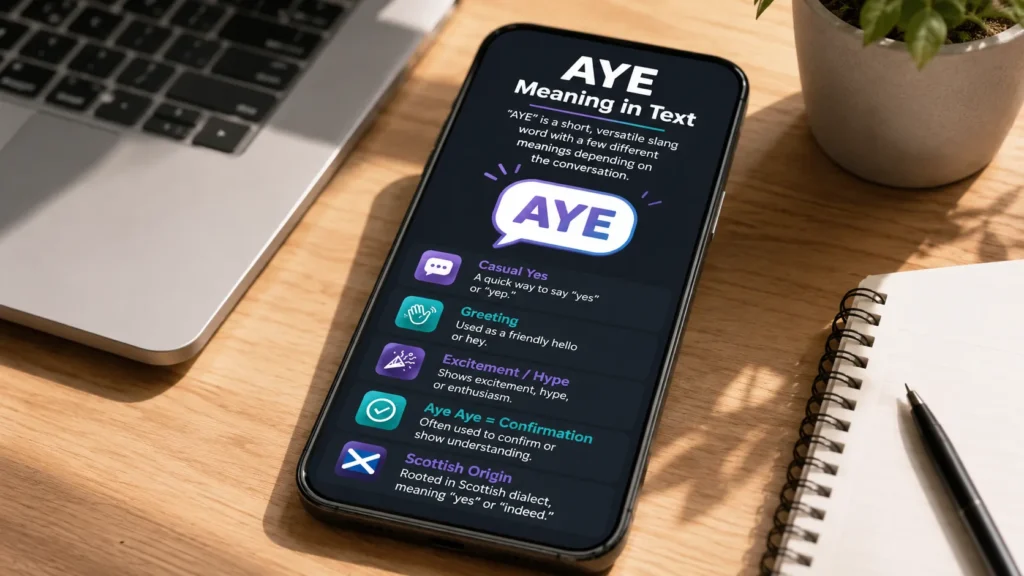
AYE is a casual affirmative used to mean yes, okay, or I agree. It’s short, quick to type, and carries more personality than a plain “yes.” In texting, its exact meaning shifts slightly based on punctuation, context, and who’s sending it — but agreement is always the core idea.
2. Quick Meaning Summary (Table)
| Form | Meaning | Typical Use |
| aye | Casual yes / agreement | “Coming tonight?” — “aye” |
| Aye! | Enthusiastic yes, excitement | Reacting to good news |
| aye aye | Strong confirmation, playful or formal | “Aye aye, captain!” |
| ayee / ayeee | Hype, celebration, flirtation | Reacting to a post or flex |
| Aye (as greeting) | “Hey” / “what’s up” | “Aye, you around?” |
| AYE (formal) | Vote in favor | Parliament, council votes |
3. Origin and History of AYE
- Traces back to Middle English, linked to the Old English “ā,” meaning “always” or “ever”
- Some etymologists connect it to Old Norse influence
- Formally used in British Parliament and Commonwealth legislatures as the recorded “yes” vote (“the ayes have it”)
- Deeply rooted in Scottish, Irish, and Northern English dialects as the everyday word for yes
- Standard in nautical language — “Aye, aye, captain!” meaning “understood and will comply”
- Adopted into texting culture through a mix of dialect, maritime tradition, and pop/rap culture
4. Why Is AYE Popular in Texting?
- Fast to type — three letters, no shift key needed
- Carries more personality than a plain “yes”
- Popularized by rappers, streamers, and influencers as an ad-lib and hype word
- Works as both a filler and a greeting, giving it more flexibility than most slang
- Easy to stretch out (“ayeee”) for extra emphasis or emotion
5. How AYE Is Used in Texting
- Direct yes/agreement to a question or plan
- Greeting or attention-getter, similar to “hey” or “yo”
- Expression of enthusiasm or hype
- Filler that shows engagement or acknowledgment
- Casual opener in flirty or low-pressure conversations
6. AYE as a Greeting
- “Aye, you up?”
- “Aye, what’s good?”
- “Aye, you around later?”
- Functions like “hey” or “yo” to open a conversation
- Common on Snapchat and casual group chats
7. AYE as Enthusiasm or Hype
- “AYEEE we won!!”
- “Ayyy let’s go!”
- “Aye that’s fire 🔥”
- Often stretched out with extra letters or emojis for emphasis
- Common in comment sections, group chats, and reactions to wins or good news
8. AYE from a Crush or in Flirting
- “Aye, what’s up? 😏”
- “Aye, been thinking about you”
- Low-pressure, easygoing way to open or continue a conversation
- Tone depends heavily on relationship context and what follows
- Not automatically flirty — context is everything
9. AYE Across Social Media and Messaging Apps
- WhatsApp / iMessage / SMS — casual yes or okay
- Instagram / TikTok comments — hype reaction, closer to “let’s go!”
- Snapchat — casual greeting to open a chat
- Discord / Gaming — quick confirmation (“aye, ready”) or hype during wins
- Dating apps — relaxed way to agree or open conversation
10. Real Examples of AYE in Texts
| Message | Meaning |
| “Aye, you up?” | Casual greeting / check-in |
| “Wanna grab food later?” — “aye” | Simple agreement |
| “AYEEE we won!!” | Excitement, celebration |
| “Aye aye, on it” | Playful compliance |
| “aye…” (flat, no punctuation) | Neutral or slightly dismissive |
| “Aye, I got you” | Reassurance + agreement |
11. AYE vs Aye Aye vs Ayee (Tone Differences)
- Aye — plain, calm agreement or acknowledgment
- Aye aye — doubled confirmation, playful or formal compliance
- Ayee / Ayeee — stretched for hype, excitement, or flirtation
- AYE (all caps) — emphasis, excitement, or formal vote context
- Punctuation and letter-stretching are the main tone signals in text
12. Common Misunderstandings About AYE
- “Aye” is not an acronym — it’s a genuine word, not short for anything
- Not the same as “hey” — “hey” is purely a greeting, “aye” is primarily an affirmative
- A flat, unpunctuated “aye” can read as low-effort, not necessarily rude
- No longer limited to Scottish, Irish, or nautical use — now common across English-speaking internet culture
13. Related Terms and Similar Meanings
- Yeah / Yep / Yup
- Bet
- Roger / Affirmative
- Say less
- Ayo
14. Other Meanings of AYE (Outside Texting)
- Aye-aye — nocturnal lemur species native to Madagascar
- AYE — abbreviation for the Ayer Rajah Expressway (Singapore)
- AYE — shorthand for Africa’s Young Entrepreneurs (nonprofit)
- “Aye” — song title by artists including Davido and Lil Uzi Vert
- Formal vote usage — recorded affirmative vote in legislative proceedings
15. How to Reply to AYE
- Casual agreement → reply with “aye,” “cool,” or “for sure”
- Hyped/excited “aye” → match energy with “AYEEE” or emojis
- Professional or neutral context → “noted” or “understood” works better
- Flirty context → mirror the casual, relaxed tone
- General rule: match the sender’s tone and punctuation level
People Also Ask
Yes — in mostTexting And Casual Contexts, “aye” is a relaxed way of saying yes or I agree.
Not inherently. A flat “aye” can read as low-effort, but it’s rarely meant as rude — tone and relationship matter more than the word itself.
A doubled-up confirmation, rooted in naval command acknowledgment, also used playfully in texting for enthusiastic agreement.
It’s strongly associated with Scottish, Irish, and Northern English dialects, where it’s simply the everyday word for yes — its wider internet slang use is a separate, more recent development.
Usually a casual, low-pressure way to say hi or check in. Whether it’s flirtatious depends on the relationship and conversation.
No. It’s a genuine word with roots going back to Middle English, not short for anything.
Conclusion
“Aye” has traveled a long way — from Middle English and Scottish dialect to naval command language and now internet slang — but its core meaning has stayed the same: an easy, expressive way to say yes. What changes is how much personality it carries in a text, from a flat confirmation to full-blown hype, depending on how it’s written and where it’s sent. Now that you know how to read it — and how to reply — you shouldn’t have to second-guess an “aye” text again.