
Can Dogs Eat Blackberries? — Safe Treat or Hidden Risk?
Yes, dogs can eat blackberries in small amounts. If you’re worried about safe portions, sugar spikes, or tummy upset, this guide shows exactly how to serve them, what risks to watch for, and when to skip the snack entirely. Before you share a berry, learn the simple vet-backed rules that can save you stress and protect your dog’s health today. Blackberries look simple on the surface.
They are small, juicy, naturally sweet, and often marketed as a human superfood. For dog owners, that creates a natural question: can dogs eat blackberries safely, or is this one of those “healthy for humans, risky for pets” foods? The answer is yes, dogs can eat blackberries, but the real story is more useful than a basic yes-or-no. Blackberries are best treated as an occasional snack, not a diet staple, and they should always be fed with portion control, hygiene, and a clear understanding of your dog’s individual health needs.
That matters because most dogs do not need fruit to meet their nutritional requirements. Complete dog food should cover the core diet, while treats should be limited. UK Pet Food notes that treats and snacks should not exceed 10% of total calorie intake, and FEDIAF’s nutritional guidelines serve as the reference framework for pet nutrition in Europe. In other words, blackberries can fit into a balanced feeding plan, but only as a small extra, not a daily food group.
This guide goes deeper than a typical blog post. You will see the health benefits, the genuine risks, the safest serving method, how many blackberries different dog sizes can have, and the situations where blackberries should be skipped entirely. You will also find the same FAQ questions preserved, but answered more clearly and more carefully.
Are Blackberries Safe for Dogs to Eat?
Yes, blackberries are generally safe for dogs when they are fresh, plain, and fed in moderation. Veterinarian-reviewed and pet-health sources consistently describe blackberries as a treat that can be offered in small amounts, especially because they are relatively low in calories and lower in sugar than many other fruits. The key is restraint. Even good foods can cause problems when the serving size becomes too large or when a dog already has a sensitive digestive system.
The safest way to think about blackberries is this: they are a useful treat, not a nutritional necessity. Your dog’s regular food should still provide the core diet, while berries remain a small add-on. That is exactly the kind of feeding pattern supported by UK Pet Food’s 10% treat rule and by FEDIAF’s broader nutrition framework for complete and complementary pet foods.
Why Blackberries Can Be a Smart Treat for Dogs
Blackberries have a few strengths that make them a better treat choice than many processed snacks. They are naturally low in calories, they contain fiber, and they offer plant compounds such as anthocyanins, which give the berries their deep color. AKC and PetMD both describe blackberries as a snack that can contribute vitamins and antioxidants, while PetMD emphasizes that they should still be treated as an occasional reward rather than a meaningful nutrient source.
From a practical standpoint, that means blackberries are most useful when you want a tiny, fresh, low-calorie reward for training, enrichment, or summer cooling treats. They can be especially appealing for dogs that do not do well with fatty biscuits or heavily processed snacks. Their texture also makes them easy to mash, portion, or tuck into enrichment toys. PetMD specifically notes that blackberries can be washed, chopped, mashed, or pureed, and then used in safe feeding ideas like topping food or freezing inside a toy.
Still, the benefits should be kept in perspective. A berry is not a supplement, and it is not a substitute for a complete canine diet. It is simply a tidy, lower-calorie treat that can be used thoughtfully. That distinction is important because many pet owners overestimate the health impact of “superfoods” and underestimate the value of routine, balanced feeding.
Nutritional Benefits of Blackberries for Dogs
1) Fiber for digestive support
Blackberries contain fiber, and that is one reason they are often described as a better treat option than many sugary snacks. Fiber can support normal bowel movement patterns and can help dogs feel satisfied after a small snack. AKC and PetMD both mention fiber as one of the useful components in blackberries.
The catch is that fiber has a “too much of a good thing” problem. A small amount may be fine, but too much can overwhelm a Dog’s gut and trigger loose stool, gas, or stomach discomfort. That is why blackberry portions need to stay tiny and why it is smart to start with just one piece the first time you offer them.
2) Antioxidants and plant compounds
Blackberries are rich in anthocyanins, the pigments that give them their dark purple-black color. AKC describes these compounds as antioxidants, and PetMD also points to the fruit’s vitamin and antioxidant profile as part of its appeal as an occasional treat. Antioxidants are one of the reasons blackberries are praised in human nutrition, and they are part of the reason pet owners often want to share them with dogs.
That said, the practical value for dogs is modest because serving sizes are small. A dog is not eating a bowl of berries; it is eating a few pieces. So the benefit is real, but it should be described honestly: blackberries may add a little nutritional variety, not a dramatic health transformation.
3) Vitamins that support overall health
PetMD notes that blackberries contain vitamins such as A, C, E, and K, while AKC also highlights a broader vitamin profile. These nutrients support normal body functions, including immune support, tissue maintenance, and general metabolic health.
Even so, the amount a dog gets from a few berries is small. That is why blackberries should never be presented as a nutritional “must-have.” The real strength of the berry is its convenience and moderation, not its ability to replace a balanced pet food. FEDIAF’s role in Europe is precisely to support the nutritional standards behind complete pet foods, which is the foundation that matters most.
4) A low-calorie treat option
If your dog is on a weight-watch plan, blackberries can be more attractive than richer treats. AKC and PetMD both note that blackberries are relatively low in calories and lower in sugar than many other fruits, which can make them a sensible occasional reward for dogs that need smaller extras.
That does not mean they are “free food.” Even low-calorie treats count toward the overall diet. UK Pet Food specifically advises that treats and snacks should stay under 10% of total calorie intake, so even a healthy fruit has to stay within that framework.
Risks of Feeding Blackberries to Dogs
Mild risks: the most common problems
The most likely issue after feeding too many blackberries is simple digestive upset. AKC and PetMD both report that excessive blackberries can cause stomach discomfort, gas, vomiting, diarrhea, or indigestion, usually because of the fiber, the sugar, or an individual’s food intolerance. This is the main reason moderation is non-negotiable.
Some dogs are more sensitive than others. Puppies, small breeds, older dogs, and dogs with delicate stomachs may react more quickly than a healthy adult dog with robust digestion. That is why even “safe” foods should be introduced slowly, one at a time, and in tiny amounts.
More serious signs: when to call the vet
Serious reactions are less common, but they should never be ignored. PetMD says to contact a veterinarian if a dog shows persistent vomiting, diarrhea, abdominal pain, poor appetite, or unusual stool color after eating Blackberries. AKC also says to seek veterinary help if a dog develops severe signs such as repeated vomiting, seizures, weakness, loss of coordination, collapse, or blood in vomit or stool. Those symptoms are not normal after a few berries and require prompt attention.
A useful rule is this: if the reaction is mild and brief, monitor closely; if the symptoms are repeated, intense, or unusual, contact a vet. That distinction helps owners respond calmly without underestimating a real problem.
The xylitol question
One reason blackberries sometimes appear in pet-safety discussions is that AKC notes they contain naturally occurring xylitol in trace amounts, though in the small servings recommended for dogs, that amount is considered safe. The real danger comes from foods that contain added xylitol, especially sugar-free products, which veterinary organizations warn can be dangerous or even fatal to dogs.
That means blackberry jam, jelly, sweetened sauces, and sugar-free processed berry products are a different story entirely. Once a recipe is altered with sugar substitutes or heavy sweetening, it is no longer the same food. The fruit may be fine, but the processed product may not be. PetMD also advises against blackberry jam or jelly because of the sugar load and the risk of xylitol in some sugar-free products.
Wild blackberries and outdoor foraging
Wild blackberries can be safe when the fruit is correctly identified and free of chemicals, but that does not make every outdoor berry patch safe by default. PetMD says wild blackberries and hybrids can be acceptable if you know exactly what they are and they are free from pesticides or other chemicals. AKC also notes that dogs can eat wild blackberries, while advising owners not to take unnecessary chances.
The real-world risk is not the cultivated blackberry itself. It is the environment around it: unknown berry species, sprayed plants, roadside contamination, or seasonal toxic plants growing nearby. PetMD specifically lists holly berries, pokeweed berries, juniper berries, and mistletoe berries as toxic to dogs, and the BVA warns that holly and mistletoe are among the dangerous seasonal hazards for pets.
How Many Blackberries Can Dogs Eat?
There is no universally published “official blackberry dose” for every dog, because safe serving size depends on weight, body condition, digestive sensitivity, and what else the dog eats that day. The safest framework is still the standard treat rule: keep snacks under 10% of total daily calories, and use blackberries only as a small part of that treat allowance. The chart below is a conservative home-feeding guide built around that principle.
Safe portion chart for blackberries
| Dog Size | Weight Range | Practical Safe Amount |
| Small | 2–5 kg | 1–2 blackberries |
| Medium | 6–20 kg | 2–4 blackberries |
| Large | 21–40 kg | 4–6 blackberries |
| Giant | 40+ kg | 6–8 blackberries |
For first-time feeding, start lower than the chart. One blackberry is enough for a trial in many dogs, especially if they are small, young, or prone to loose stool. If that goes well, you can use the chart as a weekly reference rather than a daily target.
Feeding rules that make the chart safer
Start with a tiny amount, watch your dog’s response for 24 hours, and only increase gradually if the stool stays normal and the dog shows no digestive upset. This slow-introduction approach aligns with the broader feeding advice found in RSPCA guidance, which emphasizes balancing human foods carefully and tailoring the diet to the Dog’s age, lifestyle, and health needs.
Also, remember that treats count. If your dog has already had biscuits, chews, table scraps, or training rewards that day, the blackberry allowance should be reduced accordingly. The 10% rule is about the whole treat budget, not just one fruit.
When Dogs Should Not Eat Blackberries
Blackberries are not the right choice for every dog. Any dog with a history of food sensitivity, chronic digestive upset, or a medically managed diet should only receive fruit treats after veterinary advice. RSPCA advises feeding dogs a well-balanced diet that suits their age, lifestyle, and health needs, and PetMD recommends asking a vet before offering blackberries on a regular basis.
You should also be cautious with dogs that have a habit of bolting food. Small berries may still be a choking concern for very tiny dogs or dogs that swallow without chewing. PetMD specifically notes that stems can be hard to digest and may create a choking hazard, so berries should be cleaned and prepared properly before feeding.
As a simple rule, blackberries are best avoided or limited in dogs that have a sensitive stomach, are on a therapeutic diet, or have recently shown food-related symptoms such as vomiting or diarrhea. In those cases, the safest “treat” is usually not fruit at all, but a vet-approved alternative.
Can Puppies Eat Blackberries?
Yes, puppies can eat blackberries in tiny amounts, but puppy feeding should be even more cautious than adult feeding. Puppies are still developing digestion, and their stomachs can react quickly to new foods. That means a small taste is acceptable for many healthy puppies, but overfeeding can cause loose stools or unnecessary tummy trouble.
For a puppy, “tiny” is the operative word. One berry, or even a small piece of one berry, is enough to test tolerance. If the puppy already has a sensitive digestive tract or is transitioning diets, it is wiser to wait and use a more established routine first. The general dietary principle still applies: the main nutrition should come from puppy food, not snacks.
Can Dogs Eat Blackberry Products?
Blackberry jam or jelly
No, blackberry jam and jelly should not be treated as dog-safe snacks. PetMD warns against them because they usually contain high sugar levels and may also contain xylitol, which is toxic to dogs. BVA also warns that xylitol is one of the dangerous sweeteners pet owners should keep out of reach.
Sweetened baked goods and desserts
Blackberry pies, cakes, muffins, syrups, flavored yogurts, and berry sauces are not the same as fresh blackberries. These products often contain sugar, butter, artificial sweeteners, or other ingredients that can upset a dog’s stomach or create much bigger safety problems than the fruit itself. When the recipe changes, the risk profile changes too.
Frozen products
Plain blackberries that have simply been frozen are a different case from commercial frozen desserts. PetMD includes frozen-style serving ideas, such as using mashed blackberries in enrichment toys, which can work well when the fruit is plain and unsweetened. AKC, however, cautions against frozen berry products that usually come with added sugar or xylitol. The safest approach is to freeze plain berries at home, not buy sweetened berry products for dogs.
How to Safely Feed Blackberries to Dogs
Start by washing the berries thoroughly. Even backyard fruit can carry dirt, residue, or pesticide traces, and PetMD recommends washing blackberries before serving them. The next step is to remove stems, because PetMD identifies stems as hard to digest and a possible choking hazard. If your dog is very small, elderly, or a gulper, you can also cut, mash, or puree the berries into smaller pieces.
Once the berries are prepared, there are several simple ways to serve them. You can hand-feed them one at a time as tiny rewards, mix a little mashed blackberry into food, or use them in a toy or lick mat in very small amounts. PetMD specifically suggests adding mashed berries to food, blending them with xylitol-free peanut butter in a toy, or combining them with a small amount of plain Greek yogurt for dogs that tolerate dairy.
Keep the serving controlled. Dogs do not self-regulate like people often hope they will, and many will happily eat far more than they should. That is why owner control matters more than the fruit itself. Berries should be used as a measured reward, not an open-access bowl snack.
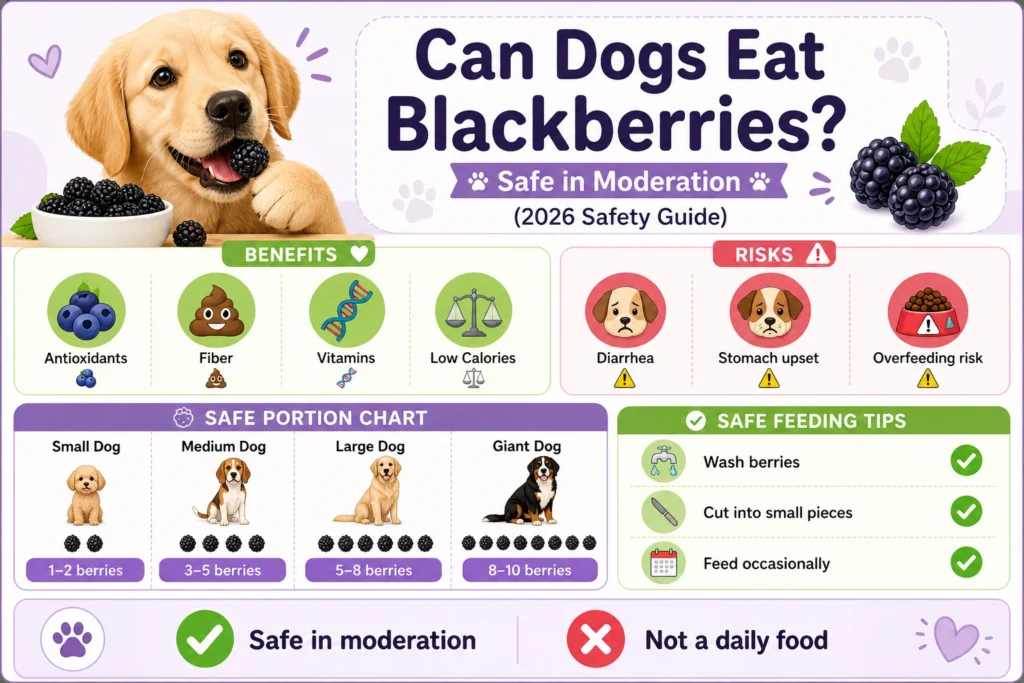
Yes—but only in the right amount. See the exact safe portions, benefits, and hidden risks every dog owner should know.
Behavioral Reasons Dogs Like Blackberries
Dogs often respond to blackberries because they are sweet, soft, aromatic, and easy to chew. From a behavior perspective, that makes them rewarding. Small fruit pieces can work well in training because they are quick to eat, low in calories, and easy to carry in a pocket or treat pouch.
The risk is that a highly palatable treat can encourage begging or scavenging if it is left out in big quantities. That is why blackberries work best when the owner remains in control of the frequency and volume. A small reward at the right time is useful; a bowl of accessible fruit is not.
Common Mistakes Dog Owners Make
One common mistake is assuming that “natural” automatically means “unlimited.” A fruit can still upset a dog’s stomach when the portion becomes too large. Another mistake is feeding blackberry jams, syrups, or bakery items and assuming they are equivalent to whole fruit. They are not. Processed foods can bring sugar, additives, and sweeteners into the picture, and that is where the danger escalates.
A third mistake is skipping the wash step. Dirt, sprays, and residue are easy to overlook, especially with garden-picked fruit. A fourth mistake is ignoring a mild reaction and continuing to feed the berry anyway. If your dog’s stool changes. Appetite drops, or vomiting starts after a new food.Stop the treat and monitor closely or consult your vet.
Finally, many owners forget that the best diet is still the simple one: complete pet food first, treats second. That principle is repeated throughout FEDIAF-linked guidance and UK Pet Food’s calorie advice. It is the anchor that keeps healthy treats from becoming diet problems.
Pros and Cons of Blackberries for Dogs
Blackberries can be a neat little treat because they are low in calories.Lower in sugar than many fruits. And easy to portion. They also bring fiber and antioxidants to the table. Which is why they are commonly described. As a beneficial snack in veterinary and pet-health writing.
On the other hand, they are not risk-free. Too many can trigger gas, diarrhea, vomiting, or a food intolerance response. Processed blackberry products can be much riskier than the fruit itself, and wild-berry or mixed-berry harvests can create identification problems. So the pros are real, but the cons are equally real when. The owner gets careless with portion size or product type.
Real-Life Feeding Scenarios
For a household that uses treats during training. A few blackberries can be tidy. low-calorie reward, especially if your dog enjoys soft foods. For a dog living in a warm climate, a plain frozen berry can also serve as a cooling treat if it is still portioned modestly and fed without sugar or xylitol. For dogs that explore outdoors, the greater concern is not the berry bowl in your kitchen; it is the unknown fruit they may snack on outside. PetMD’s guidance on correct identification and chemical-free fruit is especially relevant in that setting.
In homes with children or multiple pets, blackberries are best stored like any other treat ingredient: out of reach until you are ready to serve them. That simple habit reduces accidental overfeeding and also prevents pets from getting into sweetened berry dishes or dessert leftovers. The BVA’s warnings about dangerous human foods and sweeteners are a useful reminder that pet safety often depends more on storage than on the food itself.
Expert-Style Feeding Tips
Introduce blackberries one food at a time so you can actually tell whether your dog tolerates them. Keep notes on stool quality if your dog has a delicate gut. Use the berries as an occasional reward rather than a daily routine. Rotate treats rather than relying on one food every time. And when in doubt, ask your vet before making fruit a regular part of your dog’s snack pattern. Those habits are consistent with the broader principles in RSPCA and PetMD guidance about balanced feeding and slow, careful introduction.
A useful visual rule is this: if the treat looks like a snack, it still needs to behave like a snack in the diet. That means small quantity, infrequent use, and no processed extras. Blackberries, those three conditions are met, blackberries can sit comfortably inside a safe treat strategy.
FAQs
No. Blackberries should not become a daily food. Blackberries and snacks should stay within the 10% calorie framework. And blackberries are best used occasionally rather than as a routine part of meals.
Yes, provided they are plain and unsweetened. The safest approach is to use home-frozen berries or berry pieces that contain no added sugar or xylitol. Avoid sweetened frozen berry products.
blackberries The most common outcome is digestive upset, such as gas, vomiting, diarrhea, or abdominal discomfort. If symptoms are persistent, severe, or unusual, contact a veterinarian promptly.
Yes, but only if you are certain of the identification and the fruit is free from pesticides or other chemicals. If there is any doubt, do not feed it. PetMD also warns that wild berries in general can be risky if you cannot identify them with confidence.
They can be a good choice because. They are relatively low in calories and sugar. Compared with many fruits, but “better”. Depends on the dog and the portion. The best fruit is the one your dog tolerates well, fits the treat budget, and does not upset digestion.
Final Verdict: Should You Feed Blackberries to Dogs?
Blackberries can be a safe, nutritious, and enjoyable treat for dogs—but only when used with care and moderation.
They offer fiber, antioxidants, and essential vitamins, making them a smarter alternative to many processed treats. However, they are not a necessary part of your dog’s diet. And overfeeding can quickly lead to digestive issues like diarrhea or stomach discomfort.
The key takeaway is simple: Avoid processed blackberry products. Be cautious with wild berries. And always monitor your dog after introducing any new food. Every dog is different, and what works well for one may not suit another.