
Introduction
Many dog owners in Europe and around the world ask the same practical question: can dogs eat yogurt safely? The answer is yes, but only when the yogurt is plain, unsweetened, and offered in small amounts. Veterinary sources consistently warn that yogurt is not automatically safe just because it is a dairy product people eat every day. The biggest concerns are lactose intolerance, added sugar, artificial sweeteners, and especially xylitol, which is dangerous for dogs.
Yogurt can be a useful treat for some dogs because it may provide protein, calcium, and live cultures, and it may be easier to digest than other dairy products when it is plain and fermented. Still, yogurt should be treated as an occasional topper or enrichment snack, not as a dietary staple or a medicine substitute. Major veterinary guidance also emphasizes that treats should stay under 10% of a dog’s daily calories and should never replace a complete balanced diet.
In this guide, you will learn which yogurt is best for dogs, which types to avoid, how to feed it safely, and how to tailor your choice for puppies, adults, and senior dogs. The language is simple, but the recommendations are grounded in current veterinary and pet-nutrition guidance.
What Is the Best Yogurt for Dogs?
The best yogurt for dogs is the one that is easiest to digest, lowest in risk, and free from harmful additives. In practice, that means three things matter most: low lactose, no sugar, and no sweeteners. Among common options, plain Greek yogurt usually comes out on top because it is strained, tends to have less lactose, and often contains more protein than regular yogurt.
1) Plain Greek Yogurt — Best Overall Choice
Plain, unsweetened Greek yogurt is usually the strongest choice for most healthy dogs. AKC and PetMD both identify plain Greek yogurt as the best option because it is typically lower in lactose than regular yogurt, and it avoids unnecessary sugar when it is unsweetened. That matters because many dogs do not digest lactose well after puppyhood, and high-lactose foods can trigger gas, diarrhea, or vomiting.
Greek yogurt is also a convenient treat for owners who want something simple, portable, and easy to portion. Because it is thicker than regular yogurt, it can be used in a lick mat, frozen into a toy, or spooned over food in a very small amount. It is especially useful as an occasional reward for active dogs, dogs that need a high-value training treat, or dogs that tolerate dairy reasonably well.
2) Plain Regular Yogurt — Good, But Not the Best
Plain regular yogurt can still be safe for dogs when it is unsweetened and given in moderation. The problem is that regular yogurt generally contains more lactose than Greek yogurt, so it is more likely to upset sensitive stomachs. If your dog handles dairy well, regular yogurt can work as a budget-friendly option, but it is usually not the first pick for dogs with digestion issues.
This is why regular yogurt is best treated as an occasional treat rather than a daily add-on. Think of it as acceptable, not optimal. If your dog has ever shown loose stool, gas, or a gurgling stomach after dairy, Greek yogurt or another lower-lactose option is a safer starting point.
3) Lactose-Free Yogurt — Useful for Sensitive Dogs
Lactose-free yogurt can be a sensible option for dogs with sensitive digestion, especially if they react badly to standard dairy. Since lactose is the sugar that causes many of the digestive issues associated with milk products, a lower-lactose or lactose-free alternative may be easier on the gut. That said, the label still matters: it must still be free of added sugar and xylitol.
This option can be appealing for senior dogs or dogs that have shown a pattern of mild dairy sensitivity. It is not magical, and it is not guaranteed to solve stomach problems, but it may reduce the chance of gas or diarrhea in dogs that are more delicate. Always introduce it slowly, even if the package looks friendly and “pet-safe.”
4) Flavored, Sweetened, or Dessert-Style Yogurt — Avoid Completely
Flavored yogurt, fruit-on-the-bottom yogurt, dessert yogurt, and sweetened yogurt should be avoided for dogs. Veterinary sources warn that added sugar is unhealthy, and certain artificial sweeteners, especially xylitol, can be fatal. Sugary yogurt can also contribute to weight gain, vomiting, diarrhea, and pancreatitis risk when consumed in excess or when it is high in fat.
This is one of the most important safety points in the whole article: a yogurt that looks harmless to humans may be dangerous to dogs. Always read the ingredient list carefully. If the label includes xylitol or another artificial sweetener, do not share it with your dog under any circumstance.
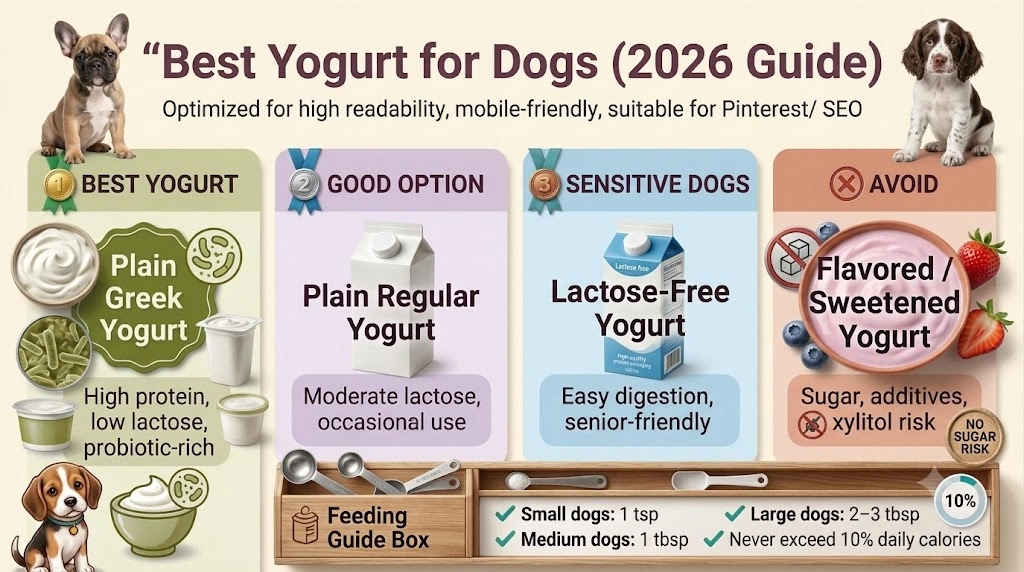
Yogurt Types Comparison
Plain Greek yogurt is the strongest all-around choice because it is typically lower in lactose and higher in protein. Plain regular yogurt is acceptable in moderation but is less ideal for sensitive dogs because of its higher lactose load. Lactose-free yogurt can be helpful for dogs that struggle with dairy, as long as the product still avoids sugar and xylitol. Flavored and sweetened yogurt should be considered unsafe for routine feeding and is best left off the menu entirely
Why Yogurt Can Be Helpful for Dogs
Yogurt is not a miracle food, but the right kind may offer a few practical benefits. In moderation, plain yogurt can provide protein and calcium, and it may support digestion because it contains live cultures. Some veterinary sources also note possible support for muscle development, gut health, nutrient absorption, and immune function.
1) It May Support Gut Health
One of the most common reasons owners reach for yogurt is digestion support. Yogurt contains live cultures, and those cultures are often called probiotics. While yogurt is not the same thing as a targeted veterinary probiotic supplement, it can still be a useful food-based treat for dogs that tolerate dairy well. PetMD notes potential gut-health support, while AKC explains that live cultures may help the digestive system, though better probiotic sources may exist.
2) It Adds Protein and Calcium
Plain yogurt can contribute protein, and it also contains calcium. That combination is one reason it is often seen as more “useful” than many sugary snacks. Protein supports body maintenance, while calcium supports bones and teeth. Still, yogurt is a treat, not a complete nutritional solution, and it should never be treated as a meaningful replacement for a balanced dog diet.
3) It Can Be a Handy Training Treat
Because yogurt is soft, palatable, and easy to portion, it can work well as a reward in small amounts. You can spread a tiny layer on a lick mat, use it inside a puzzle toy, or freeze it into a small cube for enrichment. AKC specifically notes that plain yogurt can be frozen into a dog-friendly treat or stuffed into a toy for longer-lasting engagement.
4) It May Help Some Dogs Stay Interested in Food
For picky eaters or dogs recovering from a minor appetite dip, a tiny yogurt topper can make regular food more appealing. This is not a treatment for illness, and it is not a replacement for veterinary care, but it can occasionally help owners encourage a dog to eat when the dog is otherwise healthy and still interested in food. As always, any dog with ongoing appetite loss, vomiting, or diarrhea should be checked by a veterinarian.
Risks of Feeding Yogurt to Dogs
Even healthy treats carry risk if the wrong product or the wrong amount is used. The main yogurt dangers for dogs are lactose intolerance, high sugar, excess fat, and xylitol poisoning. That is why ingredient reading is not optional. It is the safety step that separates a harmless snack from a dangerous one.
1) Lactose Intolerance
Many dogs lose much of their lactase activity after puppyhood, which means dairy can be harder to digest as they age. When a dog cannot break down lactose well, the bacteria in the gut ferment it, leading to gas, cramps, diarrhea, or vomiting. Not every dog is lactose intolerant, but many adult dogs are more sensitive than owners expect.
If your dog has ever had loose stool after cheese, milk, ice cream, or yogurt, treat that reaction as meaningful. Even a small amount can be enough to reveal a sensitivity. It is better to assume caution than to push through symptoms.
2) Too Much Fat Can Upset the Stomach
Dairy Products can be fatty, and extra fat is not harmless for dogs. Veterinary guidance warns that too much fat can contribute to stomach upset and, in serious cases, pancreatitis. This is one reason why “more yogurt” is not better. The goal is a tiny treat, not a serving bowl.
3) Xylitol Is an Emergency-Level Danger
Xylitol is the biggest red-flag ingredient in yogurt for dogs. ASPCA and PetMD both warn that xylitol can cause a sudden insulin release, severe low blood sugar, weakness, vomiting, seizures, liver injury, and potentially death. Symptoms can appear quickly, and in some cases liver problems may show later. If a dog eats any yogurt containing xylitol, that is not a wait-and-see situation. It is an emergency.
4) Sugar and Flavors Can Create Long-Term Problems
Sweetened yogurt may not be instantly toxic, but it is still a poor choice for dogs. Added sugar increases unnecessary calories and can contribute to weight gain. Over time, frequent sugary treats work against a healthy body condition and can make it harder to keep a dog lean. That is why plain yogurt is acceptable, and flavored yogurt is not.
5) Some Dogs Simply Do Not Tolerate Dairy
There is also a plain old sensitivity factor. Some dogs may react to dairy even when the yogurt is unsweetened and xylitol-free. Signs can include itchy skin, bloating, gas, vomiting, or diarrhea. If that happens, yogurt should be removed from the diet and replaced with a better-tolerated treat.
How Much Yogurt Can Dogs Eat?
The safest answer is: very little. Treats, including yogurt, should stay below 10% of your dog’s daily calories. That rule appears in WSAVA guidance and is repeated in PetMD’s yogurtrticle. The exact amount depends on your dog’s size, health, and sensitivity, but the principle stays the same: tiny portion, careful observation, no overfeeding.
Practical Feeding Chart
Use this as a conservative starting guide, not a fixed medical prescription.
Small dogs, around 1–10 kg, can start with about 1 teaspoon. Medium dogs, around 10–25 kg, can start with about 1 tablespoon. Large dogs, above 25 kg, can start with about 2 to 3 tablespoons. If there is any soft stool, gas, or vomiting, stop and scale back or skip yogurt altogether.
Golden Rule
Yogurt should stay within the treat allowance, which means it should never crowd out balanced meals. WSAVA explicitly says treats should make up less than 10% of daily calorie intake and should never replace a meal. That principle matters even more for small dogs, overweight dogs, and dogs on special diets.
A Smarter Way to Start
The best feeding method is to begin with a very small amount and observe your dog for 24 hours. PetMD recommends starting with a small portion before increasing, because the first serving helps you see whether the dog tolerates the food well. That approach is especially useful for dogs with sensitive stomachs or owners who are unsure about dairy tolerance
Best Ways to Feed Yogurt to Dogs
The safest ways to serve yogurt are simple and controlled. You can mix a small amount into kibble, spoon a thin layer onto a lick mat, freeze it into cubes, or stuff a toy with a tiny portion. PetMD and AKC both mention frozen yogurt-style enrichment and toy stuffing as acceptable methods when the yogurt is plain and dog-safe.
One smart use is a frozen enrichment treat. For example, you can spoon plain yogurt into a silicone mold or ice cube tray and freeze it. This creates a slow-lick snack that can keep a dog busy without turning the treat into a calorie bomb. AKC also notes that homemade frozen yogurt treats are preferable to commercial frozen yogurt, which is often loaded with sugar.
You can also use yogurt to add interest to a meal without changing the meal itself. A teaspoon on top of regular food may be enough for flavor, which is especially useful for dogs that need novelty but not extra calories. Keep in mind that dogs on prescription diets should not receive extra foods unless your vet says it is safe.
Yogurt for Puppies vs Adults vs Seniors
Different life stages call for different caution levels. Puppies, adults, and senior dogs may all eat yogurt differently depending on digestion, dental health, and medical history. That is why one universal rule does not work for every dog.
Puppies
Puppies can eat dog-safe yogurt in very small amounts, but only when it is plain, unsweetened, and xylitol-free. PetMD explicitly says puppies can eat dog-safe yogurt in moderation. Because puppies have immature digestive systems and are still learning what their bodies tolerate, the first serving should be tiny and closely observed.
Adult Dogs
Healthy adult dogs are often the easiest group to feed, provided they tolerate dairy. For most adults, yogurt works best as a training bonus, a lick-mat topper, or an occasional enrichment treat. Even then, moderation matters because treats still count toward daily calories and can cause stomach upset if overdone.
Senior Dogs
Senior dogs may benefit from lower-lactose or lactose-free options if they have become more sensitive with age. Age does not automatically ban yogurt, but older dogs may also have more health conditions or prescription diets, so a treat that was fine at age three may no longer be ideal at age ten. For older dogs, tiny portions and ingredient caution are especially important.
A European-Style Feeding Perspective
For a European dog owner, the most practical yogurt rule is the same as anywhere else: plain, unsweetened, and minimal. What changes in real life is how you use it. In colder months, a small yogurt topper can add variety without replacing a full meal. In warmer weather, frozen yogurt in a toy or mold can double as enrichment and a cooling snack. AKC specifically supports frozen plain yogurt as a safer homemade treat option than commercial frozen yogurt.
This matters in urban homes, too. A small frozen yogurt cube can be useful for indoor dogs that need mental stimulation. It is easy to portion, easy to control, and less messy than many store-bought treats. Just remember that enrichment should still obey the same calorie rules.
Common Mistakes Dog Owners Make
The most common mistake is choosing yogurt by human taste instead of dog safety. A yogurt that seems healthy in a supermarket aisle may still contain sugar, flavoring, or xylitol. That is the first trap. The second trap is assuming “a little extra won’t matter,” when extra dairy can trigger stomach upset or push calories too high.
Another common mistake is using yogurt as a meal replacement or a “health fix.” Yogurt is not a substitute for a balanced diet, and PetMD specifically warns that it should not be used to provide enough probiotic bacteria or calcium to balance the diet. It is a treat, not a nutritional cure-all.
A third mistake is ignoring early symptoms. If a dog gets gas, soft stool, bloating, vomiting, or itching after yogurt, that is information. Those signs mean the treat may not be a good fit, even if other dogs tolerate it well.
Vet-Informed Feeding Tips
Start with the smallest possible amount. This gives you a low-risk way to test tolerance while keeping your dog interested. If the dog handles that portion well, you can occasionally offer a slightly larger amount, but the overall treat limit still applies.
Choose Greek Yogurt first if you are unsure. Because it is generally lower in lactose and higher in protein than regular yogurt, it is often the better starter option. Keep the ingredient list short: milk, live cultures, and nothing else is the ideal profile.
Watch the stool. That may sound unglamorous, but it is one of the easiest ways to see whether a new treat agrees with a dog. If the dog develops diarrhea, vomiting, or noticeable gas after yogurt, stop offering it and contact your veterinarian if the signs continue.
Do not use yogurt to hide medications unless your vet says it is appropriate. Calcium-rich dairy can interfere with some medications, and PetMD notes that dairy products can negatively affect certain antibiotics. When medication is involved, safety depends on the specific drug, not just the food.
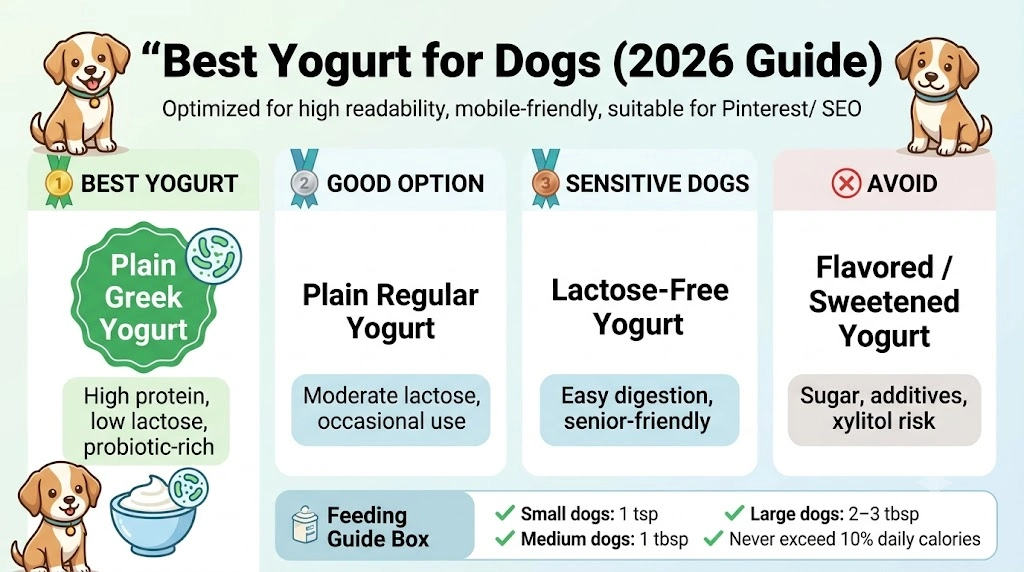
Pros and Cons Summary
Pros
Plain yogurt can be a convenient treat, a source of protein and calcium, and a tasty enrichment food for dogs that tolerate dairy. It may also support digestive comfort when used carefully and in small amounts.
Cons
The downsides are real: many dogs are sensitive to lactose, sweetened yogurt can be unhealthy, high-fat versions can upset the stomach, and xylitol can be life-threatening. That risk profile is exactly why yogurt should remain an occasional treat rather than a routine food.
Frequently Asked Questions
No, yogurt should not be a daily food for most dogs. Treats should stay below 10% of daily calories, and yogurt should be given only in small, occasional amounts. Daily feeding increases the chance of digestive upset and makes it easier to overdo sugar, fat, or calories.
Yes, plain unsweetened Greek yogurt is generally the best yogurt for dogs. It is usually lower in lactose than regular yogurt and easier to digest for many dogs. Just make sure it contains no sweeteners, no sugar, and absolutely no xylitol.
Yes, puppies can eat dog-safe yogurt, but only in moderation. The yogurt must be plain, unsweetened, and xylitol-free, and the first portion should be very small so you can see how the puppy responds.
Plain Greek yogurt or lactose-free yogurt may be easier on some dogs, but yogurt is not a guaranteed diarrhea fix. If a dog already has diarrhea, dairy can sometimes make it worse, especially if the dog is lactose sensitive. Persistent diarrhea should be handled by a veterinarian rather than by trial-and-error feeding.
Only if the fruit and the yogurt are both dog-safe and the yogurt is still plain and unsweetened. Many fruit yogurts contain added sugar, and some include problematic sweeteners or unsafe ingredients. A safer route is to use a tiny amount of plain yogurt with a dog-safe fruit topper that you have already checked carefully.
Conclusion
Yes, Yogurt can be good for dogs when it is chosen carefully and fed in moderation. The best yogurt for dogs is usually plain unsweetened Greek yogurt, with lactose-free yogurt as a useful backup for sensitive dogs. Regular plain yogurt can also work in small amounts, but flavored, sweetened, and xylitol-containing yogurts should be avoided completely.
The simplest rule is this: plain is good, sweetened is bad, and moderation is everything. If your dog tolerates yogurt well, it can be a handy enrichment treat. If your dog shows gas, loose stool, vomiting, or itching, yogurt is not the right snack for that dog. When in doubt, your veterinarian should have the final say, especially if your dog is young, older, overweight, diabetic, or on a prescription diet.