The Truth About Dogs and Fish That Most Pet Owners Discover Too Late
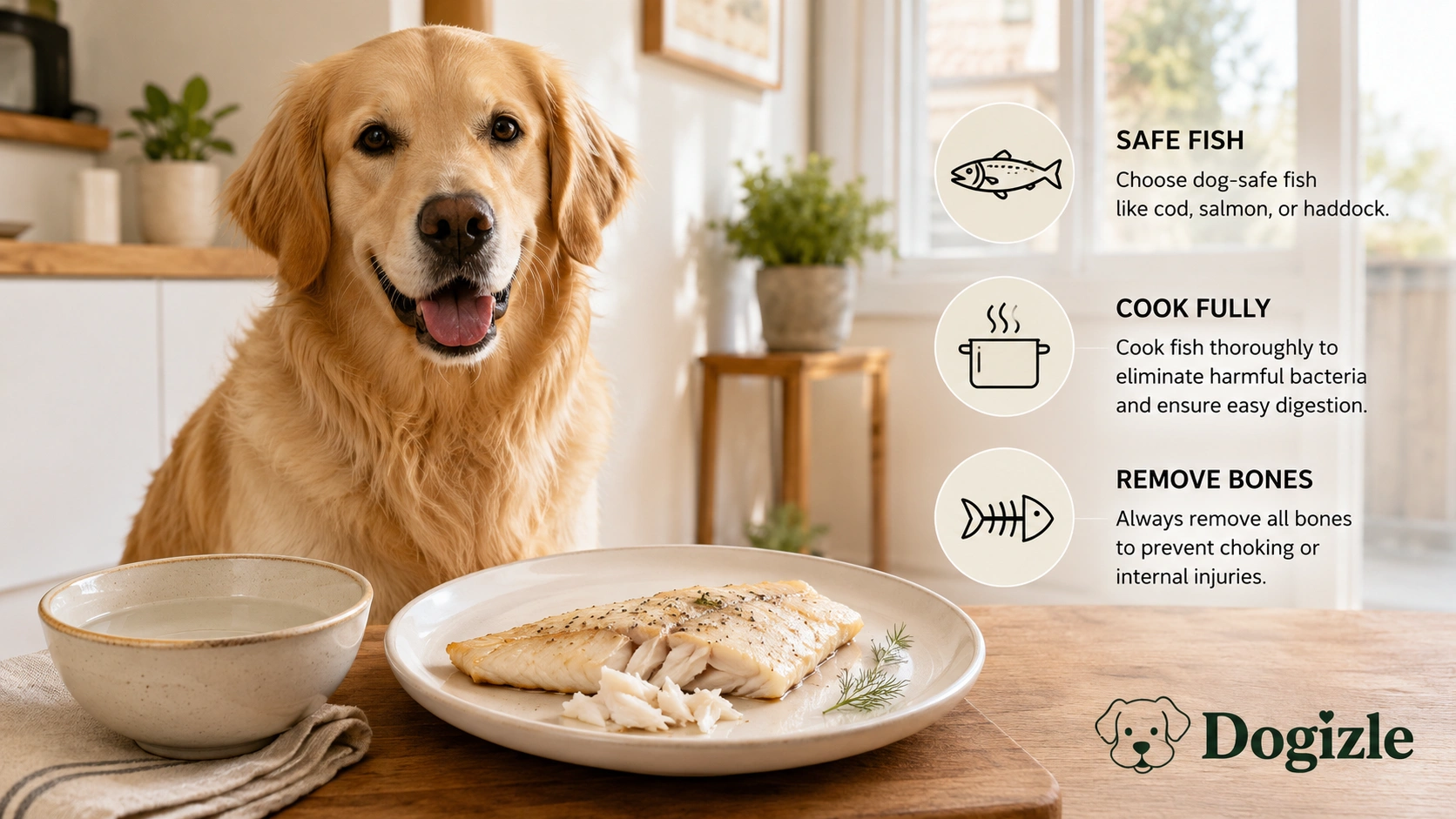
Yes, Dogs Can Eat fish when it is plain, fully cooked, deboned, and served in moderation. Fish can be a useful source of protein and omega-3 fatty acids, and it may also work as a novel protein for dogs with food sensitivities. The key is not whether fish is allowed, but which fish you choose and how you prepare it.
That matters because the wrong fish, raw fish, fried fish, fish bones, or fish loaded with seasoning can turn a healthy treat into a stomach upset or a safety problem. In this guide, you will get the fast answer first, then the details that help you feed fish safely at home without guesswork.
Quick Answer
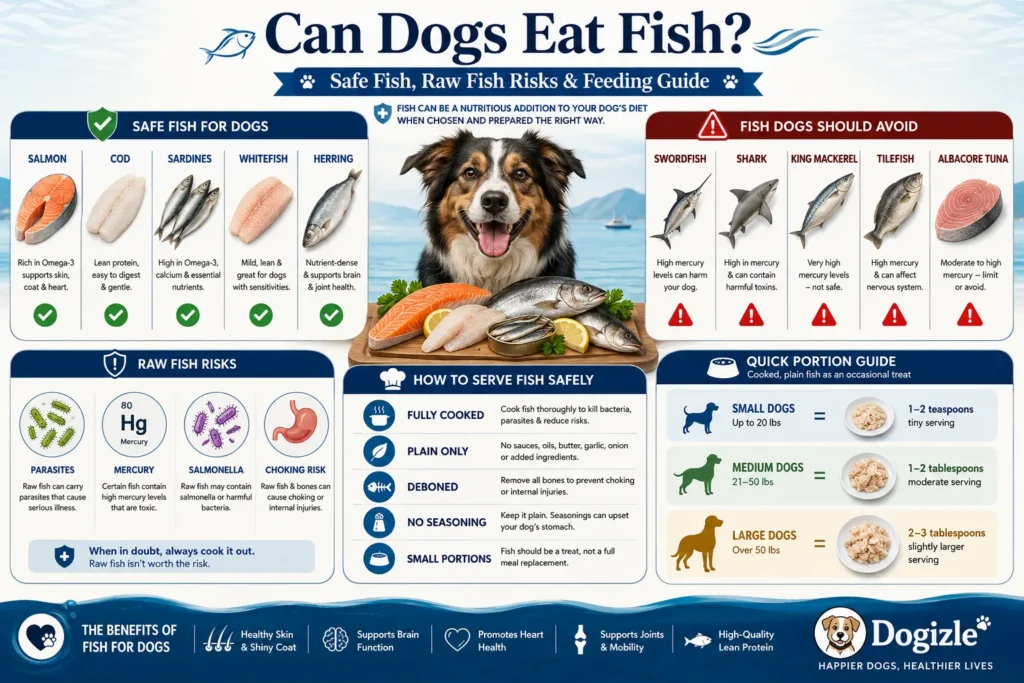
Dogs can eat plain cooked fish in small amounts. Safe options include fish such as whitefish, flounder, salmon, herring, catfish, cod, whiting, sardines, and canned light tuna in water. Avoid raw fish, fish with bones, fried fish, fish sticks, and high-mercury species such as shark, swordfish, king mackerel, tilefish, and albacore tuna.
Is Fish Good for Dogs?
Fish can be a smart addition to a dog’s diet because it is a good source of protein and can be relatively easy to digest when cooked properly. It also provides omega-3 fatty acids, which are often used in canine nutrition for skin, coat, and inflammation support. Fish may be especially useful as a novel protein for some dogs with food allergies or intolerances.
Still, fish should be treated as a supplement or occasional treat, not a free-form replacement for a complete dog food. Blue Cross and PDSA both emphasize that dogs need a complete diet, and homemade or raw-style feeding becomes complicated fast if it is not built by a veterinary nutritionist.
Why fish sometimes works so well
Fish is often chosen for dogs that need a gentler protein option. In practice, that means it can fit into allergy-friendly diets, joint-support routines, and bland-diet recovery plans when used correctly. The value is in the right form of fish, not in feeding more fish.
What Types of Fish Can Dogs Eat?
The safest fish are usually smaller, younger, well-sourced fish because they are generally less likely to have heavy mercury loads or significant parasite burdens. PetMD lists whitefish, flounder, salmon, herring, catfish, cod, whiting, and canned light tuna in water as safer choices, and it also notes that sardines are generally safe when packed in water and without added salt.
Safe Fish for Dogs
| Safer fish choices | Why are they usually preferred |
| Whitefish | Lean, simple, easy to serve plain |
| Flounder | Mild and generally low-risk |
| Salmon | Nutrient-rich when fully cooked |
| Herring | Often used in dog nutrition |
| Catfish | Commonly listed as safe when cooked |
| Cod | A frequent bland-diet option |
| Whiting | Mild and easy to digest |
| Sardines | Small fish can be skin-on with bones if plain and water-packed |
| Light tuna in water | Only in small amounts, not as a staple |
Best practical choices for most dogs
For most households, the easiest fish to use safely are cod, whitefish, flounder, and sardines. They are simple to cook, plain, easy to portion, and less likely to create the “too much mercury, too much oil, too much seasoning” problem that comes with restaurant-style or heavily processed fish.
A note on tuna
Light canned tuna in water may be acceptable in small amounts, but tuna should not become an everyday fish for dogs. PetMD and AKC both warn against higher-mercury fish, and PetMD specifically lists albacore tuna among the fish to avoid.
What Fish Should Dogs Avoid?
Avoid large, long-lived fish that are more likely to accumulate mercury. PetMD and AKC both flag species such as shark, tilefish, swordfish, king mackerel, and albacore tuna as poor choices for dogs.
| Fish to avoid | Main concern |
| Shark | Mercury burden |
| Tilefish | Mercury burden |
| Swordfish | Mercury burden |
| King mackerel | Mercury burden |
| Albacore tuna | Higher mercury risk |
| Fried fish | Oils, fats, digestive upset |
| Fish sticks | Breaded, salty, greasy |
| Raw fish | Parasites and bacteria |
Fish that is fried, breaded, heavily salted, buttered, or seasoned is also a bad idea. PetMD notes that fried fish can contribute to vomiting, diarrhea, and even pancreatitis because of the oils and butter, and fish sticks bring in breading, fats, salts, and empty calories.
Can Dogs Eat Raw Fish?
No. Raw or undercooked fish is not recommended for dogs. The AVMA discourages raw or undercooked animal-source protein for dogs and cats, including fish, because of parasite and bacterial risks, and PetMD specifically notes risks from Salmonella, Listeria, and Clostridium.
Raw salmon is a special concern. PetMD warns that raw or undercooked salmon can contain organisms linked to salmon poisoning disease, which can be fatal if untreated. Merck Veterinary Manual and VCA explain that clinical signs can appear about a week after ingestion and can include fever, vomiting, diarrhea, dehydration, weight loss, and swollen lymph nodes.
Why raw fish is a bad trade-off
Some owners think raw fish is “more natural,” but veterinary guidance does not support that idea as a safer or better choice. Blue Cross says raw pet food can contain harmful bacteria such as Salmonella and E. coli, while PDSA notes no studies show raw feeding is better than traditional dog food.
How to Cook Fish for Dogs
The safest method is simple: cook the fish plain, fully, and without seasoning. PetMD says fish for dogs should be prepared to human consumption standards, then served without harmful additives such as garlic, onion, and butter. AKC also says fish should be fully cooked, without oils or seasonings, and without bones.
Best cooking methods
Grilling, baking, boiling, and steaming are all practical options if you keep the fish plain. For most dog owners, steaming or baking is easiest because it avoids oils and lets you portion the fish cleanly.
Simple step-by-step method
- Choose a safe fish such as cod, whitefish, flounder, or salmon.
- Remove every bone, head, tail, and fin.
- Cook it fully until the flesh flakes easily.
- Do not add salt, garlic, onion, butter, oil, sauces, or spices.
- Cool it before serving.
- Start with a small amount and watch for stomach upset.
How Much Fish Can Dogs Eat?
For a healthy dog, fish is usually best offered as a small treat or dietary add-on rather than a full meal. WSAVA’s treat guidance says treats should make up no more than 10% of a dog’s daily calorie intake, and PetMD says fish can be offered several times a week depending on the dog’s needs.
Practical feeding guide from PetMD
| Dog size | PetMD portion example |
| Extra-small (2–20 lb) | 1-inch by ¼-inch square |
| Small (21–30 lb) | 2–3 small squares |
| Medium (31–50 lb) | 3–5 small squares |
| Large (51–90 lb) | 5–9 small squares |
| Extra-large (91+ lb) | 9–10 small squares |
Best way to use this at home
Think of fish as a topper, snack, or small training reward rather than a bowl-filling protein unless your veterinarian has built fish into a specific diet plan. That approach fits both WSAVA’s treat rule and PetMD’s portion guidance.
Can Puppies and Pregnant Dogs Eat Fish?
Yes, but only with caution and veterinary approval. PetMD says pregnant females and weaned puppies may benefit from fish’s extra protein, but fish should be properly cleaned, deboned, and thoroughly cooked, and it should be offered in small amounts. The AVMA specifically does not recommend raw or undercooked fish for any life stage, including puppies and pregnant females.
For puppies, the biggest risk is not just the fish itself but upsetting a still-developing digestive system. For pregnant dogs, the priority is safety, balance, and avoiding anything that introduces parasites or harmful bacteria. When in doubt, keep fish as a tiny, cooked add-on only if your vet says it fits the diet.
Can Dogs Eat Fish Skin, Bones, or Fish Sticks?
Cooked fish skin may be okay in limited situations, but raw fish skin is not safe because it can transmit parasites and bacteria. PetMD notes that dried fish-skin treats may be acceptable if they are plain, scaled, and free of oils or seasonings.
Fish bones are a no. PetMD warns that fish heads, tails, bones, and fins should not be fed to dogs because they can scratch or penetrate the digestive tract and may even migrate through tissue. AKC also says fish must not contain bones.
Fish sticks are also a poor choice. They are usually too salty, too fatty, and too processed for dogs, and PetMD warns they can trigger vomiting, diarrhea, or pancreatitis.
Signs Your Dog Ate Bad Fish
Watch closely if your dog ate raw fish, spoiled fish, fish bones, or a greasy fish dish. Common warning signs include vomiting, diarrhea, lethargy, reduced appetite, dehydration, twitching, weakness, trouble walking, and abdominal pain. PDSA and PetMD both highlight these kinds of signs when dogs eat something harmful or develop food poisoning.
With salmon poisoning disease, signs can also include fever, swollen lymph nodes, eye or nose discharge, and blood in the stool. Merck Veterinary Manual says symptoms may appear around 7 days after eating infected fish, though they can be delayed for up to 33 days.
Contact a vet immediately if your dog has
- Repeated vomiting or diarrhea
- blood in the stool
- a swollen or painful belly
- severe weakness or collapse
- tremors, fever, or trouble walking
- choking, gagging, or pawing at the mouth after eating fish bones
Fish Feeding Guide for Everyday Dog Owners
| Situation | Safer choice | Avoid |
| Normal treat | Plain cooked cod or whitefish | Fried fish, fish sticks |
| Allergy-friendly topper | Plain cooked salmon or cod | Raw fish, seasoned fish |
| Recovery meal | Poached white fish with rice | Oil, butter, sauce |
| Small apartment storage | Cook fresh, refrigerate promptly | Leaving fish out too long |
| Training reward | Tiny flake-sized pieces | Large portions |
Common Mistakes Dog Owners Make
Many owners make the same mistakes with fish: feeding it raw, leaving bones in, adding seasoning, using fried leftovers, or treating fish like a full meal instead of a small add-on. Another common mistake is assuming all fish are equal, when in reality, species choice matters because of mercury and parasite risk.
A second mistake is ignoring the dog’s individual health profile. Dogs with kidney concerns, allergies, or prescription diets may need a more careful plan, and PetMD specifically warns not to add outside foods to prescription diets without veterinary guidance.
Expert Tips for Feeding Fish Safely
Keep fish plain, portioned, and occasional. Choose smaller fish more often than large predator fish, and buy from trusted, well-regulated sources. PetMD also notes that farm-raised fish should generally be avoided unless the source is well-regulated and inspected.
Use fish as a tool, not a habit. It can help with variety, training, or gentle digestion, but the foundation should still be a balanced dog food that meets your dog’s life stage and health needs. That aligns with Blue Cross, PDSA, and WSAVA guidance on balanced feeding and controlled treats.
Europe-Specific Practical Advice
For dog owners in the UK and across Europe, the safest approach is the simplest one: choose plain fish, cook it thoroughly, and keep it as a small part of a balanced diet. Blue Cross and PDSA both stress that homemade feeding is tricky to balance and that dogs recovering from stomach upset often do well on small amounts of plain boiled white fish with rice for a short period only.
In apartment homes, storage and hygiene matter just as much as the fish itself. Cook only what you need, cool leftovers quickly, and keep bones out of open bins or accessible counters. In warmer weather, act faster with refrigeration and food handling because heat increases the chance of spoilage; in colder months, do not let “I left it out for a bit” become a habit. RSPCA’s seasonal guidance also reinforces that dogs need close attention in both hot and cold weather, especially when their routine and digestion are off.
When Fish Can Be Useful in a Dog’s Diet
Fish can be especially helpful for dogs with certain food sensitivities or when a veterinarian wants a novel protein source. It may also be used in a bland diet for a short digestive reset, where Blue Cross and PDSA both recommend plain poached or boiled white fish without skin or bones.
When Fish Is Not the Right Choice
Fish is not ideal when your dog has an active stomach upset, is on a prescription diet, or has shown intolerance to fish before. It is also not a good idea if the fish is greasy, heavily seasoned, raw, bone-in, or old enough to raise freshness concerns. In those cases, a vet-guided diet is the safer path.
People Also Ask
Yes, but only when it is fully cooked, plain, and deboned. Raw salmon is risky because it can carry organisms linked to salmon poisoning disease.
Only in small amounts, and water-packed light tuna is the better choice. High-mercury tuna types, especially albacore tuna, should be avoided as routine food.
Yes, sardines are usually considered safe when they are packed in water, low in salt, and served plain. Their small size makes them easier to manage than large fish.
No. Fish bones can choke a dog, injure the mouth, or scratch and penetrate the digestive tract.
No. Raw fish raises parasite and bacterial risks, and veterinary guidance discourages it for dogs of any life stage.
Cooked, plain fish skin may be okay in small amounts, but uncooked fish skin is not safe. Remove scales and avoid oils and seasonings.
Call your vet if your dog is choking, gagging, pawing at the mouth, vomiting, or seems painful. Fish bones can damage the throat or digestive tract, so do not wait for symptoms to “just pass.”
Conclusion
So, can dogs eat fish? Yes — but only the right fish, cooked the right way, and served in the right amount. The safest version is plain, fully cooked, boneless fish used as an occasional treat or a small diet topper. The riskiest version is raw, greasy, seasoned, or bone-in fish.
If you remember only one rule, make it this: plain, Cooked, deboned, and small. That simple standard protects your dog from the most common fish-related problems while still letting you use fish as a healthy, practical food option at home. Bookmark this guide, share it with another dog owner, and explore more nutrition and dog care content on Dogizle.com for deeper, vet-aware advice.
This content is for educational and informational purposes only and does not replace professional veterinary advice. Always consult a licensed veterinarian for medical concerns regarding your dog.