What Actually Happens Inside Your Dog After Eating Yogurt
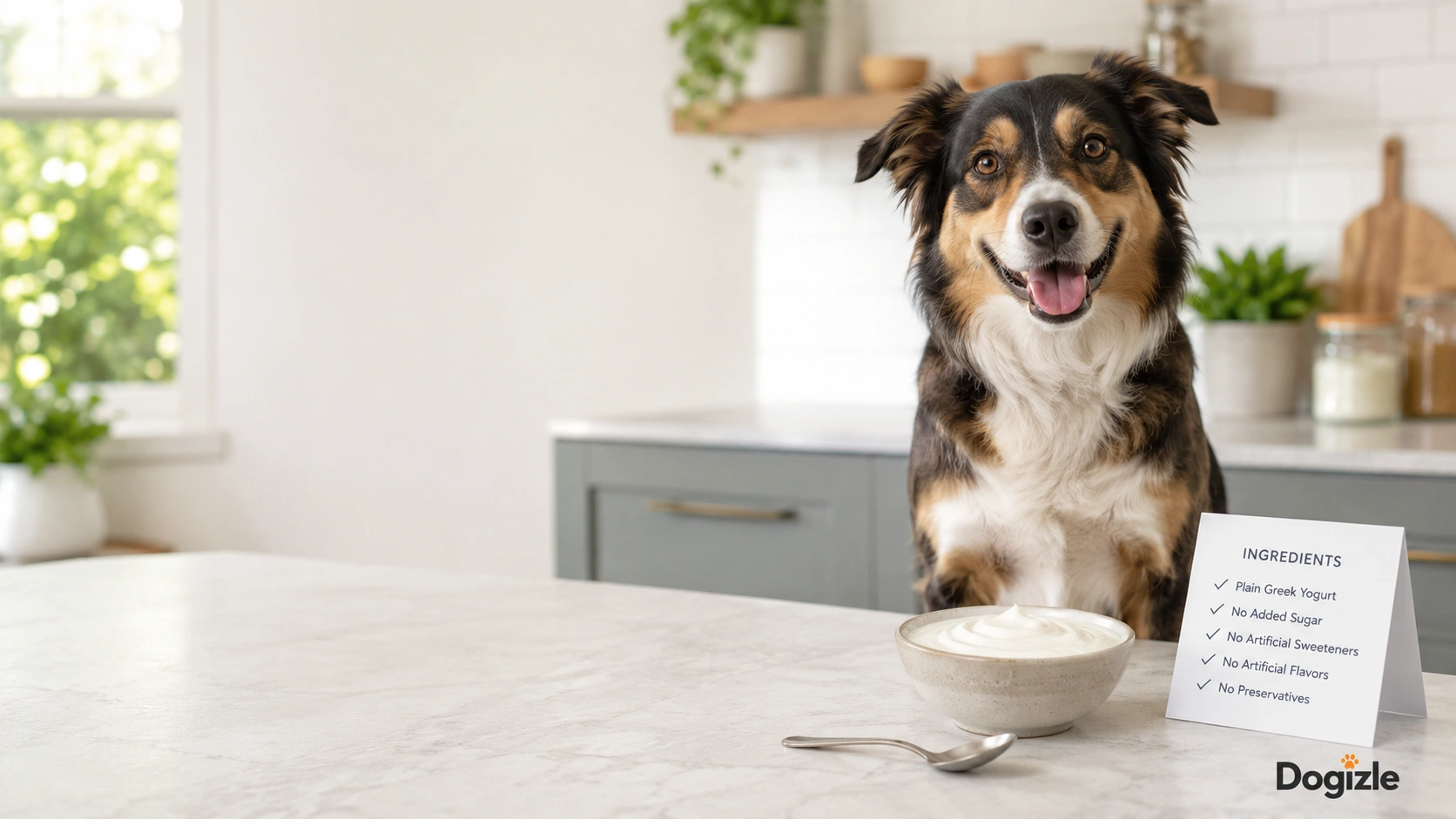
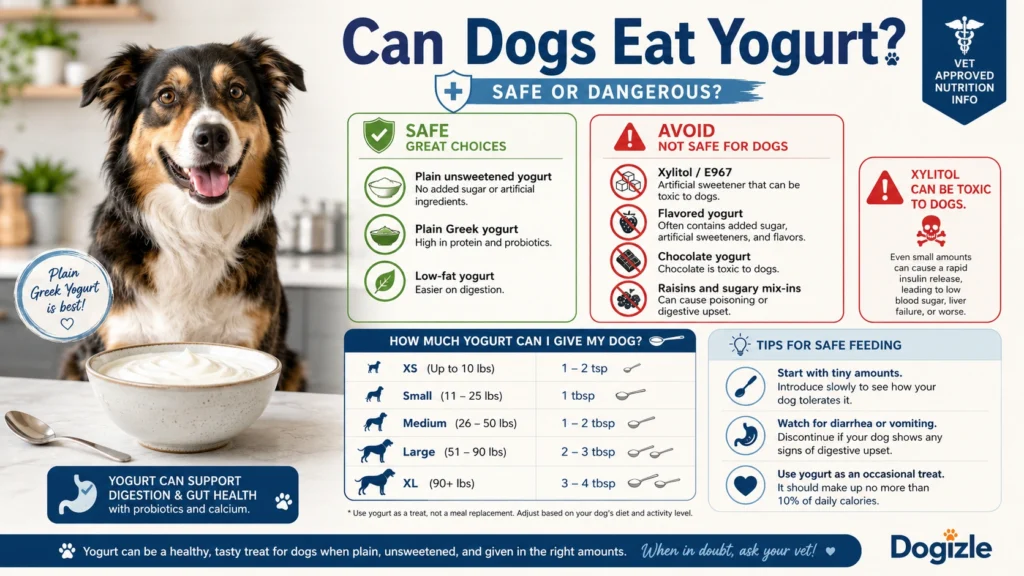
Yes, dogs can Eat Yogurt if it is plain, unsweetened, and given in small amounts. Plain Greek yogurt is usually the safest choice. Avoid flavored yogurt, added sugar, and anything containing xylitol (E967), which can be toxic to dogs. If your dog stares at your spoon every time you eat yogurt, you are not alone. Yogurt looks harmless, smells like food, and often gets described as “healthy,” so it is natural to wonder whether it is a smart treat for dogs. The short answer is yes, dogs can eat yogurt, but only plain, unsweetened yogurt and only in small amounts. The real safety issue is not yogurt itself. The real issue is what is inside the cup: added sugar, artificial sweeteners, fruit mixes, and especially xylitol, which is dangerous for dogs.
That is why this guide goes beyond a simple yes-or-no answer. You will get the safest yogurt types, the right portion sizes, the warning signs to watch for, and the exact steps to take if your dog ate the wrong product. You will also find Europe-friendly label advice, because ingredient names and E-numbers can look different depending on where you live. For most dogs, yogurt can be a fine occasional treat. For dogs with dairy sensitivity, weight issues, pancreatitis history, or food allergies, it may be a poor choice.
Quick Answer: Can Dogs Eat Yogurt?
Yes, dogs can eat plain, unsweetened yogurt in moderation, and plain unsweetened Greek yogurt is usually the best choice. Avoid yogurt with added sugar, artificial sweeteners, fruit-on-the-bottom mix-ins, and especially xylitol. Treats, including yogurt, should stay under 10% of daily calories.
Is Yogurt Good for Dogs?
Yogurt can offer a few modest benefits. It contains protein, calcium, and live cultures, and some veterinary sources say those live cultures may support gut health in some dogs. That said, yogurt is not a miracle food, and it should not be used as a main nutritional source or as a substitute for a balanced dog diet. The benefit is small; the safety details matter more.
The practical way to think about yogurt is this: it is a treat, not a health supplement. It may be useful as a high-value training reward, a frozen enrichment snack, or a food topper in tiny amounts. But if your dog already gets a complete diet, yogurt does not need to play a major role in their meal plan.
What Kind of Yogurt Can Dogs Eat?
The safest yogurts are the plain ones. The best options are:
- plain, unsweetened yogurt
- plain, unsweetened Greek yogurt
- plain, low-fat, or non-fat yogurt if the ingredient list is clean and your dog tolerates dairy.
Greek yogurt is often preferred because it is usually strained, richer in protein, and often easier for some dogs to tolerate than regular yogurt. But “often” does not mean “always.” If your dog gets gas, loose stool, vomiting, or itching after dairy, even Greek yogurt may not agree with them.
Safe vs. Unsafe Yogurt Types
This table gives a quick decision guide based on the safety themes repeated across veterinary and pet industry sources. Plain, unsweetened yogurt is the default. Anything flavored, sweetened, or mixed with risky add-ins moves into the caution or avoid zone.
| Yogurt type | Safe for dogs? | Why |
| Plain, unsweetened yogurt | Yes, in small amounts | Simplest ingredient profile; fewer added risks |
| Plain, unsweetened Greek yogurt | Yes, usually best | Often less lactose and more protein |
| Plain low-fat yogurt | Usually yes | Better than full-fat if your dog is sensitive to rich foods |
| Flavored yogurt | No | Often contains sugar, sweeteners, or extra ingredients |
| Fruit-on-the-bottom yogurt | No | Hidden sugar and mix-ins |
| Yogurt with granola, raisins, candy, and chocolate | No | Mix-ins can be unsafe or toxic |
| Sugar-free yogurt with xylitol | Absolutely no | Xylitol is toxic to dogs |
| Frozen yogurt from a shop | Usually avoid | Ingredients are hard to verify and may include xylitol or sugar |
Yogurt Types Dogs Should Avoid
Avoid any yogurt that contains added sugar, artificial sweeteners, fruit pieces at the bottom, flavored syrups, chocolate, raisins, granola, or other mix-ins you would not normally feed a dog. The biggest red flag is xylitol, a sweetener that can cause a dangerous drop in blood sugar and liver injury in dogs.
In the UK and EU, xylitol may be listed as E967, so this is especially important for European dog owners reading labels on imported foods or human desserts. The Food Standards Agency lists E967 as xylitol, which makes label-checking a lot easier once you know the code.
Yogurt Ingredients to Watch for on Labels
Use this checklist before sharing any yogurt with your dog:
- sugar
- fructose syrup
- artificial sweeteners
- xylitol / E967
- chocolate
- raisins
- cacao
- fruit preparations
- “dessert-style” mix-ins
- high-fat cream additions.
How Much Yogurt Can Dogs Eat?
Yogurt should stay inside the 10% treat rule. AAHA and FEDIAF both recommend keeping treats to no more than about 10% of daily calorie intake, which is a good benchmark for yogurt, too. Chewy’s practical serving guide gives a useful starting point by body size, but your dog’s tolerance matters just as much as the chart.
Yogurt Serving Guide by Dog Size
| Dog size | Approximate amount |
| Extra-small dogs (2–10 lb / 1–4.5 kg) | 1–2 teaspoons |
| Small dogs (11–20 lb / 5–9 kg) | 1 tablespoon |
| Medium dogs (21–50 lb / 10–23 kg) | 1–2 tablespoons |
| Large dogs (51–90 lb / 23–41 kg) | 2–3 tablespoons |
| Extra-large dogs (91+ lb / 41+ kg) | 3–4 tablespoons |
This sizing chart comes from Chewy’s veterinary guidance and is a helpful start, not a target you must reach. Many dogs do best with less, especially if they are new to dairy or have a sensitive stomach. Begin with a tiny amount, watch the stool, and only increase if your dog clearly tolerates it.
Practical Rule for First-Time Feeding
- Offer a very small spoonful.
- Wait and observe for 24 hours.
- Check for gas, vomiting, diarrhea, bloating, or itching.
- Only continue if your dog stays normal.
Can Puppies Eat Yogurt?
Yes, puppies can eat dog-safe yogurt in very small amounts, but they are usually more delicate than adult dogs. Their digestion is still developing, so the portion should be tiny, and it should be treated as an occasional taste rather than a daily snack.
That matters even more for large-breed puppies, because overfeeding and excessive energy intake can contribute to unhealthy growth patterns. FEDIAF notes that puppies should not be fed ad libitum and that overfeeding can create growth problems, especially in large and giant breeds. Yogurt should stay a treat, never a growth strategy.
What Are the Risks of Yogurt for Dogs?
The main risks are predictable and avoidable.
1) Lactose intolerance
Many dogs have trouble digesting lactose, and that can lead to gas, diarrhea, vomiting, or abdominal discomfort. This is one reason even “safe” yogurt should be introduced slowly.
2) Too much fat
Full-fat yogurt can be a poor choice for dogs with sensitive stomachs or pancreatitis risk. A rich dairy snack can upset digestion, especially if your dog is already prone to GI trouble.
3) Too much sugar
Sweetened yogurt can add unnecessary calories and contribute to weight gain. It can also irritate the stomach and turn a small treat into a much less healthy one.
4) Xylitol poisoning
This is the serious one. Xylitol is extremely toxic to dogs. FDA and VCA both warn that even small amounts can cause vomiting, weakness, collapse, difficulty walking, shaking, seizures, liver failure, or death. Symptoms can begin quickly, sometimes within minutes.
5) Food allergy or sensitivity
Milk is one of the protein sources dogs may be allergic to, and dairy is a common food allergen category in veterinary references. If your dog gets itchy skin, repeated ear problems, vomiting, or chronic stool changes after dairy, yogurt may simply not suit them.
What to Do If Your Dog Ate the Wrong Yogurt
Act based on what kind of yogurt it was.
If it were plain yogurt, and your dog seems fine
Monitor your dog for the next 24 hours. Mild gas or a softer stool can happen, but many dogs will be okay if the amount is tiny.
If it had sugar or was flavored.
Watch for vomiting, diarrhea, and stomach upset. This is usually less urgent than xylitol exposure, but it still matters if your dog seems uncomfortable or symptoms continue.
If it contained xylitol or E967
Treat this as an emergency. Contact your vet or an emergency clinic immediately. FDA and VCA both stress that xylitol poisoning can become life-threatening very quickly. Do not wait for symptoms to “see what happens.”
Emergency warning signs
Get urgent help if your dog shows:
- weakness
- wobbling or collapse
- vomiting
- shaking
- seizures
- trouble standing
- unusual lethargy
- a swollen or tense abdomen
- inability to keep food down.
Healthy Ways to Serve Yogurt to Dogs
Plain yogurt can be useful if you keep it simple. Chewy and AKC both suggest using yogurt in small Portions, as a frozen treat, in a toy, or as a small topper. The important part is not the presentation. The important part is the ingredient list.
Good serving ideas
- spoon a tiny amount as a special treat
- freeze it in a silicone mold
- smear a thin layer on a lick mat
- Stuff toy for enrichment
- Mix a little into plain dog food as a topper
- Combine it with dog-safe fruit in tiny amounts.
Safer add-ins
If you want to make yogurt more interesting, stick to simple dog-safe extras such as a few blueberries, banana slices, or plain pumpkin. Avoid anything sugary, salty, or toxic.
Best Dog Profiles for Yogurt
Not every dog is a good yogurt candidate. Here is the practical version.
| Dog profile | Is yogurt usually okay? | Why |
| Healthy adult dog | Yes, in small amounts | Usually tolerates a tiny treat well |
| Puppy | Sometimes | Use very small portions only |
| Sensitive stomach | Maybe not | Dairy may trigger loose stool or gas |
| Overweight dog | Limited | Yogurt adds calories quickly |
| Pancreatitis-prone dog | Usually avoid | Rich or fatty foods can be risky |
| Dog with dairy allergy | No | Avoid dairy completely |
| Dog on prescription diet | Ask the vet first | The diet may need strict consistency |
These are practical feeding judgments built from the same risks highlighted by PetMD, AKC, Chewy, Merck, and FEDIAF: dairy tolerance varies, calories matter, and some dogs should not be experimenting with extras at all.
Europe-Specific Practical Advice
For dog owners in the UK and Europe, label reading matters even more because sweeteners may appear under additive codes. Xylitol = E967 in the Food Standards Agency’s additive list, so that code should be treated as a hard stop for dogs. This is especially helpful when checking yogurt desserts, protein pots, frozen dairy snacks, and imported products.
Seasonally, treat calories that need extra attention. FEDIAF notes that dogs kept outdoors in winter may need significantly more calories than in summer, but that does not mean yogurt should become a calorie dump. It means the whole diet should be adjusted thoughtfully, with treats still staying controlled.
For apartment dogs and urban pets, the most practical advice is simple: keep yogurt portions tiny and predictable. Indoor dogs often get fewer big exercise bursts than rural or working dogs, so extra treat calories can add up faster than people expect. A teaspoon is often more than enough for enrichment.
Common Mistakes Dog Owners Make
- Assuming “human-safe” means dog-safe. Xylitol is the classic example of a food that is harmless to humans but dangerous to dogs.
- Choosing flavored yogurt because it looks healthy. Many flavored cups still carry sugar or sweeteners.
- Giving too much too soon. Even plain yogurt can upset a dog’s stomach if the portion is too large.
- Using yogurt as a daily “Health Food.” It is a treat, not a necessary probiotic strategy.
- Ignoring breed and health history. Dogs with digestive issues, allergies, pancreatitis, or special diets may need different rules.
Expert Tips for Safer Feeding
- Start with plain Greek yogurt if your dog has never had yogurt before.
- Buy the simplest label you can find. Fewer ingredients usually mean fewer problems.
- Keep yogurt treats Occasional, not routine.
- Use yogurt as an enrichment tool, not a meal replacement.
- If in doubt, choose a dog-specific treat instead of improvising with human food.
Pros and Cons of Yogurt for Dogs
| Pros | Cons |
| Can be an enjoyable occasional treat | Some dogs are lactose sensitive |
| May offer protein and calcium | Easy to overfeed calories |
| Can be used in frozen enrichment toys | Flavored versions may contain sugar |
| Plain Greek yogurt is easy to find | Xylitol makes some yogurts dangerous |
| Simple to portion in tiny amounts | Not ideal for dogs with certain health issues |
This balance reflects the overall veterinary guidance across the sources: yogurt is not inherently toxic, but it is not automatically “good” for every dog. The safest choice is always the simplest one.
People Also Ask
Yes. Plain, unsweetened Greek yogurt is usually the best yogurt choice for dogs because it is typically easier to portion and often more digestible than regular yogurt. Keep it plain and give only a small amount.
No. Flavored yogurt is risky because it often contains sugar, fruit mix-ins, or sweeteners. The biggest concern is any product with xylitol.
Yes. Dogs that are lactose-sensitive may experience gas, loose stools, vomiting, or bloating after eating yogurt. Start with a tiny amount and stop if your dog reacts badly.
Usually not. Yogurt should be an occasional treat, not a daily staple. Treats should stay under about 10% of daily calories, and daily yogurt can become a calorie or stomach issue over time.
Plain, unsweetened Greek yogurt is usually the safest default. It should still be given only in small amounts and only if your dog tolerates dairy well.
Treat it as an emergency and call a vet right away. Xylitol can cause dangerously low blood sugar and liver injury very quickly, so do not wait for symptoms.
Yes, but only in very small amounts and only if the yogurt is plain and unsweetened. Puppies are still developing digestion, so less is safer.
Final Verdict
So, can dogs eat yogurt? Yes, but only if it is plain, unsweetened, and served in small amounts. For most dogs, plain Greek Yogurt is the best option, while flavored yogurts, sugary desserts, and anything containing xylitol / E967 should be avoided completely. The smartest approach is to start tiny, watch your dog’s reaction, and stop immediately if stomach upset appears. If the yogurt contains xylitol, treat it as a veterinary emergency.
For responsible dog owners, the goal is not to find ways to feed more human food. The goal is to make every extra bite safe, simple, and worth it. Bookmark this guide, share it with another dog parent, and use the same label-checking habit whenever you buy any treat, dessert, or dairy snack for your dog.