Can Dogs Eat This Green Veg Secretly Safe or Dangerous for Your Dog?t Cabbage?
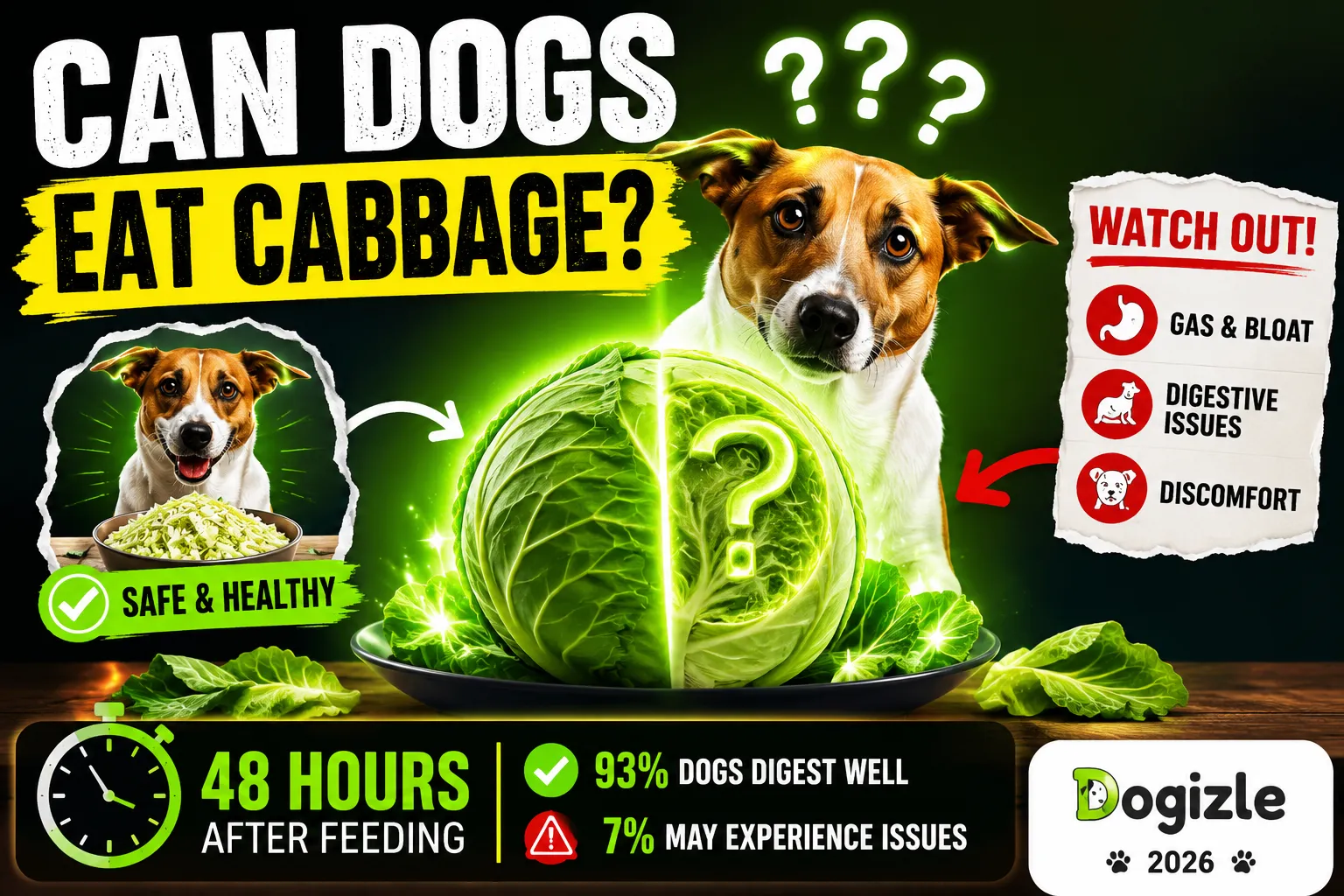
Yes, dogs can eat cabbage in moderation.
Many owners worry about digestion, gas, and safety risks, but this guide explains benefits, portion control, vet-approved feeding tips, and hidden dangers you must avoid so your dog stays healthy, and you feel confident and surprised by what most people don’t know today. If you are a dog owner, you have probably asked this simple question at least once: Can dogs eat Cabbage? The answer is yes, dogs can eat cabbage, but only in the right form, in the right amount, and as an occasional treat rather than a routine food. Veterinary nutrition sources consistently describe cabbage as safe in limited quantities, especially when it is plain and prepared without salt, butter, oil, garlic, onion, or seasoning. Cabbage is also low in calories and can contribute fiber, antioxidants, and certain vitamins, but it is still not a required part of a balanced canine diet.
That is the real answer in one sentence: cabbage is not toxic for dogs, but it is also not a free-for-all snack. The main reason is digestive tolerance. Cabbage belongs to the cruciferous family, and this group can cause flatulence, stomach rumbling, and bloating in sensitive dogs, especially when fed raw or in large amounts. Cooking cabbage can make it easier to digest, and introducing it slowly is the safest way to test whether your dog handles it well.
In this guide, we will keep the language simple, practical, and SEO-friendly while answering the questions dog owners actually search for. You will see which cabbage forms are safest, how much to feed, what risks to watch for, how to handle puppies, and which alternatives may be easier on your dog’s stomach.
Quick Answer — Can Dogs Eat Cabbage?
Yes — but only in moderation.
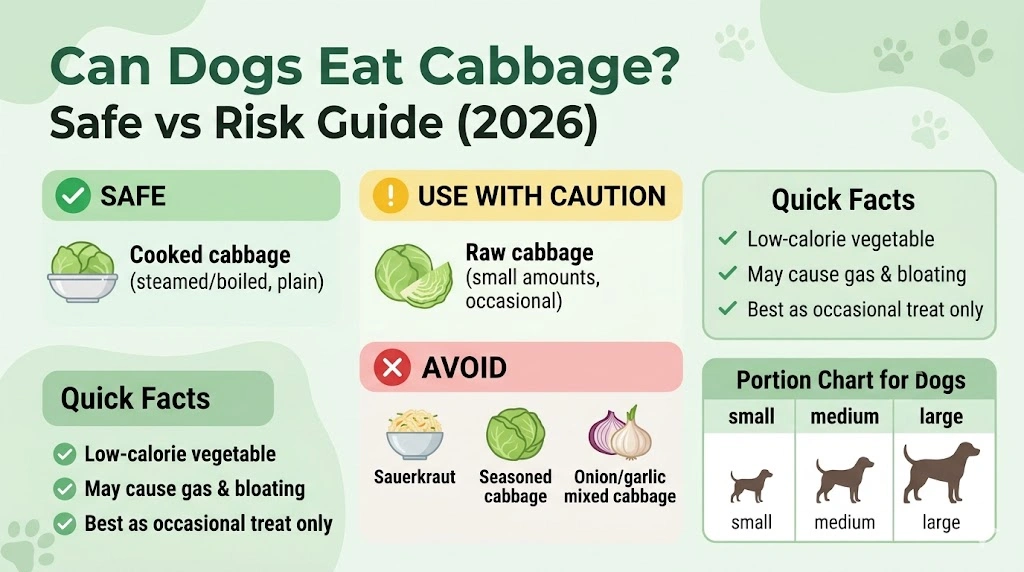
Cabbage is safest when it is plain, lightly cooked, and served in very small portions. The best version is steamed or boiled cabbage with nothing added. Vet and pet-nutrition sources also note that green cabbage, red cabbage, and several other common cabbage types can be safe in limited quantities.
Use caution if your dog has a sensitive stomach, tends to get gassy easily, or has a history of digestive upset after new foods. Cabbage can be fine for some dogs and irritating for others, so the key is slow introduction and careful observation. PetMD specifically notes that the high fiber and water content can upset some dogs’ stomachs if they get too much too quickly.
Avoid cabbage when it is mixed with human seasoning, salt, butter, onion, garlic, spicy sauces, or high-fat meats. In European-style meals, cabbage is often paired with rich foods such as corned beef, and VCA warns that gassy foods like cabbage can cause gastrointestinal upset, while salty, fatty, seasoned meats can create additional risk.
What Types of Cabbage Can My Dog Eat?
Not every cabbage looks the same, but the good news is that several common forms are considered safe in limited amounts. AKC notes that red cabbage and green cabbage are safe for dogs in limited quantities, and also lists Savoy cabbage, Napa cabbage, and bok choy as safe options. PetMD similarly describes cabbage as a safe vegetable for dogs when it is fed carefully and in moderation.
The safest choice is usually the simplest one: plain cooked cabbage. Red and green cabbage are both acceptable, but they should be treated as occasional add-ons, not core ingredients. If you are using cabbage to add variety or extra fiber, think of it like a garnish with benefits, not a staple meal. That mindset lines up with the moderation-first guidance found in major pet-health resources.
A useful way to think about cabbage is this: the vegetable itself is generally safe, but the preparation style makes all the difference. A dog-friendly version can become a stomach problem if it is drenched in oil, soaked in salt, or folded into a rich dish. The food is only as safe as the recipe around it.
Nutritional Value of Cabbage for Dogs
Cabbage is not essential for dogs, but it does contain nutrients that make it a reasonable occasional treat. PetMD describes cabbage as a low-calorie vegetable with Fiber, antioxidants, potassium, and multiple vitamins, including vitamins C and K. AKC also groups cabbage with vegetables that can provide antioxidants, fiber, and vitamins when used in small amounts.
Here is the practical takeaway: cabbage can add volume with few calories, which is one reason some owners like it for dogs that need lighter snacks. The fiber may help improve stool quality in some dogs, and the water content can make it feel fresh and hydrating. Still, a dog’s real nutritional foundation should come from a complete and balanced dog food, not from vegetables. Cabbage is a side note, not the main story.
It is also worth remembering that “healthy” does not automatically mean “unlimited.” A vegetable can be nutritious and still be too stimulating for the gut if the portion is too large. That is especially true for cruciferous vegetables, which are known for causing gas in some dogs.
What Are the Main Benefits of Cabbage for Dogs?
One possible benefit is fiber support. In a dog that tolerates it well, a small amount of cabbage may help add bulk to the diet and support normal digestion. Another benefit is low calorie density, which makes cabbage useful as a light treat for dogs that need to watch their weight. PetMD and AKC both describe cabbage in this general “nutrient-dense but low-calorie” category.
Cabbage also contributes Antioxidants, which are part of why it gets included in “good veggie” lists for dogs. That does not mean cabbage is a miracle food. It simply means it can be a decent small supplement to a well-formulated diet. The benefit is modest, not dramatic.
Another practical plus is variety. Some dogs enjoy the mild flavor and soft texture of cooked cabbage, which can make it an easy occasional topper for owners who want to rotate vegetables. When cabbage is used this way, the goal is enrichment and variety, not nutritional dependence.
What Are the Risks of Feeding Cabbage to Dogs?
The most common downside is gas. PetMD warns that cabbage can cause increased flatulence, and VCA also notes that gassy foods like cabbage can trigger gastrointestinal upset and discomfort. For many dogs, the biggest issue is not toxicity; it is simply the social disaster of a very gassy afternoon.
The second concern is bloating or digestive discomfort, especially if the dog eats too much at once or gets cabbage for the first time. Dogs with sensitive stomachs may experience loose stool, noisy intestines, or a general “off” feeling after even a small serving. That is why expert sources repeatedly emphasize small portions and gradual introduction.
The third issue is the goitrogen question. PetMD’s thyroid discussion explains that goitrogens are substances that can interfere with thyroid hormone synthesis, and cabbage is among the vegetables commonly mentioned in that category. In practice, this is mainly a concern when large amounts are fed repeatedly over time. That is one more reason cabbage should remain an occasional treat instead of a daily habit.
Raw vs Cooked vs Fermented Cabbage
Cooked cabbage is usually the best choice for dogs. PetMD says cooking may help your dog digest cabbage more easily, and VCA’s general food-safety advice supports keeping table food simple, plain, and non-greasy. Steaming or boiling cabbage without seasonings is the cleanest option.
Raw cabbage is not automatically dangerous, but it is often harder on the stomach. It is more fibrous, takes more work to break down, and may create more gas. For dogs that have never eaten cabbage before, raw is the less predictable choice. If you use it at all, use only a tiny bite and watch for digestive changes afterward.
Fermented cabbage, such as sauerkraut, is usually not the best everyday dog food. The problem is not cabbage alone; it is the extra salt and possible seasonings. VCA warns that cabbage-based meals can become risky when paired with salty, fatty, or heavily seasoned ingredients, which is exactly why sauerkraut-style dishes should not be treated like routine canine snacks.
A simple rule works well here: plain cooked cabbage is best, raw cabbage is “maybe,” and fermented or seasoned cabbage is a no for regular feeding. That ranking matches the overall direction of the vet and pet-nutrition guidance available from the sources above.
Can Puppies Eat Cabbage?
Yes, puppies can eat cabbage, but the margin for error is smaller. Puppies have more delicate digestive systems than adult dogs, so even a food that is safe in principle can still cause loose stools, gas, or temporary discomfort if the portion is too large or introduced too fast. The safest puppy option is plain, cooked cabbage in very small amounts.
For puppies, the goal is not to “add vegetables to the diet” in a big way. It is to test tolerance carefully. Start with a tiny bite, wait a day, and watch for any change in stool quality, appetite, or behavior. If the puppy handles it well, you can occasionally repeat a small serving. If not, skip cabbage and use a gentler vegetable instead.
Because puppies are still growing, their primary food should remain a complete puppy formula. Cabbage can never replace the calorie, protein, and mineral balance they need during development. It is only an optional add-on.
How Much Cabbage Can Dogs Eat?
A conservative feeding rule is the safest approach. Since the strongest guidance from vet and pet-nutrition sources is to feed cabbage in limited quantities, the exact serving should stay small enough that it does not compete with the dog’s normal diet. As a practical starting point, use a tiny spoonful for small dogs, a modest spoonful for medium dogs, and no more than a couple of spoonfuls for large dogs, once or twice a week at most. This is a cautious home-feeding guideline built around the moderation advice given by AKC and PetMD.
Here is a simple portion guide you can use as a starting reference:
Small dogs under 10 kg: 1–2 teaspoons, occasionally
Medium dogs 10–25 kg: 1 tablespoon, occasionally
Large dogs over 25 kg: up to 2 tablespoons, occasionally
These are intentionally conservative servings. They are not a license to feed cabbage every day, and they are not meant to replace a vet’s advice for dogs with medical issues. They are simply a safe-feeling entry point for healthy dogs that tolerate vegetables well.
The most important detail is frequency. Cabbage should be treated as an occasional treat, not a daily supplement. That keeps the digestive load light and lowers the chance that gas, bloating, or stool changes will become a pattern.
How to Safely Feed Cabbage to Dogs
The safest preparation is straightforward. Wash the cabbage well, remove the hard core, cook it plain, let it cool, and serve it in tiny pieces. PetMD specifically notes that cooking may help digestion, and AKC repeatedly emphasizes moderation and veterinary consultation when introducing new foods.
A practical feeding routine looks like this: first, steam or boil the cabbage without salt or seasoning. Second, cool it completely so it is gentle on the mouth and stomach. Third, chop it into bite-sized bits. Fourth, offer only a small amount the first time. Fifth, observe your dog for about 24 hours for gas, loose stool, or discomfort.
Do not pair cabbage with rich human food. Butter, garlic, onion, heavy oils, and spicy mixes can turn a harmless vegetable into a digestive problem. VCA’s safety guidance around cabbage-containing meals shows why simple preparation matters so much.
Which Dogs Should Be Extra Careful?
Any dog can react poorly to cabbage if the portion is too large, but dogs with sensitive stomachs deserve extra caution. PetMD explicitly recommends slow introduction and smaller quantities for dogs that are prone to stomach upset. If your dog regularly reacts to new foods, cabbage should be tested only in the tiniest amount, if at all.
Dogs that already have digestive disease, chronic loose stool, or a history of vomiting after new treats should not be used as “trial subjects” for cabbage experiments. In those cases, the risk is not just flatulence; it is the chance of making a chronic problem feel worse. The more fragile the digestive system, the more conservative the approach should be.
Dogs that get noticeably gassy from vegetables in general may also do better with lower-fiber alternatives. AKC and PetMD both list milder dog-safe vegetables such as carrots, green beans, celery, and cucumber as options people often use when they want a lighter snack.
Europe-Based Feeding Scenarios
In Europe, cabbage often appears in home cooking, winter dishes, and fermented forms such as sauerkraut. That makes it especially important to separate human-style cabbage dishes from dog-safe cabbage serving. The safest version for dogs is still the plain one: no salt, no onions, no garlic, and no fatty meat on the side.
For apartment dogs in busy urban settings, gas control matters more than people think. A small amount of cabbage can be enough to create strong odor and extra discomfort, so tiny portions are the smarter choice. That is particularly relevant when the dog lives indoors and shares a small space with the household. The digestive issue may be harmless medically, but it can still be unpleasant in daily life.
For owners who cook traditional meals, the best rule is simple: feed the dog only the vegetables, not the recipe. A spoonful of plain cabbage is not the same thing as a family dinner with sausage, bacon, butter, or seasoning. VCA’s guidance around cabbage-and-meat meals makes that distinction very clear.
Common Mistakes Dog Owners Make
The most common mistake is assuming that because cabbage is healthy for humans, more cabbage must be better for dogs. That is not true. Dogs are more sensitive to certain vegetables than people are, especially cruciferous ones that can trigger gas.
Another frequent mistake is feeding cabbage with seasoning. Garlic, onion, salt, butter, and rich sauces are all unnecessary and potentially harmful additions. A safe vegetable can become an unsafe meal once the human recipe takes over. VCA’s food-safety warning is especially relevant here.
A third mistake is giving too much raw cabbage at once. Raw cabbage may be tolerated by some dogs, but it is a poor starting point for beginners because it is more fibrous and more likely to cause gas. Cooking keeps the experiment simpler and usually gentler.
Signs Your Dog Did Not Tolerate Cabbage Well
If cabbage does not sit well with your dog, the first signs are usually easy to spot. You may notice extra gas, stomach noises, a bloated or tight-looking belly, mild discomfort, softer stool, or a temporary drop in enthusiasm for food. PetMD and VCA both emphasize gastrointestinal upset as the main concern with cabbage.
Most of the time, mild gas is just that: gas. But if your dog develops repeated vomiting, severe bloating, obvious pain, a distended abdomen, or a very unwell appearance after eating cabbage or any other food, that is no longer a simple “vegetable reaction.” At that point, veterinary attention is appropriate.
A good rule is to treat cabbage like a test food. One small trial tells you a lot. If the dog is comfortable, great. If the dog responds badly, move on and use a different vegetable instead.
Best Alternatives to Cabbage
If your dog reacts badly to cabbage, several safer-feeling vegetable options are commonly recommended for dogs. AKC and PetMD both list carrots, green beans, cucumber, celery, and other simple vegetables as good options in moderation. These choices are often easier on the stomach than cruciferous vegetables.
Carrots are a popular crunchy treat and are generally easy to serve plain.
Green beans are low in calories and often used for light snacking.
Cucumber is high in water and can feel refreshing.
Pumpkin is another classic option when owners want to support digestion.
These alternatives are not magical either, but they are often more predictable than cabbage for dogs with sensitive digestion. If your goal is simple variety, there is no need to force cabbage when a gentler vegetable does the job better.
Can Dogs Eat Cabbage Every Day?
No, cabbage should not be a daily food for dogs. The strongest available guidance points toward small amounts, limited quantities, and slow introduction, not regular large servings. That is partly because of the gas factor and partly because cabbage is not nutritionally necessary in a canine diet.
Daily feeding also increases the chance that a small issue becomes a recurring one. Even if a dog seems fine the first time, repeated exposure can eventually create digestive resistance or make the dog more gassy than you want. That is why occasional use is the smarter long-term pattern.
The cleanest conclusion is this: cabbage can be part of a dog’s life, but it should live in the treat category, not the main-meal category.
People Also Ask
Yes, but only in small amounts. Raw cabbage is more likely to cause gas and digestive upset than cooked cabbage, so it is the less forgiving option. PetMD recommends starting slow and limiting intake because too much cabbage can upset the stomach.
It can help some dogs because it adds fiber, but it is not a cure-all. If constipation is persistent, painful, or recurring, the dog needs proper veterinary guidance rather than extra vegetables. Cabbage should be seen as a small dietary add-on, not a treatment plan.
Yes. Too much cabbage can irritate the gut and lead to loose stool or diarrhea, especially in dogs with sensitive digestion. That is why small portions and slow introduction matter so much.
No. Dogs should not eat cabbage every day. It is best treated as an occasional snack because the main issue is not toxicity but digestive overload and flatulence.
Both are safe when served properly, but the safest version is the one your dog digests best. AKC says red and green cabbage are both safe in limited quantities, and PetMD notes that all cabbage types should still be fed in moderation.
Yes, but only in tiny portions and preferably cooked. Puppies are more sensitive to digestive changes, so even a little cabbage should be introduced slowly and watched closely for 24 to 48 hours.
Because cruciferous vegetables can ferment in the digestive tract and produce extra gas. PetMD specifically warns that cabbage can increase flatulence, and VCA also describes cabbage as a gassy food that may cause gastrointestinal discomfort.
Conclusion
So, can dogs eat cabbage? Yes, they can, but only in Moderation and only in the right form. The best choice is plain cooked cabbage served occasionally in a small amount. That gives you the nutritional upside without turning your dog’s stomach into a gas factory.
The final verdict is simple: cabbage is safe in small portions, better cooked than raw, not ideal every day, and not a substitute for balanced dog food. For many dogs, it is a harmless little veggie treat. For sensitive dogs, it may be better left off the menu.