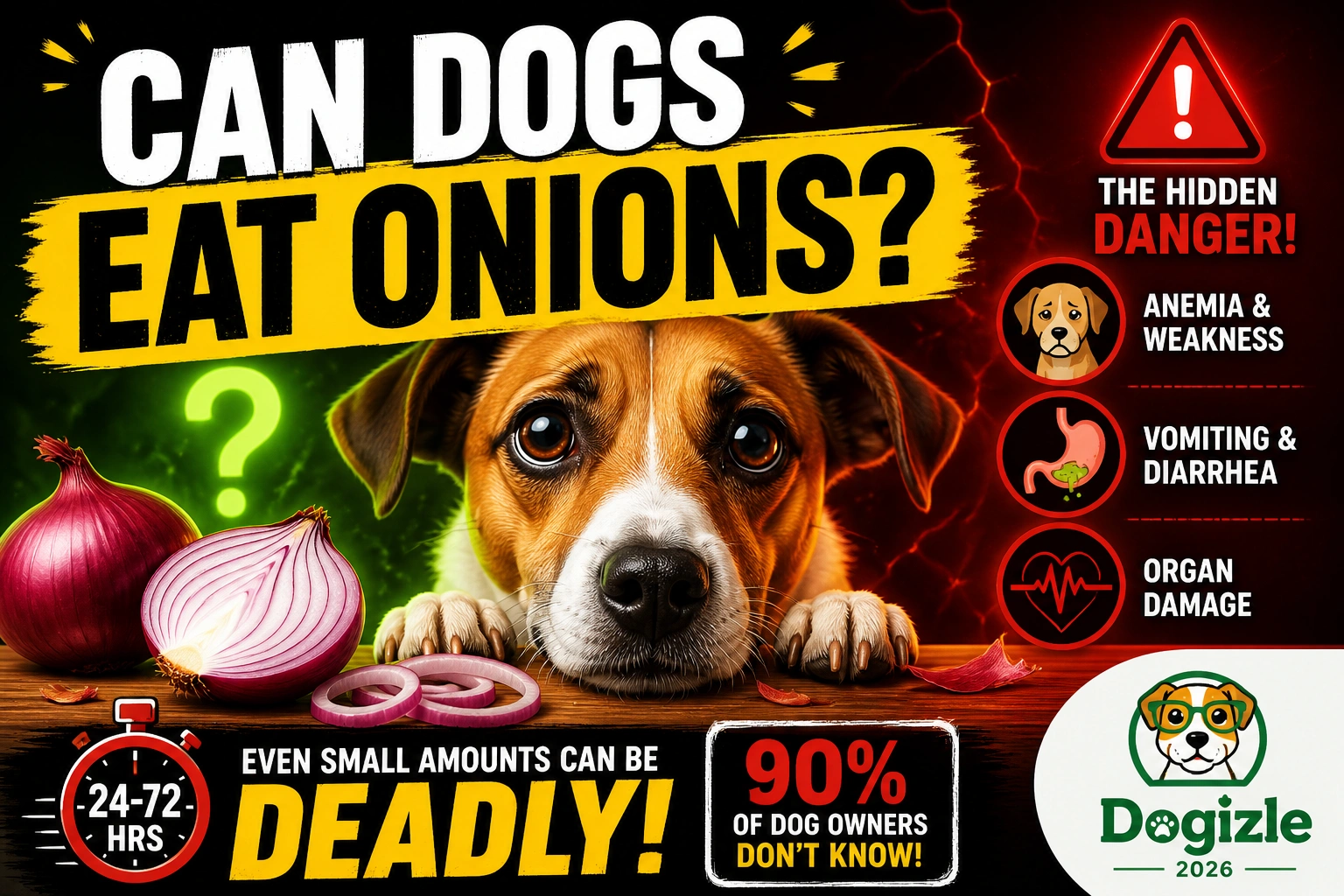
Can Dogs Eat Onions? — The Hidden Toxic Threat Most Owners Miss
Yes—dogs should not eat onions, because even small amounts can be toxic and damage red blood cells. If your dog slipped a bite, this guide explains the warning signs. How much is too much, and when to call a vet? You’ll learn what to do next fast, before a hidden problem turns serious, and protect your pet from lasting harm. “Can dogs eat Onions?” is one of those questions that seems simple on the surface. But the answer can have serious consequences for your dog’s health. Onions are common in home kitchens. Restaurant meals, sauces, soups, and prepared foods. Which means accidental exposure happens more often than many owners realize. Veterinary sources consistently warn that onions. Along with the rest of the Allium family, it can trigger gastrointestinal upset and red blood cell damage in dogs.
The real danger is that onion poisoning is not always obvious right away. Some dogs show stomach upset early, but the more serious blood-related effects may take several days to appear. That delay is exactly why a dog can seem “fine” at first and still be in trouble later. If your dog has eaten an onion in any amount. The safest move is to treat it as a potential poison exposure and act quickly.
This article gives you a clear, search-friendly. And a veterinarian-aligned explanation of onion toxicity in dogs, including the science behind it, and the symptoms to watch for. The likely timeline, emergency steps, and safer food alternatives you can use instead.
Why Are Onions Dangerous for Dogs?
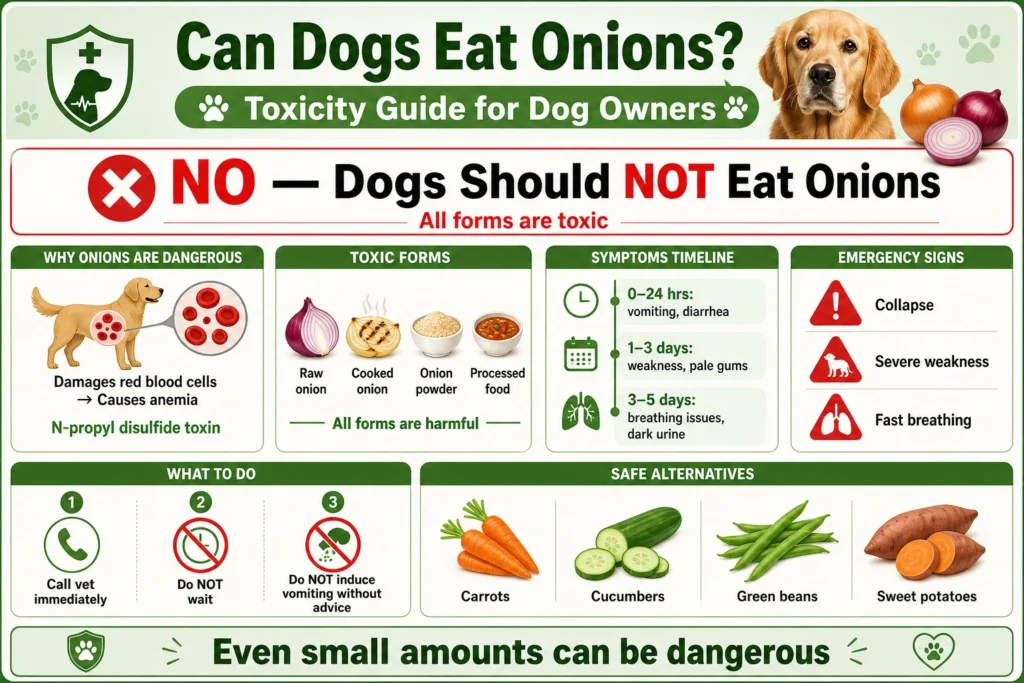
No. Dogs should not eat onions in any form. Whether they are raw, cooked, powdered, dehydrated, grilled, fried, mixed into gravy, or hidden inside a recipe. Veterinary and poison-control sources agree that onions are toxic to dogs. And the risk does not disappear when the onion is heated or blended into another food.
The safest rule is simple: do not intentionally feed onions to your dog under any circumstances. What looks like a tiny amount to a person may still be enough to create digestive upset or red blood cell injury, especially in smaller dogs, sensitive breeds, or dogs who have been exposed more than once.
Why Are Onions Toxic to Dogs?
Onions belong to the Allium family, which also includes garlic, leeks, chives, and shallots. These plants contain oxidizing compounds, and veterinary sources identify N-propyl disulfide as a toxic principle in onions. In dogs, these compounds can damage red blood cells, making them more fragile and more likely to rupture. That process can lead to hemolytic anemia, which means the body loses its oxygen-carrying red blood cells faster than it can replace them.
When red blood cells are damaged, oxygen delivery drops. That is why onion toxicity can go beyond “an upset stomach” and become a true medical emergency. Dogs may develop weakness, rapid breathing, high heart rate, pale gums, discolored urine, collapse, and in severe cases, organ stress or death.
What Makes Onions So Dangerous? (Simple Science)
A simple way to think about onion toxicity is this: onions contain chemicals that act like tiny saboteurs inside the bloodstream. Once they are absorbed, they can injure the membranes of red blood cells. Damaged cells become unstable, and the body breaks them down before they can do their job properly. That is why a dog may first show vomiting, drooling, or diarrhea, and later show signs of anemia and low oxygen delivery.
Veterinary references describe the resulting condition as Heinz body hemolytic anemia or hemolytic anemia, and they note that the oxidative injury can begin within hours while the more obvious clinical signs may not appear until several days later. This delayed pattern is one of the reasons onion poisoning is so easy to miss at home.
How Much Onion Is Toxic to Dogs? (With Chart)
There is no meaningful “safe” amount to offer as a treat, because the practical advice for pet owners is to avoid onions entirely. That said, published veterinary references report clinical signs in dogs after ingestion of 15–30 g/kg of raw onion, while concentrated forms such as powders, flakes, and dry soup mixes are considered especially risky because they pack more onion into a smaller dose.
Here is a simple way to think about those reported clinical-sign ranges:
A 5 kg dog would reach that published range at roughly 75–150 g of raw onion. A 10 kg dog would reach it at roughly 150–300 g. A 20 kg dog would reach it at roughly 300–600 g. These are only rough illustrations of the published range, not a safety margin, because individual dogs vary, and concentrated onion ingredients can create trouble with less food volume.
The most important practical message is this: do not wait to see whether the amount was “enough.” If the dog is small, if the food contained onion powder, or if the exposure happened more than once, the risk rises. Veterinary poison guidance and clinical references emphasize that susceptibility and severity can vary.
Onion Poisoning Timeline in Dogs
Onion poisoning often unfolds in stages. Early on, a dog may develop vomiting, diarrhea, drooling, abdominal discomfort, or reduced appetite. Those signs can happen relatively soon after eating onions. But the red blood cell damage that makes onion poisoning dangerous may take several days to show up, which means a dog can appear stable and then worsen later.
Within the first 24 hours, some dogs may show gastrointestinal signs and early metabolic changes. Over the next 1–3 days, weakness, lethargy, pale gums, poor appetite, and faster breathing may become more noticeable. By 3–5 days, hemolysis can become more obvious, and the dog may develop red or dark urine, marked fatigue, elevated heart rate, collapse, or other signs of anemia.
That delay matters because many owners assume that “no symptoms yet” means “no problem.” Veterinary sources warn against that assumption. The safest response is immediate action, not waiting for the timeline to prove the exposure was serious.
Symptoms of Onion Toxicity in Dogs
The first wave of symptoms often looks like a stomach bug: vomiting, diarrhea, drooling, belly discomfort, reduced appetite, and a general low-energy appearance. These are common warning signs in the early phase of Allium poisoning.
As the condition progresses, the focus shifts from the digestive tract to the blood. Watch for pale gums, weakness, rapid breathing, panting, a fast heart rate, exercise intolerance, and urine that looks red, brown, or unusually dark. These signs are strongly associated with red blood cell damage and anemia.
In severe cases, the dog may collapse, struggle to breathe, become too weak to stand, or appear mentally dull and unresponsive. Those signs need urgent veterinary care right away.
What to Do If Your Dog Eats Onions
The best first step is to stay calm and act quickly. Remove any remaining onion-containing food, estimate how much was eaten, and identify whether it was raw onion, cooked onion, onion powder, or a prepared food with onion listed in the ingredients. Then call your veterinarian or a poison-control service as soon as possible for case-specific advice. VCA specifically recommends immediate contact so the risk can be assessed and treatment can begin early if needed.
Do not take a “wait and see” approach. The RSPCA specifically advises pet owners not to watch and wait after a suspected poisoning event, and it also says not to try to make dogs vomit at home. That advice matters because home treatment can make the situation worse, especially if the wrong method or dose is used.
If a veterinarian decides treatment is needed soon after ingestion, the clinic may induce vomiting, give activated charcoal, monitor blood values, and provide supportive care. Merck notes that treatment can involve early gastrointestinal decontamination, management of acute hemolytic anemia, and IV fluid therapy. Severe cases may require hospitalization and close monitoring.
Can Dogs Eat Cooked Onions or Onion Powder?
No. Cooking does not make onions safe for dogs. Both VCA and Merck note that raw, cooked, dehydrated, granulated, and powdered forms can still cause poisoning, because the toxic compounds remain a problem even after heat or processing.
Onion powder is especially concerning because it is concentrated. A recipe may contain only a spoonful of powder, but that spoonful can represent a surprisingly large amount of onion in a compact form. Prepared foods are a common trap here: soups, sauces, gravy, seasoning blends, baby food, takeout, stuffing, and seasoned meat can all hide onion ingredients.
That is why the ingredient label matters. If onion, onion powder, onion flakes, onion extract, or another Allium ingredient appears in the food, it is not a dog-safe choice.
Are All Allium Foods Dangerous?
Yes. The Allium family includes onions, garlic, leeks, chives, and shallots, and veterinary sources warn that all of these can be toxic to dogs. The exact risk depends on the plant, the form, the amount, and the dog’s individual sensitivity, but the family should be treated as unsafe for pets.
Garlic deserves special mention because Merck states it is about 3–5 times more toxic than onion, and Pet Poison Helpline gives a similar estimate of about 5 times as potent. That means a “small flavoring” mentality can be especially risky when garlic is involved.
The safest rule for dog owners is simple: keep all Allium foods and seasonings out of your dog’s diet, and assume that anything built around onion or garlic is unsafe unless a veterinarian says otherwise.
Safe Alternatives to Onions for Dogs
If you want to share a crunchy snack or a light topper with your dog, choose foods that are actually dog-friendly. Veterinary nutrition sources list carrots, cucumbers, green beans, peas, and sweet potatoes among the vegetables that can be safe for dogs when served plain and in moderation. AKC and PetMD both support carrots, cucumbers, and green beans as good options, while PetMD also notes that sweet potatoes are safe when cooked and that zucchini is also dog-safe.
Carrots are popular because they are low in calories and crunchy. Cucumbers are hydrating and light. Green beans are fiber-rich and easy to serve plain. Sweet potatoes need to be cooked, but they can be a good occasional treat. Zucchini is another useful option for owners looking for variety.
The bigger point is not that vegetables should become a Dog’s main diet, but that there are plenty of safe, simple foods available when you want to reward your pet without taking a poison risk.
Prevention Tips for Dog Owners
Prevention starts in the kitchen. Keep onions, garlic, soups, spice mixes, and leftovers out of reach, and never assume that a dog will ignore something just because it smells strong. VCA specifically recommends preventing access to plants, herbs, seasonings, leftovers, and supplements that contain these ingredients.
Be especially careful with shared meals and holiday cooking. BVA and VCA both warn that onion-containing foods can appear in festive dishes, toppings, gravies, and BBQ foods, where dogs may be tempted by dropped scraps or unattended plates. Many poisoning cases happen when owners think a tiny bite from the table “cannot matter.”
It also helps to teach the household. Everyone in the home should know that an onion is not a harmless snack, and every visitor who feeds the dog should understand that “human food” is not automatically safe food.
Common Mistakes Dog Owners Make
One of the biggest mistakes is underestimating small exposures. Owners often think that a few bites of seasoned food are harmless, but veterinary sources consistently warn that toxicity can occur from raw, cooked, powdered, or concentrated Allium ingredients.
Another common error is waiting for symptoms. Onion poisoning can be delayed, and a dog may look okay for a while before weakness, anemia, or red-colored urine appear. That delay is exactly why you should not use “behavior today” as your only safety check.
A third mistake is relying on old folklore, such as “cooked onions are fine” or “garlic is healthy in small amounts.” Those claims do not align with current veterinary toxicology guidance. Garlic is also an Allium toxin, and it is considered more potent than onion.
Expert-Level Tips
If you want to be genuinely prepared, keep a short emergency plan ready before anything happens. Know your regular veterinarian’s number, know where the nearest emergency clinic is located, and know how to contact a poison-control service quickly. VCA and the RSPCA both emphasize rapid veterinary contact after a suspected poisoning event.
It is also smart to understand what a healthy dog’s gums look like. Pale gums can be a warning sign of anemia or poor oxygenation, which matters in onion poisoning because red blood cell injury is part of the toxic process.
A final practical tip: keep all spice jars, meal-prep trays, lunch boxes, takeout containers, and leftovers stored securely. Poison exposures often happen when the dog reaches something the owner did not think was at risk. VCA specifically notes that pets can get into cabinets, drawers, counters, backpacks, and purses, so kitchen security matters more than many people realize.
Breed Sensitivity Note
Not every dog reacts the same way to onion exposure. Pet Poison Helpline notes that certain dogs, including Japanese breeds such as Akita and Shiba Inu, may be more sensitive. That does not mean other dogs are safe; it means breed can influence vulnerability, so you should never assume your dog is “tough enough” to handle onions.
This is one more reason to avoid testing the limits. The healthiest approach is zero intentional exposure and fast action whenever accidental ingestion happens.
EU Pet Safety & Veterinary Standards
For UK and broader European readers, the practical message is the same: keep onion-containing foods away from dogs, and seek veterinary help immediately if exposure occurs. The RSPCA says not to watch and wait after poisoning is suspected, and BVA warns that onion, garlic, and leeks are among the common toxic foods dogs and cats may encounter at home or during holiday meals.
That guidance aligns with major veterinary sources such as VCA, Merck, ASPCA, AKC, and Pet Poison Helpline, all of which describe onion-related toxicity as a real risk that can cause gastrointestinal upset, red blood cell damage, anemia, and emergency symptoms.
FAQs
A small amount may not kill every Can Dogs Eat Onions, but it can still cause harm, and some Dogs are more sensitive than others. Because the response varies by size, dose, form, and individual susceptibility, you should not wait to see whether a small exposure becomes serious.
No. Onion soup is unsafe because onions may be present in the broth, seasoning, or powder form, and concentrated Allium ingredients are particularly concerning.
Treat it as an urgent exposure and contact your veterinarian quickly. Onion powder is a concentrated form of onion, and veterinary sources warn that powdered and dehydrated Allium products can be harmful.
Stomach upset may appear sooner, but red blood cell damage and anemia may take several days to show up. That delayed pattern is well documented in veterinary references.
No. Organic does not mean non-toxic. The issue is the onion itself and its toxic compounds, not how it was grown.
No. Puppies should not eat onions. Young dogs are smaller, which can make toxic exposures more serious relative to their body weight.
No. Garlic is also toxic, and Merck and Pet Poison Helpline both report that garlic is more potent than onion.
Pros & Cons
There can be a nice bonding moment when you share food with your dog, and some plain fruits or vegetables can be used as occasional treats. But the downside is significant: human food often contains salt, fat, seasoning, or hidden toxic ingredients such as onion and garlic.
For that reason, the safest approach is to treat human food as an occasional, carefully chosen extra—not a default habit. When in doubt, go with plainly prepared dog-safe options instead of whatever happens to be on the plate.
Conclusion — Protect Your Dog Before It’s Too Late
Onions may be a harmless everyday ingredient for humans, but for Can Dogs Eat Onions , they pose a serious and preventable health risk. Whether raw, cooked, powdered, or hidden inside processed foods, onions contain toxic compounds that can damage your dog’s red blood cells and lead to dangerous conditions like hemolytic anemia. What makes onion poisoning especially risky is the delayed onset of symptoms. Your Can Dogs Eat Onions may appear normal at first, but internal damage can already be happening. By the time clear warning signs appear—such as weakness, pale gums, or dark urine—the situation may already require urgent veterinary care.