Can Dogs Eat Mushrooms? — Safe vs Toxic Truth Every Owner Must Know
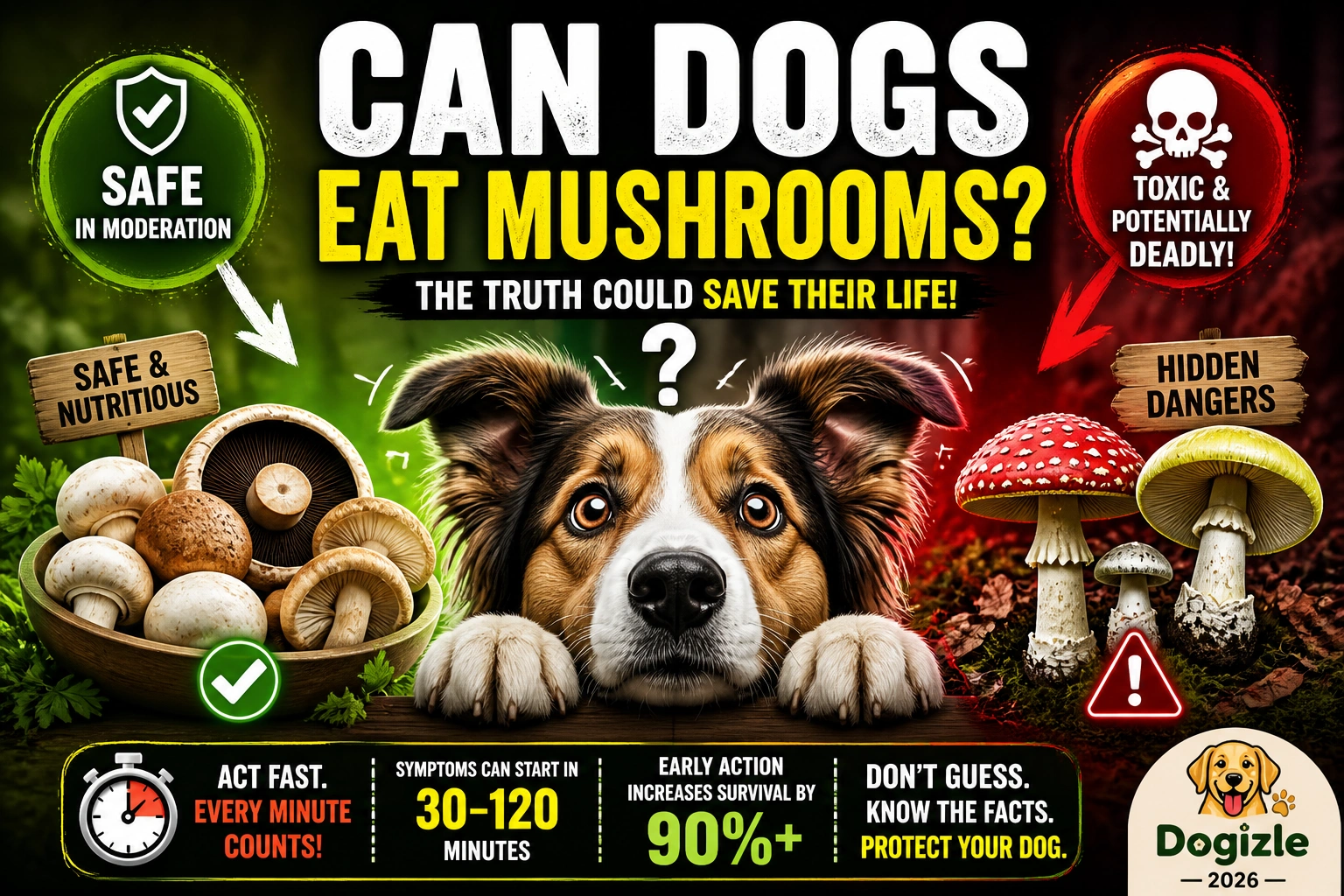
Yes, dogs can eat some mushrooms, but many are highly toxic and even deadly. Can Dogs Eat Mushrooms? — worried about poisoning or confusion over safe vs toxic types? This guide shows exactly which mushrooms are safe, which to avoid, and what to do fast if your dog eats one—before a small mistake turns into a serious emergency. Can dogs eat Mushrooms? It is a simple question with a complicated answer, because the word “mushroom” covers both harmless food and highly dangerous wild fungi.
In practical terms, the answer is yes, some store-bought mushrooms can be safe in small amounts, but many wild mushrooms are toxic, and some can cause severe poisoning, organ failure, seizures, or death. Veterinary and poison-control sources consistently warn that mushroom ingestion should be treated seriously, especially when the species is unknown.
This topic matters even more in Europe because mushroom growth is common after rain, especially in gardens, parks, wooded paths, and grassy public spaces. Dogs are naturally curious, quick to sniff, and often willing to sample things they should not eat, which is one reason veterinarians consider them particularly vulnerable to mushroom toxicosis. That risk is heightened when owners assume all mushrooms are harmless or that cooking makes every mushroom safe.
The safest approach is simple: only give dogs plain, prepared, supermarket mushrooms in tiny amounts if you choose to offer them at all, and treat any wild or unidentified mushroom as an emergency exposure. Multiple veterinary and poison-control sources say not to wait for symptoms before seeking help when an unknown mushroom has been eaten.
Can Dogs Safely Eat Mushrooms or Is It Dangerous?
A useful way to think about mushroom safety is to separate mushrooms into three practical risk levels: low risk, caution, and high risk. This is not a formal diagnostic scale, but it is a clear framework for dog owners. It helps explain why one mushroom may be a mild digestive issue while another can become a life-threatening toxin exposure. Veterinary toxicology references note that mushroom toxins vary widely, with effects ranging from stomach upset to liver failure, kidney damage, neurologic signs, and death.
Level 1: Safe Mushrooms for Dogs, with strict limits
Store-bought mushrooms such as white button, cremini, portobello, and similar food-grade varieties are generally considered safe when plain and cooked. Sources aimed at pet owners consistently emphasize that supermarket mushrooms prepared for human consumption are typically fine, but the toppings and cooking fats people love are not. That means the mushroom itself is not the only issue; the preparation matters just as much.
Even when mushrooms are non-toxic, they are still not nutritionally essential for dogs. Dogs get complete and balanced nutrition from quality commercial diets, and in Europe, those diets are commonly formulated according to FEDIAF nutritional guidance for complete pet food. In other words, mushrooms can be an optional nibble, not a necessity.
Level 2: Caution mushrooms
Some mushrooms are sold or marketed as “medicinal” or “functional” ingredients, and these are a different category from a simple kitchen vegetable. Veterinary sources caution that supplements and medicinal mushroom products can still cause sensitivity, digestive upset, or other adverse reactions, and the evidence for long-term benefit in dogs remains limited. Because the market is variable and formulations differ, these products should be used only with veterinary guidance.
Level 3: Toxic mushrooms for dogs
Wild mushrooms are where the danger becomes serious. Toxic species may include Amanita types such as death cap or destroying angel, as well as mushrooms that contain muscarine, gyromitrin, orellanine, ibotenic acid, muscimol, psilocybin, or unknown toxins. These can produce rapid digestive upset, neurologic signs, liver injury, kidney failure, or fatal multi-organ damage. Merck Veterinary Manual and poison-control references are clear that toxic mushroom exposure can be mild, delayed, or deadly depending on the species involved.
Can Dogs Eat Store-Bought Mushrooms?
Yes, plain store-bought Mushrooms are generally considered safe in moderation, provided they are properly prepared, and the dog does not have a sensitive stomach or special dietary restriction. Pet and veterinary sources agree that grocery-store mushrooms intended for human consumption are usually not the main risk; the danger comes from seasoning, fats, sauces, and the possibility of a wild mushroom being mistaken for an edible one.
That said, “safe” does not mean “superior.” Mushrooms do not offer dogs a unique dietary advantage that outweighs the possibility of digestive upset. They may contain fiber and small amounts of vitamins or minerals, but pet-nutrition sources stress that there is no real reason to make them a regular feature in a dog’s meal plan.
The best way to serve a mushroom to a dog, if you choose to do so, is plain, cooked, and unseasoned. No garlic, onion, heavy salt, butter, cream, or spice blends should be used because those additions create separate health risks. This is the same practical rule veterinarians often use for many human foods: the ingredient may be acceptable, while the human preparation is not.
Can Dogs Eat Wild Mushrooms?
No. Wild mushrooms should be treated as unsafe unless a qualified professional has identified them quickly and confidently as non-toxic. Poison-control guidance says all mushroom ingestions should be considered potentially toxic until proven otherwise, and veterinarians warn owners not to wait for symptoms because the delay can be dangerous.
The problem with wild mushrooms is identification. Many dangerous species resemble harmless ones, and even experienced foragers can make mistakes. ASPCA and other veterinary sources note that most toxic mushrooms are difficult to distinguish from non-toxic varieties, which is exactly why a visual guess is not enough.
Cooking does not reliably solve the problem. Some mushroom toxins remain dangerous even after heat exposure, and delayed-onset toxins can make owners think the dog is fine when the damage is already unfolding internally. The danger is not just the first hour after ingestion; some mushroom poisons show signs only much later, especially those that affect the liver or kidneys.
Why Mushroom Poisoning Is So Unpredictable
Mushroom poisoning is unpredictable because different species attack different body systems. Some act mainly on the digestive tract and cause vomiting, diarrhea, drooling, and dehydration. Others produce neurologic signs such as wobbliness, tremors, disorientation, and seizures. The most dangerous toxins can quietly damage the liver or kidneys before outward signs become obvious.
Timing is another reason this problem is so dangerous. Some toxins cause signs within minutes to a few hours, while others may not show symptoms until 6 hours, 24 hours, or even days later. By the time a dog looks very sick, organ damage may already be advanced. Poison specialists therefore recommend immediate veterinary evaluation for any unknown mushroom ingestion.
This delayed pattern is one reason mushroom poisoning is often missed at first. A dog may seem normal after a snack in the yard or after nibbling during a walk, then become ill long after the owner has forgotten the event. The absence of immediate symptoms is not proof of safety.
Dogs Mushroom Poisoning Symptoms
The symptoms of Mushroom poisoning in dogs depend on the toxin involved, the quantity eaten, and how quickly the body absorbs it. Early signs often affect the stomach and intestines, but some toxins move directly toward the nervous system or internal organs. Veterinary toxicology sources describe a broad range of clinical signs.
Early symptoms, often within minutes to several hours
Common early signs include vomiting, diarrhea, drooling, abdominal discomfort, weakness, and loss of appetite. Some mushrooms that trigger a cholinergic response can also cause excessive salivation, tearing, urination, and breathing difficulty. In many cases, early digestive illness is the first clue that the mushroom was not safe.
Mid-stage symptoms, often after several hours
As poisoning progresses, dogs may develop tremors, stumbling, confusion, unsteady movement, low energy, dehydration, or changes in gum color. Certain toxins can start injuring the liver or kidneys during this window, which is why “he seems okay now” can be a false reassurance.
Severe symptoms, which require emergency care
Severe mushroom poisoning can lead to seizures, collapse, coma, liver failure, kidney failure, bleeding problems, shock, and death. Toxicology references note that some species can cause fatal outcomes, especially when treatment is delayed or the dog ingests a highly toxic mushroom such as an Amanita species.
What to Do If Your Dog Eats a Mushroom
Time matters. If your dog eats an unknown mushroom, the safest move is to treat the event as a medical emergency rather than waiting to see what happens. Pet poison experts repeatedly advise immediate contact with a veterinarian or poison helpline, because mushroom species are hard to identify, and some toxins work fast.
Step 1: Remove the dog from the area
Stop the dog from eating more mushroom material and move them away from the spot. If you are outdoors, prevent further nibbling while you assess the situation. This immediate separation reduces additional exposure.
Step 2: Collect evidence safely
If it is safe to do so, take a clear photo of the mushroom and gather a sample in a bag or container. Veterinary and poison-control sources note that identification by a professional can help determine the best treatment plan. A photo from the walk can be extremely useful, especially if the mushroom was growing in a garden, park, or forest edge.
Step 3: Contact a veterinarian or poison line immediately
Do not wait for vomiting, tremors, or weakness to begin. Immediate professional advice is the best way to reduce harm, because some mushrooms become far more dangerous after the window for decontamination has passed.
Step 4: Do not induce vomiting unless a professional tells you to
Home vomiting can make things worse in some poisoning situations, and poison-control guidance specifically warns against doing it without veterinary direction. The correct response depends on the toxin, the timing, and the dog’s condition.
Step 5: Follow the treatment plan exactly
Treatment may include decontamination, activated charcoal in some cases, anti-nausea medication, fluid therapy, hospitalization, blood work, neurologic monitoring, and longer observation if liver or kidney injury is possible. The precise plan depends on what was eaten and how long ago the exposure occurred.
Safe Feeding Guide for Mushrooms, If You Choose to Offer Them
Even when the mushroom is a common food-grade variety, moderation matters. Dogs do not need mushrooms for a healthy diet, so any serving should be small, plain, and occasional. That approach reduces the chance of digestive upset and keeps the treat from displacing a nutritionally complete meal.
The ideal format is simple: fully cooked, unsalted, and free from butter, oils, sauces, garlic, onion, and spice blends. This matters because the risks often come from the recipe rather than the mushroom itself. Many pet nutrition sources make the same point for human foods that dogs can technically eat, but should only receive in the least processed form.
Feeding guide by dog size
| Dog weight | Suggested amount | Frequency |
| Under 10 kg | 1–2 small pieces | Rare treat |
| 10–25 kg | 2–4 small pieces | Occasional |
| 25–40 kg | 5–6 small pieces | Rare or occasional |
| 40+ kg | Small handful at most | Occasional |
This table is a conservative treat guide, not a nutritional requirement. Start even smaller if your dog has a sensitive stomach, a history of pancreatitis, or a diet plan from your vet.
Do Mushrooms Have Benefits for Dogs?
Mushrooms do contain nutrients, including some fiber and trace vitamins or minerals, and pet nutrition sites sometimes describe them as a source of minor nutritional value. But the key point is proportion: dogs already receive complete nutrition from balanced food, and mushrooms are not a necessary component of canine health.
In Europe, nutritionally complete dog food is commonly formulated under FEDIAF guidance, which exists specifically to help manufacturers provide balanced, complete, and complementary pet foods for healthy dogs and cats. That means most dogs already receive far more reliable nutrition from their main diet than from any vegetable-style garnish.
So the honest answer is this: mushrooms may be an optional treat, but they are not a meaningful health upgrade. The real value lies in making the main diet balanced, safe, and appropriate for the dog’s age and body condition.
Real-Life Mushroom Risks in Europe
Mushroom exposure is not just a wilderness problem. Dogs can encounter mushrooms in backyards, shared green spaces, footpaths, urban parks, and forest trails. ASPCA and other veterinary sources specifically warn pet owners to watch for mushrooms around trees and grassy areas, especially during seasonal growth periods.
Backyard growth after rain
After rainfall, mushrooms can appear quickly in lawns, mulch beds, shaded borders, and neglected corners of a garden. Owners may not notice them until a dog has already investigated them with its nose and mouth. Because many toxic species resemble harmless ones, the safer habit is to remove mushrooms promptly and supervise the dog while outdoors.
Forest walks and trail exposure
Wooded and semi-wooded areas can contain a wide variety of fungi. In these settings, dogs that explore off-leash or sniff intensely near damp soil have a higher chance of contact. The risk is not limited to rural areas; even suburban trails can hide dangerous mushrooms in leaf litter or along tree roots.
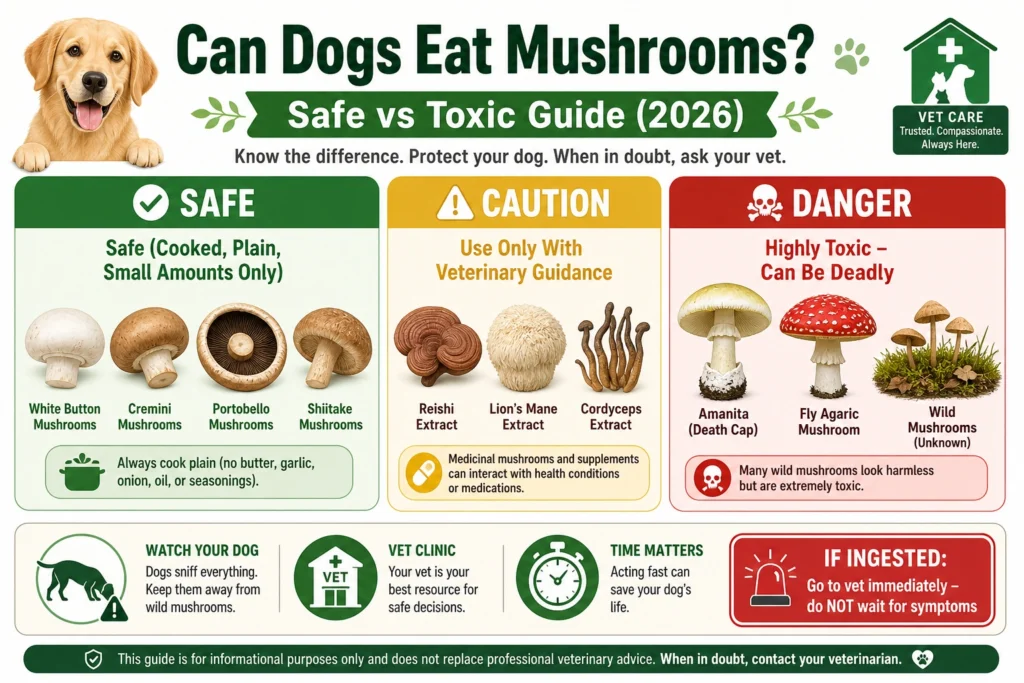
Discover which mushrooms are safe, which are toxic, and what to do in an emergency. A must-read vet-approved guide to protect your dog from accidental poisoning in 2026.
Urban parks and city lawns
City parks and residential green spaces are not mushroom-free. Damp weather, mulch, and shaded turf can create ideal growing conditions, so a dog in a busy neighborhood may still encounter a poisonous fungus. That is why poisoning prevention should be part of routine leash and recall training, not just a “country walk” concern.
Common Mistakes Dog Owners Make
A major reason that Mushroom poisoning becomes serious is that owners underestimate the risk. The most common mistake is assuming that a mushroom is harmless because it was found in the yard or because it looks ordinary. Poison-control and veterinary sources emphasize that visual identification is unreliable for non-experts.
Another mistake is believing that cooking neutralizes every danger. It does not. Some toxins remain active after heat exposure, and some dangerous species are only identifiable by specialists, not by appearance alone.
A third mistake is waiting too long. Dogs may seem fine for hours, then worsen later, especially with delayed toxins that affect the liver or kidneys. In poisoning cases, delayed action often means reduced treatment options and a worse outcome.
Expert Veterinary Tips for Prevention
Prevention is the most powerful tool you have. Treat every wild mushroom as potentially hazardous, because the cost of caution is low and the cost of error can be enormous. That principle is consistent across poison-control guidance and veterinary toxicology references.
A practical prevention plan includes teaching a strong “leave it” cue, keeping the dog on leash during peak mushroom growth seasons, checking your yard after rain, and avoiding areas with visible fungal growth. ASPCA and VCA both advise pet owners to be alert in lawns, parks, and autumn conditions when mushrooms are more likely to appear.
It also helps to save the number of your local emergency clinic and a poison helpline in your phone before an incident happens. In a real emergency, you do not want to be searching for contacts while your dog is getting sicker.
Breed-Specific Risk
Some dogs are simply more likely to eat mushrooms than others. Food-driven breeds, adventurous sniffers, and young dogs tend to investigate with their mouths, which increases the chance of accidental ingestion. This is a behavior issue more than a breed flaw, but it affects risk.
Labradors, Beagles, puppies, and highly active outdoor dogs often deserve extra supervision because they may be more persistent scavengers or less discriminating about what they taste. Any dog with a strong habit of grabbing food from the ground should be taught reliable “leave it” behavior and monitored carefully in mushroom season.
The most important takeaway is that personality matters more than breed labels. A curious, hungry, or under-trained dog of any size can be at risk if mushrooms are present.
Can Dogs Eat Mushrooms for Health Reasons?
Some people ask whether Mushrooms could improve immunity, digestion, or overall vitality. The cautious answer is that the evidence for meaningful health benefits in dogs is limited, especially compared with the evidence supporting balanced, complete diets. Veterinary sources on medicinal mushrooms note possible sensitivity reactions and emphasize that research is still evolving.
In a healthy dog, the most valuable nutritional “upgrade” is not a trendy mushroom supplement. It is a well-formulated diet that matches the dog’s age, activity level, and health status. In Europe, FEDIAF nutritional guidelines exist for exactly that reason.
So, while mushrooms may sound functional or wholesome, they are not a shortcut to better canine health. Safety and balance matter more than novelty.
Quick Safety Summary for Dog Owners
Assuming-that the mushroom came from a supermarket and is plain cooked, a tiny portion is usually the safer end of the spectrum. If the mushroom is wild, unidentified, or growing outdoors, assume it is dangerous until a professional says otherwise. If your dog has already eaten an unknown mushroom, do not wait for symptoms—seek veterinary help immediately.
The single best rule is this: unknown mushroom equals emergency. That rule is simple, memorable, and far safer than trying to guess based on appearance.
FAQs
Yes, plain cooked store-bought mushrooms are generally considered safe in small amounts. Keep them unseasoned and avoid butter, onion, garlic, oil-heavy recipes, and rich sauces. The mushroom itself may be acceptable, but the human preparation often is not.
No. Wild mushrooms should be treated as unsafe because many poisonous species are hard to tell apart from harmless ones. Poison-control sources advise considering all wild mushroom ingestions potentially toxic until identification is confirmed by a professional.
Contact a veterinarian or poison helpline right away, and do not wait for symptoms. Take a photo or sample if it is safe, because identification helps guide treatment. Avoid inducing vomiting unless a professional instructs you to do so.
Yes. Highly toxic mushrooms can cause organ failure, seizures, coma, and death. The danger is greatest when the species is unknown or when the mushroom belongs to a highly toxic group such as Amanita.
Plain, cooked supermarket mushrooms are generally safer than wild ones, but puppies should only receive tiny amounts, if any. Puppies are also more likely to chew on outdoor objects, which makes supervision more important during walks and playtime.
It varies. Some mushroom toxins cause signs within 15 to 30 minutes, while others may take several hours or even days to produce obvious illness. That is why waiting for symptoms is risky.
No, not reliably. Cooking does not make wild mushrooms safe, and some mushroom toxins remain hazardous after heat exposure. Identification and veterinary advice are much more important than hoping cooking has neutralized the problem.
Conclusion:
So, can dogs eat Mushrooms? The safest answer is balanced and strict: yes, plain supermarket mushrooms can be acceptable in tiny amounts, but wild or unidentified mushrooms are a serious and potentially fatal danger. Veterinary toxicology, ASPCA guidance, and poison-control resources all point in the same direction: do not gamble with unknown fungi, and do not wait for symptoms if your dog has eaten one.