Introduction
Determining the Best Dog Food For Small Dogs is perhaps one of the most important decisions that you can make for your dog. Regardless of the fact that small dogs are lighter and appear to be more delicate in size when compared to large breed dogs, small breed dogs have a higher metabolic rate, and burn up energy quicker. This quicker burn rate of energy in small breed dogs means that they must have a higher concentration of calories and nutrients in their dog food in order to compensate for the quicker rate at which they are losing energy. You will find that there are a number of small breed dog food options that are designed specifically for your small breed dog, depending on the life stage of your dog.
From a one-room apartment house in London or Paris to a single-family house in the suburbs of Germany or Sweden, it is all too common to find European homes that are home to small breeds of dogs. Small breeds of dogs such as the Chihuahua, Yorkshire Terrier, the Shih Tzu, and the Pomeranian, among many others, are best served small breed dog food in small portions.
Health Problems From Bad Food Choices ,includes:
- Excess body weight
- Digestive upset
- Dental deterioration
- Reduced stamina
- Skin and coat disorders
A small dog needs more calories per kilogram of body weight than a large dog. Nutrition is a very important part of a dog’s life.
This complete small dog nutrition guide explains:
- How to choose the best dog food for small dogs
- Best dry dog food small breeds options
- Feeding schedules and portion sizes
- Vet recommended small dog food advice
- Ideal ingredients and harmful additives to avoid
- Diet-related health risks
- Feeding small dogs in Europe recommendations
This is one of the most detailed small breed nutrition resources available online.
Why Small Dogs Need Special Dog Food
Some feed manufacturers provide a small breed version of their large breed feed and feeding the regular large breed program for smaller dogs does not always satisfy their nutritional needs.
Faster Metabolic Rate
Small dogs expend calories at a much faster rate than large breeds.
Typical calorie requirements:
| Dog Weight | Daily Calories |
| 2 kg | 200–250 calories |
| 3 kg | 250–320 calories |
| 5 kg | 300–400 calories |
| 7 kg | 400–500 calories |
| 10 kg | 500–650 calories |
Our adorable puppy is now 5kg and apparently needs 300-400 calories per day, while our lazy giant is now 30kg and needs 1200-1500 calories per day.
Per kilogram, smaller dogs demand significantly more energy intake.
That is why toy breed formulas are usually nutrient-dense and calorie-rich.
Smaller Mouth Structure
Small breeds have narrower jaws and compact teeth.
Large kibble pieces can be difficult to chew and may discourage eating.
High-quality small breed formulas include:
- Mini kibble pieces
- Softer texture choices
- Easy-to-chew shapes
- Improved digestibility
Micro-kibble is ideal for Toy breeds as they are particularly at risk of choking and dental problems with large kibble.
Higher Fat Needs
Fat is a major fuel source for small dogs.
Most veterinarian-recommended formulas contain:
12–18% fat content
Healthy fats contribute to:
- Brain function
- Sustained energy
- Skin condition
- Coat shine
A low fat diet can cause tiredness in your pet and dull coats. On the other hand, too much fat in the diet can lead to obesity.
Proper balance is essential.
Dental Health Protection
Small breeds frequently develop dental disease.
Dry kibble may help reduce:
- Plaque accumulation
- Tartar buildup
- Gum inflammation
That is why many of our doctors recommend a high quality dry small breed dog food.
How To Choose The Best Dog Food For Small Dogs
Choosing a good dog food for your dog is not always easy. More and more dog foods are appearing in the stores and each is claiming to be the best. Unfortunately too many dog owners choose a Dog food based solely on advertisements
First of all, a European feeding strategy for small dogs has to take into account the composition of the diets and the ingredients used.
Protein Requirements
Protein supports muscle maintenance and immune defense.
The best dog food for small dogs should contain:
22–30% protein
Excellent protein sources include:
- Chicken
- Turkey
- Salmon
- Lamb
Avoid products where grains appear before meat in the ingredient list.
Quality protein improves:
- Lean muscle mass
- Energy levels
- Coat condition
Fat Requirements
Fat supplies concentrated energy.
Recommended fat levels:
12–18%
Low-fat intake may lead to:
- Low stamina
- Dry skin
- Weak coat
Excess fat intake may cause:
- Weight gain
- Digestive issues
Balanced fat intake is critical.
Kibble Size Considerations
Small kibble promotes proper chewing and digestion.
Look for:
- Small kibble diameter
- Soft or crunchy textures
- Easily chewable pieces
Toy breeds particularly require micro-kibble formulas.
Ingredient Quality
Premium ingredients support long-term health and disease prevention.
Look for:
- Named animal proteins
- Whole grains or vegetables
- Natural preservatives
Avoid foods containing:
- Artificial dyes
- Excessive fillers
- Chemical additives
Ingredient quality is one of the strongest indicators of a healthy diet.
AAFCO and FEDIAF Approval
Always choose dog food that meets recognized nutritional standards.
Important certifications include:
- AAFCO (United States)
- FEDIAF (Europe)
These standards confirm the food provides complete and balanced nutrition.
This is essential for feeding small dogs safely across Europe.
Best Dog Food For Small Dogs (Top Picks 2026)
These categories represent the most veterinarian-recommended feeding options.
Comparison Table
| Food Type | Best For | Protein | Price |
| Premium Dry Food | Balanced nutrition | High | $$$ |
| Wet Food | Easy chewing | Medium | $$$ |
| Budget Food | Affordable feeding | Medium | $ |
| Sensitive Food | Digestive care | Medium | $$$ |
| Puppy Food | Growth support | High | $$ |
| Senior Food | Aging dogs | Medium | $$ |
Best Overall Dog Food
High-quality formulas deliver complete and balanced nutrition.
Features include:
- High protein levels
- Balanced fat ratios
- Small kibble pieces
- Complete nutrient profiles
Best suited for:
Adult small breed dogs.
These diets form the foundation of a modern small dog nutrition plan.
Best Dry Dog Food Small Breeds
Dry food remains the most popular feeding choice.
Advantages include:
- Longer shelf life
- Simple storage
- Lower feeding cost
- Dental support
Dry food is usually the core of most European feeding routines.
Best Wet Dog Food
Wet food is softer and easier to chew.
Benefits include:
- Higher moisture levels
- Soft texture
- Strong aroma and flavor
Best suited for:
- Senior Dogs
- Dental problems
- Picky eaters
Wet food fits well into a balanced small-breed diet plan.
Best Affordable Dog Food
Budget-friendly foods can still provide proper nutrition.
Look for:
- Real meat sources
- Balanced nutrients
- No artificial coloring
- Certified nutrition standards
Affordable options allow owners to maintain consistent feeding routines.
Best Premium Dog Food
Premium diets typically contain:
- Higher meat content
- Superior ingredient quality
- Omega fatty acids
- Natural preservation
Premium foods often rank highest among veterinary recommendations.
Best Dog Food For Sensitive Stomach
Sensitive digestion formulas include:
- Limited ingredient recipes
- Gentle protein sources
- Easily digestible carbohydrates
Best suited for:
Dogs with food sensitivities.
These formulas are widely used in European feeding programs.
Best Dog Food For Puppies
Growing puppies require specialized nutrition.
Puppy formulas include:
- Higher protein levels
- DHA for brain growth
- Balanced calcium
Essential for toy breed development.
Best Dog Food For Seniors
Senior formulas contain:
- Reduced calories
- Joint nutrients
- Easy digestion
Best suited for:
Older small dogs.
Senior nutrition is essential for aging dogs.
Dry vs Wet Dog Food For Small Dogs
Both feeding methods offer advantages.
Comparison Table
| Feature | Dry Food | Wet Food |
| Cost | Lower | Higher |
| Dental health | Better | Worse |
| Moisture | Low | High |
| Storage | Easy | Harder |
| Taste | Moderate | High |
Dry Food Benefits
Dry food:
- Helps maintain dental health
- Costs less per meal
- Stores easily
- Supports feeding consistency
Ideal for daily feeding plans.
Wet Food Benefits
Wet food provides:
- Extra hydration
- Easier chewing
- Stronger taste
Ideal for selective eaters.
Best Feeding Approach
Many owners combine feeding styles:
- Dry food as main meals
- Wet food occasionally
Mixed feeding works well for most small dogs.
Best Ingredients For Small Dogs
Ingredients determine overall food quality.
A balanced formula includes multiple nutrient sources.
Excellent Protein Sources
Best protein options:
- Chicken
- Turkey
- Salmon
- Lamb
High-quality protein supports:
- Muscle development
- Energy production
- Immune defense
Healthy Carbohydrates
Good carbohydrate sources include:
- Brown rice
- Oats
- Sweet potato
Provide:
- Energy
- Fiber
- Digestive stability
Healthy Fats
Important fats include:
- Fish oil
- Chicken fat
- Flaxseed oil
Benefits include:
- Skin protection
- Coat shine
- Brain support
Essential Vitamins
Important nutrients include:
- Vitamin A
- Vitamin D
- Vitamin E
Support:
- Immunity
- Vision
- Bone health
Ingredients To Avoid
Poor-quality ingredients reduce nutrition value.
Avoid foods containing:
Artificial Colors
Offer no health benefit.
Often used in cheap foods.
Unknown Meat Meals
Labels such as:
“Meat by-product”
Often indicate inferior protein quality.
Better foods list specific meats.
Excess Fillers
Too much corn or wheat lowers nutritional value.
High-quality diets limit fillers.
Artificial Preservatives
Avoid:
- BHA
- BHT
Natural preservatives are safer.
Feeding Guide For Small Dogs
Proper portions prevent weight problems.
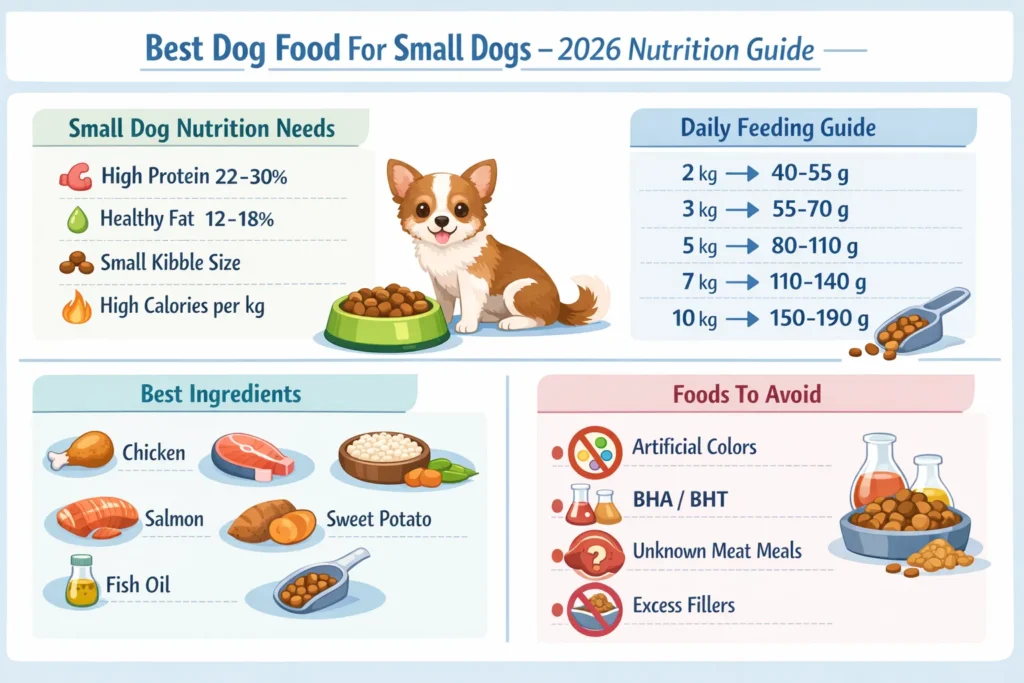
Small Dog Feeding Chart
| Dog Weight | Daily Food |
| 2 kg | 40–55 g |
| 3 kg | 55–70 g |
| 5 kg | 80–110 g |
| 7 kg | 110–140 g |
| 10 kg | 150–190 g |
Always check manufacturer feeding instructions.
How Much Should Small Dogs Eat
Food intake depends on:
- Age
- Activity level
- Body weight
Example:
A 5 kg dog needs:
Low activity → 300 calories
Active → 400 calories
Overfeeding quickly leads to obesity.
Small Dog Health Problems Related To Food
Diet strongly influences health.
Obesity
Small dogs gain weight easily.
Risks include:
- Joint strain
- Diabetes
- Reduced lifespan
Proper feeding prevents obesity.
Hypoglycemia
Common in toy breeds.
Symptoms include:
- Weakness
- Shaking
- Low energy
Frequent meals help prevent hypoglycemia.
Dental Disease
Small breeds often develop:
- Gum disease
- Tooth loss
- Plaque buildup
Dry food helps reduce plaque.
Best Dog Food For Different Small Breeds
Breed-specific nutrition improves health outcomes.
Food For Chihuahuas
Needs:
- Very small kibble
- High calories
- Frequent meals
Food For Yorkshire Terriers
Needs:
- Omega fatty acids
- High protein
Supports coat health.
Food For Shih Tzus
Needs:
- Skin nutrients
- Easy digestion
Sensitive stomachs are common.
Food For Pomeranians
Needs:
- High protein
- Joint support
Common Small Dog Feeding Mistakes
Many owners make avoidable errors.
Overfeeding
Most common problem.
Leads to:
- Obesity
- Low mobility
Too Many Treats
Treats should be under:
10% of daily calories.
Feeding Large Breed Food
Large Breed formulas have incorrect nutrient ratios.
Always choose small-breed formulas.
Sudden Food Changes
Rapid changes cause:
- Vomiting
- Diarrhea
Transition slowly.
How To Switch Dog Food Safely
Gradual transitions prevent digestive upset.
7-Day Transition Plan
| Day | Old Food | New Food |
| 1–2 | 75% | 25% |
| 3–4 | 50% | 50% |
| 5–6 | 25% | 75% |
| 7 | 0% | 100% |
Homemade vs Commercial Dog Food
Both approaches have advantages.
Homemade Food
Pros:
- Ingredient control
- Fresh meals
Cons:
- Difficult nutrient balance
- Time intensive
Commercial Food
Pros:
- Balanced nutrition
- Easy feeding
- Convenient storage
Cons:
- Quality differences
Most veterinarians recommend commercial diets.
Vet Tips For Feeding Small Dogs
Professional advice includes:
- Feed twice daily
- Measure portions
- Monitor weight monthly
- Choose small-breed formulas
- Provide fresh water
Pros and Cons of Small-Breed Dog Food
Pros
✔ Better digestion
✔ Smaller kibble
✔ Higher energy nutrition
✔ Dental support
✔ Balanced nutrients
Cons
✘ Higher cost
✘ Premium foods expensive
✘ Wet food spoils faster
Safety & Health Considerations
Never feed:
- Chocolate
- Onions
- Grapes
- Fatty leftovers
Always consult a veterinarian before major diet changes.
Expert Tips For Small Dog Owners
Professional feeding strategies include:
- Use kitchen scales
- Feed at fixed times
- Monitor body condition
- Adjust seasonal feeding
Dogs burn fewer calories during winter.
FAQs
The best dog food for small dogs is one made just for tiny tummies — real meat first, small kibble, and balanced nutrition to keep them energetic and healthy.
Most small dogs should eat:
2 meals daily
Toy breeds may need:
3 meals daily
Dry is considered better for the teeth and wet is considered easier to chew. Some owners combine both.
Yes. Small dogs need calorie-dense food with smaller kibble and balanced nutrients.
Chicken
Salmon
Brown rice
Sweet potato
Conclusion
Choosing a dog food for your small dog is one of the most important decisions you will ever make for your dog’s future health and wellbeing. Small breed dogs require a unique mix and balance of nutrients to ensure they maintain a healthy weight, have an effective immune system and have a glossy coat.
The ideal small-breed formula includes:
- High-quality protein
- Balanced fats
- Small kibble size
- Complete nutrition certification
Feed a weight loss Food as directed by your veterinarian. Be sure to understand the portions and feed accordingly, and have your dog’s weight checked.
I am constantly amazed at the sheer number of normal sized, healthy, short dogs that are considered “small”. This is a prime example of how nutrition can affect the final size of a dog.