DK Meaning in Text: What It Really Means (2026 Guide)
You’re mid-conversation, you ask a simple question, and back comes a two-letter reply: “DK.” No punctuation, no explanation — just DK.
For anyone unfamiliar with texting shorthand, that can feel oddly abrupt. Is it rude? Is it code for something else? Neither.
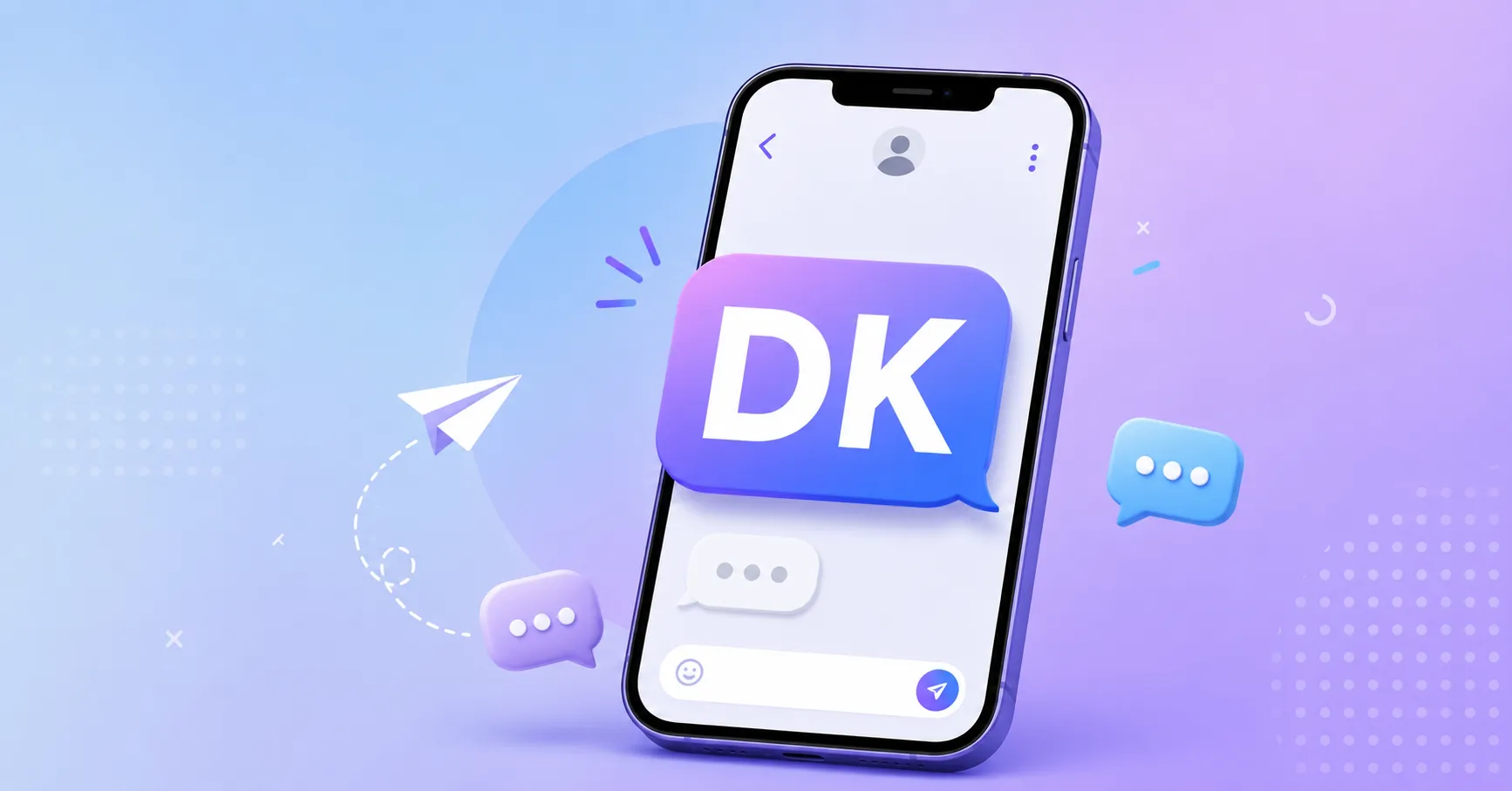
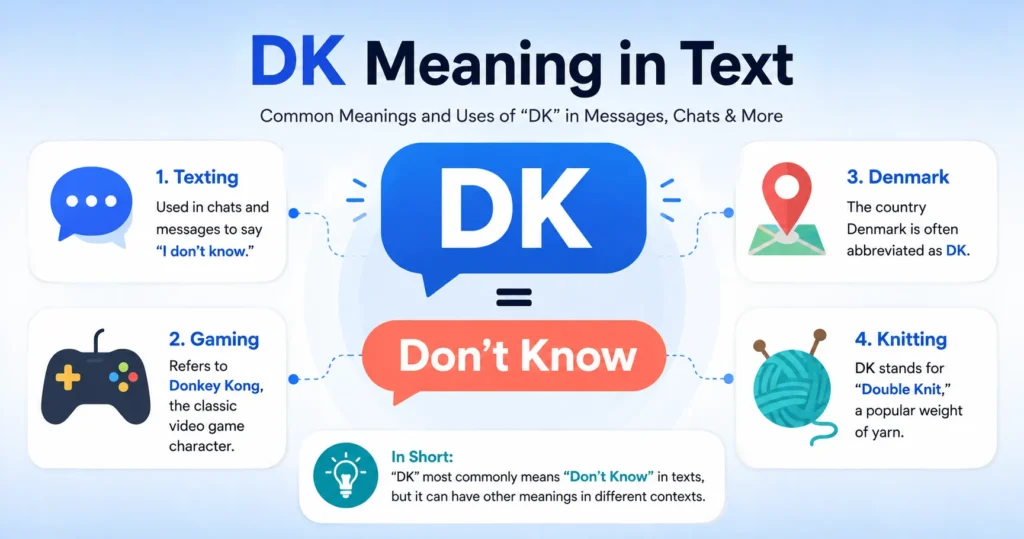
DK Meaning InText is almost always “Don’t Know” — a fast, low-effort way to signal uncertainty without typing out a full sentence. It’s part of a much larger family of texting shorthand (IDK, TBH, NVM) that exists purely to save time in fast-moving conversations.
People search for this because context clues aren’t always enough. A bare “DK” reads differently in a flirty DM than in a work Slack thread, and outside of texting, the same two letters point to completely unrelated things — a video game character, a country code, even a yarn weight. This guide covers all of it, so you never have to guess again.
What Does DK Mean?
DK is a two-letter texting abbreviation for “Don’t Know.”
It shows up when someone is asked a question they can’t answer, or when a topic comes up that nobody in the conversation has details on. Think of it as a digital shrug: quick, honest, and low-effort by design.
It’s closely related to IDK (“I don’t know”), but DK drops the subject pronoun entirely. That makes it feel even more clipped — some people use DK and IDK interchangeably, while others treat DK as the blunter, faster version reserved for close friends.
Quick Meaning Summary
| Context | What DK Means |
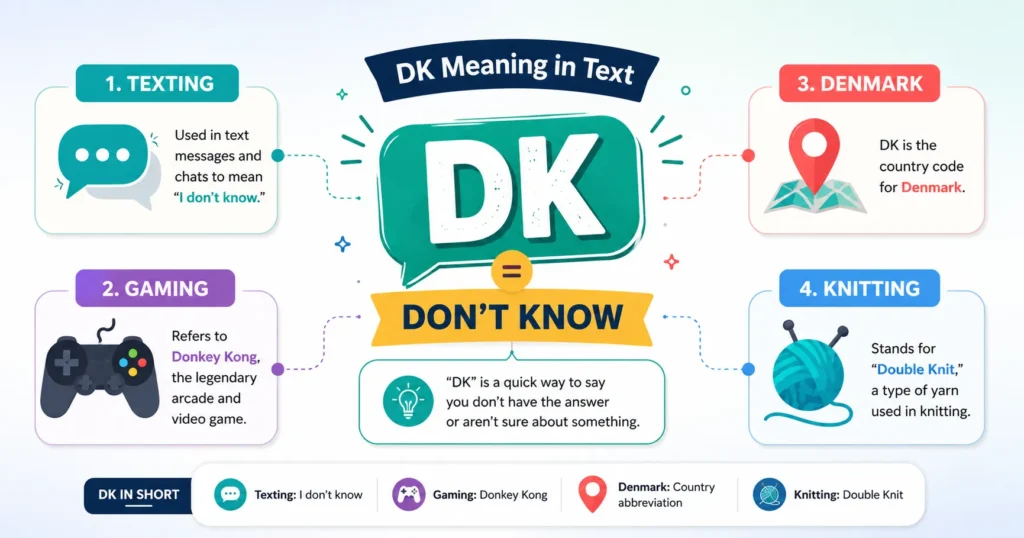
| Texting / group chats | Don’t Know |
| Gaming (Nintendo) | Donkey Kong |
| Geography / country codes | Denmark |
| Knitting | Double Knitting (a yarn weight) |
| Work Slack / internal chat | Don’t Know (used sparingly) |
Origin and History
Like most SMS-era abbreviations, DK grew out of the character limits and slow typing speeds of early 2000s mobile texting.
Shortening common phrases saved time and keystrokes, and “don’t know” — something people type constantly — was an obvious candidate for compression.
As messaging moved from flip-phone SMS to smartphone apps, group chats, and social platforms, DK stuck around. It’s short, unambiguous in context, and doesn’t require a lookup the way rarer slang does.
Why Is DK Still Popular?
DK has survived nearly two decades of texting trends because it solves a problem that never goes away: sometimes you genuinely don’t know the answer, and typing “I don’t know” every time is friction nobody wants.
It also travels well across platforms — the same two letters work in a text, a DM, a comment, or a group chat without needing translation. That portability keeps it in active use even as newer slang cycles in and out.
How Is DK Used in Real Conversations?
One-on-one texting: The most common use case. Someone asks a direct question, you reply “DK” to close the loop without writing a full sentence.
Group chats: When a topic comes up that nobody has an answer to, DK is often the fastest way to move the conversation along without dead air.
Gaming chat: Context matters here. In general chat during a game, DK usually still means “don’t know.” But in Nintendo-specific conversations, DK almost always refers to Donkey Kong instead.
Work chat (Slack/Teams): DK shows up occasionally in casual internal channels but is generally avoided in client-facing messages or formal documentation, where “I’m not sure” or “I’ll check and follow up” reads more professional.
Examples of DK in Use
- “Where’s the party tonight?” → “DK, ask Sam”
- “Which movie should we watch?” → “DK, you pick”
- “Do you know if the store’s open?” → “DK, might be closed on Sundays”
- “DK if this trend is worth trying tbh”
DK on Social Media
TikTok: Appears in comments and captions as a quick, honest reaction — “DK but it’s funny either way.”
Instagram (DMs and comments): Common in casual replies, often paired with an emoji to soften or add tone.
Snapchat: Frequent in quick back-and-forth chats, where speed matters more than full sentences.
Discord: Used in both text and voice-adjacent chat during gaming sessions — though remember the Donkey Kong overlap in gaming-specific servers.
X (Twitter) and Reddit: Shows up in replies and comment threads, functioning the same way it does in texting — a quick admission of uncertainty.
Facebook: Less common than on faster-paced platforms, but still appears in comments and Messenger chats among casual users.
DK vs. IDK vs. IDC — What’s the Difference?
| Abbreviation | Meaning | Tone |
| DK | Don’t Know | Blunt, minimal, closer to a shrug |
| IDK | I Don’t Know | Slightly more conversational, includes the subject |
| IDC | I Don’t Care | Signals indifference, not just lack of knowledge — easy to confuse with DK if skimmed quickly |
The key distinction: DK and IDK both express uncertainty, while IDC expresses indifference. Mixing them up is a common source of misread tone in fast-moving chats.
Common Misunderstandings
“DK always means Donkey Kong.” Only true in gaming-specific contexts, usually Nintendo discussions. In general texting, it means “Don’t Know” the vast majority of the time.
“DK is rude or dismissive.” Not inherently. Tone depends on what surrounds it — “DK, sorry!” reads as polite, while a bare “DK” with no punctuation can come across as curt, especially to less texting-fluent readers.
“DK and IDK are exactly the same.” They express the same core idea but differ slightly in formality — DK is more clipped, IDK slightly softer and more common in mixed-age conversations.
“DK has some secret, deeper meaning.” Outside its niche uses (gaming, Denmark, knitting), DK doesn’t carry hidden connotations. It’s exactly what it looks like: shorthand for uncertainty.
Related Terms and Similar Meanings
- IDK — I Don’t Know
- IDC — I Don’t Care
- NVM — Never Mind
- IDGAF/IDRC — variations expressing stronger indifference
- TBH — To Be Honest
People Also Ask
DK stands for “Don’t Know.” It’s used when someone doesn’t have an answer to a question or lacks information about a topic.
They mean the same thing — DK is just a shorter, more clipped version that drops the “I.”
No. Donkey Kong is a gaming-specific meaning, mostly used in Nintendo-related conversations. In everyday texting, DK means “Don’t Know.”
Not inherently — it depends on context and tone. Adding a follow-up (“DK, let me check”) softens it, while a bare “DK” alone can occasionally read as curt.
It’s best avoided in formal emails or client-facing communication. It’s fine in casual internal chat, but “I’m not sure” reads more professional.
DK means “Don’t Know” (uncertainty). IDC means “I Don’t Care” (indifference). They’re easy to mix up when skimming fast-moving chats.
Conclusion
DK meaning in text comes down to one simple idea: “Don’t Know.” It’s a fast, low-effort way to admit uncertainty without slowing a conversation down.
Outside of texting, the same letters point to a handful of unrelated meanings — Donkey Kong in gaming, Denmark in country codes, double knitting in yarn — but none of those override the everyday texting definition.
Next time DK shows up in your messages, you’ll know exactly what’s meant, how to reply, and when it’s better to spell things out instead.