Schmaltz Meaning: Definition, Origin, Food, Slang & Cultural Usage Explained
Have you ever heard someone describe a movie as “too schmaltzy” or seen a recipe calling for “schmaltz” and wondered what the word actually means?
The word schmaltz is fascinating because it has evolved from a traditional Jewish cooking ingredient into a widely used English expression describing excessive emotion and sentimentality. Today, the term appears in food culture, film criticism, music reviews, literature, and everyday conversation.
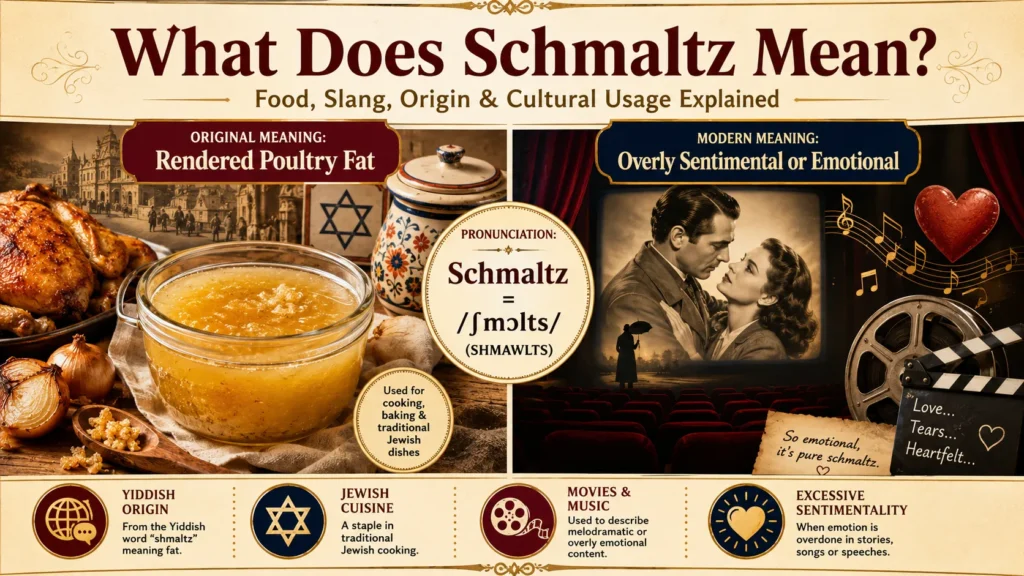
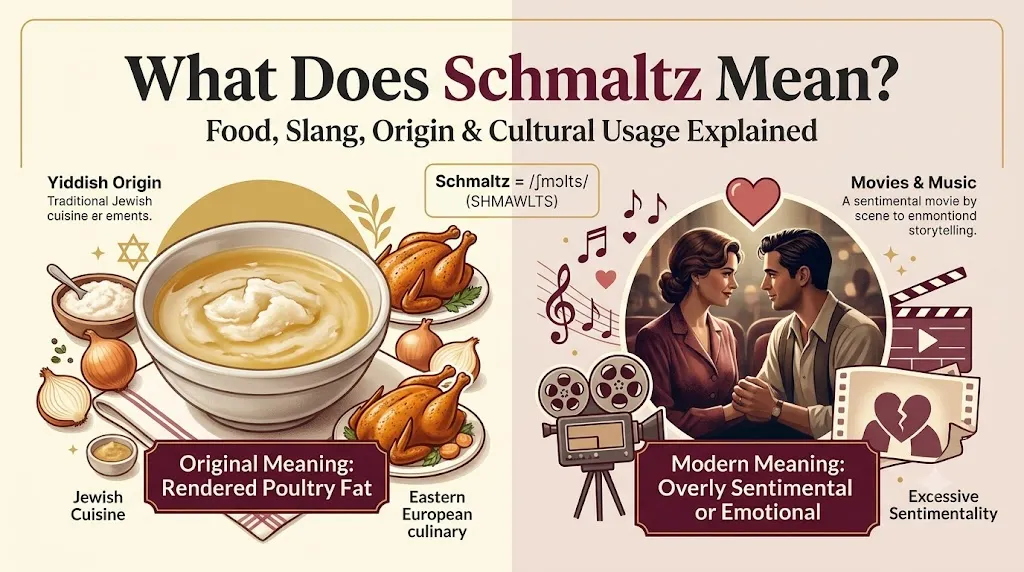
In its original sense, Schmaltz Refers To Rendered Poultry fat—usually chicken fat—used in traditional Jewish cooking. In its figurative sense, schmaltz describes something overly sentimental, emotional, or excessively nostalgic.
This complete guide explains the definition of schmaltz, its pronunciation, historical origins, culinary importance, modern slang usage, and how it became a popular cultural expression.
What Does Schmaltz Mean?
Schmaltz has two primary meanings:
| Meaning | Definition | Example |
| Culinary Meaning | Rendered chicken, goose, or duck fat used in Jewish cooking | “The recipe calls for homemade schmaltz.” |
| Figurative Meaning | Excessive sentimentality or emotional exaggeration | “That movie was full of schmaltz.” |
The meaning depends entirely on the context in which the word is used.
Quick Meaning Summary
| Term | Meaning |
| Schmaltz | Rendered poultry fat or excessive sentimentality |
| Origin | Yiddish |
| Pronunciation | SHMAWLTS |
| Part of Speech | Noun |
| Adjective Form | Schmaltzy |
| Common Usage | Food, movies, music, literature |
How to Pronounce Schmaltz
The correct pronunciation of schmaltz is:
Phonetic spelling:
/ʃmɔlts/
Many English speakers find the pronunciation challenging because the “schm” sound combination comes directly from Yiddish and is uncommon in standard English vocabulary.
The Origin and History of Schmaltz
The word schmaltz originates from the Yiddish word shmalts, which literally meant “rendered animal fat.”
Its linguistic roots trace back through:
- Yiddish
- Middle High German
- Old High German words related to melting fat
Originally, schmaltz referred exclusively to rendered poultry fat used throughout Eastern European Jewish communities.
During the early twentieth century, particularly in American entertainment and journalism, critics began using “schmaltz” metaphorically to describe artistic works that felt emotionally excessive, overly sweet, or manipulative.
By the 1930s and 1940s, the figurative meaning had become firmly established in American English.
Schmaltz as Food: The Original Meaning
In traditional Jewish cooking, schmaltz is rendered poultry fat, most commonly produced from:
- Chicken fat
- Goose Fat
- Duck fat
Before modern vegetable oils became widely available, schmaltz served as one of the primary cooking fats in Eastern European Jewish households.
Schmaltz became especially important because:
- Pork products were prohibited under kosher dietary laws.
- Dairy products could not be combined with meat dishes.
- Poultry fat was affordable and widely available.
Today, many chefs still value schmaltz for its rich flavor and cultural significance.
Traditional Foods Made with Schmaltz
Common dishes prepared with schmaltz include:
- Chopped liver
- Matzo balls
- Kugel
- Potato dishes
- Roasted vegetables
- Traditional pastries
- Stuffings
Its savory richness continues to make it popular in traditional Jewish cuisine.
Why Does Schmaltz Also Mean “Overly Emotional”?
The figurative meaning developed through metaphor.
Just as rendered poultry fat is rich, heavy, and indulgent, emotional performances that seemed excessively rich or sentimental began to be described as “schmaltzy.”
Over time, critics applied the term to:
- Movies
- Music
- Television
- Theater
- Literature
- Advertising
Today, when someone calls something “schmaltz,” they usually mean it contains more emotion than necessary.
Schmaltz Meaning in Movies
In film criticism, schmaltz refers to excessive emotional manipulation or sentimentality.
A movie may be considered schmaltzy when it relies heavily on:
- Emotional speeches
- Predictable romance
- Tearjerker scenes
- Nostalgia
- Dramatic reunions
- Sentimental endings
Example:
“The film’s final scene crossed the line from emotional storytelling into pure schmaltz.”
However, some viewers intentionally enjoy movies that embrace sentimental storytelling.
Schmaltz Meaning in Music
In music, schmaltz describes songs that emphasize emotional expression, romance, and nostalgia.
Schmaltzy music often includes:
- Romantic ballads
- Dramatic orchestral arrangements
- Emotional lyrics
- Nostalgic themes
- Sentimental performances
Examples frequently include classic love songs and highly emotional soundtrack music.
Schmaltz Meaning in Literature and Storytelling
Writers and literary critics often use the term to describe stories that rely too heavily on emotional appeal.
Characteristics of literary schmaltz include:
- Overly emotional dialogue
- Forced happy endings
- Excessive nostalgia
- Unrealistic sentimentality
- Emotional manipulation
A moderate amount of sentimentality may enhance a story, while excessive sentimentality can make it feel artificial
Not always.
The tone of the word depends on context.
| Usage | Example | Tone |
| Negative | “The movie was pure schmaltz.” | Critical |
| Neutral | “There’s some schmaltz in the script.” | Descriptive |
| Positive | “I enjoy old Hollywood schmaltz.” | Appreciative |
Many people enjoy sentimental entertainment and use the term affectionately.
What Does “Schmaltzy” Mean?
Schmaltzy is the adjective form of schmaltz.
It describes something that is:
- Overly sentimental
- Excessively emotional
- Corny
- Sappy
- Nostalgic
- Melodramatic
Examples include:
- A schmaltzy romance movie
- A schmaltzy love song
- A schmaltzy greeting card
- A schmaltzy television commercial
Schmaltz vs Cheesy vs Corny vs Sappy
| Word | Primary Meaning | Typical Tone |
| Schmaltz | Excessive sentimentality | Emotional |
| Cheesy | Low quality or awkward | Humorous |
| Corny | Old-fashioned cliché | Mild criticism |
| Sappy | Excessively emotional | Informal |
| Melodramatic | Overly dramatic | Serious criticism |
Although these words overlap, each carries a slightly different emotional nuance.
Examples of Schmaltz in Sentences
Here are some real-world examples:
- “That Christmas movie was full of schmaltz.”
- “The speech became overly sentimental and crossed into schmaltz.”
- “I secretly enjoy old Hollywood schmaltz.”
- “Grandmother cooked with homemade schmaltz.”
- “The soundtrack added unnecessary schmaltz to the scene.”
- “The greeting card was charming but a little schmaltzy.”
Is Schmaltz Still Used Today?
Yes.
Although younger generations may use alternatives like “cheesy” or “cringe,” the term remains common in:
- Film criticism
- Music journalism
- Literary reviews
- Cultural commentary
- Jewish cooking communities
- Online discussions
The word continues to carry both cultural significance and expressive power.
Common Misunderstandings About Schmaltz
Myth: Schmaltz only refers to food.
Reality: It also refers to excessive emotional sentimentality.
Myth: Schmaltz is always an insult.
Reality: It can be used positively, negatively, or neutrally.
Myth: Schmaltz and cheesy mean the same thing.
Reality: Schmaltz specifically emphasizes emotional excess rather than poor quality.
Related Terms and Similar Expressions
Related words include:
- Sentimental
- Sappy
- Cheesy
- Corny
- Melodramatic
- Nostalgic
- Emotional
- Tearjerker
- Romantic
- Overdramatic
Understanding these related expressions helps clarify the unique meaning of schmaltz.
People Also Ask
Schmaltz has two meanings: it refers to rendered chicken or poultry fat used in traditional Jewish cooking, and it also describes something overly sentimental, emotional, or cheesy in movies, music, and storytelling.
In slang and everyday English, schmaltz means excessive sentimentality or emotional exaggeration. It is often used to describe movies, songs, speeches, or stories that feel overly emotional.
Not always. Schmaltz can be used negatively to criticize excessive emotion, but it can also be used affectionately to describe nostalgic or heartwarming entertainment.
Schmaltzy is the adjective form of schmaltz. It describes something that is overly sentimental, romantic, emotional, sappy, or melodramatic.
Yes. Schmaltz originated from the Yiddish word shmalts, which originally referred to rendered animal fat and later developed its figurative meaning in American English.
Conclusion
The meaning of schmaltz extends far beyond its origins as rendered chicken fat in traditional Jewish cooking. Today, the word serves as a colorful expression describing excessive sentimentality in movies, music, literature, and everyday conversation.
Whether you’re discussing classic Jewish cuisine, nostalgic films, romantic ballads, or emotional storytelling, understanding the meaning of schmaltz provides insight into both language and culture. While some people criticize schmaltz as overly emotional, others embrace it as part of what makes stories, music, and traditions emotionally memorable.
Ultimately, schmaltz remains one of the most interesting examples of how a cultural term can evolve into a widely recognized expression with multiple layers of meaning