Best Food for Older Dogs — The Senior Nutrition Shift Most Owners Miss
Many pet owners struggle with choosing the right diet for aging dogs, but this guide reveals vet-approved options, hidden nutrition secrets, and surprising foods that can dramatically improve vitality and comfort. As Dogs Move into their later years, feeding becomes much more than a daily routine. Nutrition turns into a long-term health strategy that can influence energy, mobility, digestion, body weight, immunity, and overall comfort. Many owners notice that their dog is slowing down, sleeping more, or becoming fussier with food, but they do not always connect those changes to a need for dietary adjustment.
What Is the Best Food for Older Dogs & Why It Matters
The truth is simple: there is no single perfect food for every senior dog. A truly effective feeding plan depends on your dog’s body condition, activity level, chewing ability, underlying health concerns, and lifestyle. A healthy, active senior may do well on a well-balanced kibble. A dog with dental discomfort may need soft food. The dog struggling with appetite loss may benefit from highly palatable meals. A dog with kidney disease, obesity, or joint pain may need a more specialized diet.
In Europe, food selection should also be guided by recognized nutritional standards such as FEDIAF, which help ensure that pet foods are complete, balanced, and appropriate for long-term feeding. That matters because not every product marketed as “senior” is automatically the best choice for your aging dog.
This guide explains the topic in a practical, easy-to-understand way. You will learn how aging changes a dog’s nutritional needs, what nutrients matter most, how to compare food types, how to feed according to health conditions, and how to choose a diet that supports healthy aging rather than simply filling the bowl.
What Changes When a Dog Becomes Older?
A dog is generally considered senior once it reaches the later part of its life stage, but the exact timing depends on breed size, genetics, and overall condition. Larger breeds usually age sooner, while smaller dogs may remain youthful for longer. A giant breed may begin showing senior changes around 7 years of age, while a toy breed may not be considered senior until closer to 8 to 10 years or even later.
Aging affects the body in multiple ways, and those changes matter directly for feeding.
Slower metabolism
Older dogs usually burn fewer calories than younger dogs. They are less active, move more carefully, and often spend more time resting. If their food is not adjusted, even a familiar diet can begin causing weight gain. That extra weight is not harmless. It can place pressure on joints, reduce stamina, and make it harder for an older dog to stay mobile.
Reduced activity
A senior dog may still enjoy walks and play, but the overall amount of movement often declines. Less activity means lower energy needs, so calorie intake must be reviewed regularly. A diet that once suited a lively adult dog may become too rich for a slower senior.
Muscle loss
One of the most important age-related shifts is loss of lean body mass. Older dogs may gradually lose muscle unless their diet supplies enough high-quality protein. Muscle loss can make an aging dog appear thinner, weaker, and less stable on its feet. Protein becomes especially valuable in this stage because it helps preserve strength and mobility.
Dental decline
Tooth decay, missing teeth, inflamed gums, and oral discomfort are common in older dogs. Even if a dog still wants to eat, crunchy kibble may become harder to chew. That is why texture matters. Senior feeding is not only about ingredients; it is also about comfort and accessibility.
Digestive sensitivity
The digestive system can become more reactive with age. Some older dogs become sensitive to rich meals, fatty foods, or complicated ingredient lists. They may develop softer stools, occasional vomiting, or decreased appetite when a food does not agree with them.
Joint stiffness
Arthritis and general stiffness are common in aging dogs, especially in larger breeds or dogs with a history of physical strain. Nutrition cannot cure joint disease, but the right diet can support comfort, maintain lean body mass, and help reduce inflammatory burden.
The key takeaway
Aging does not automatically mean a dog needs a product labeled “senior.” It means the dog needs food that matches changing biological needs. The goal is not just to feed less or more. The goal is to feed smarter.
How to Choose the Best Food for Older Dogs
Choosing the right food becomes much easier when you use a clear evaluation method instead of relying on marketing language alone. A useful senior feeding strategy starts with four practical checks.
1. Assess body condition
Look at whether your dog is underweight, at the ideal weight, or overweight. This step matters because senior dogs may need very different calorie levels depending on body fat, muscle mass, and daily movement. A dog carrying excess weight needs a leaner diet. A thin dog may need more energy-dense food or meals that are easier to digest.
2. Evaluate dental health
Can your dog chew dry food comfortably? Do they swallow kibble too quickly? Do they avoid hard treats or hesitate before eating? These signs often point to oral discomfort. If chewing is difficult, softer food, moistened kibble, or wet diets may be better.
3. Consider health conditions
Older dogs often live with one or more age-related health concerns. Common examples include arthritis, kidney disease, digestive upset, obesity, and reduced appetite. These conditions can change the type of diet that is appropriate. A healthy senior dog can usually tolerate a broader range of foods than a dog with medical restrictions.
4. Review lifestyle and activity
Not all senior dogs are low-energy. Some remain active, enjoy long walks, and maintain a strong appetite. Others are mostly indoor companions with limited daily movement. The more active dog generally needs more calories and may tolerate a slightly richer diet. The less active dog usually needs tighter calorie control.
Best food type by need
| Condition | Best Food Type | Why It Works |
| Healthy senior | Dry kibble | Balanced, convenient, and affordable |
| Dental issues | Wet food | Softer texture, easier chewing |
| Poor appetite | Fresh or gently cooked food | Strong aroma and higher palatability |
| Overweight | High-protein, lower-calorie diet | Supports fat loss while preserving muscle |
| Joint pain | Omega-3-enriched food | Helps support mobility and comfort |
| Kidney disease | Veterinary diet | Formulated for medical support |
This kind of condition-based feeding is more useful than simply asking, “Is this a senior formula?” A label cannot replace observation.
What Nutrients Matter Most in Senior Dog Food?
The best food for older dogs is not defined by one ingredient alone. It is built around nutrient quality, digestibility, calorie balance, and condition-specific support. Some nutrients become especially important as dogs age.
1. High-quality protein
Protein is one of the most important nutrients for senior dogs because it supports muscle maintenance, repair, and overall strength. Older dogs can lose muscle more easily, especially if they are less active or eating too few calories. That makes protein a cornerstone of senior nutrition.
Good protein sources often include chicken, turkey, fish, beef, and eggs. The key is not just the source name, but the digestibility and completeness of the protein profile. A high-quality protein helps support lean body mass and can contribute to a healthier, more energetic older dog.
2. Controlled calories
Senior dogs usually need fewer calories than younger adults. That does not mean they should be underfed. It means calorie intake should match energy output. When calories are too high, weight gain becomes more likely. Excess weight can place stress on joints, heart function, and general mobility. In an older dog, even a modest gain can make daily life noticeably harder.
3. Omega-3 fatty acids
Omega-3 fatty acids are often valued in senior diets because they support inflammatory balance, skin and coat condition, brain health, and mobility. Many owners look for this nutrient when their dog begins showing stiffness or a dull coat. While omega-3s are not a cure-all, they can be a meaningful part of a senior support plan.
4. Joint-support nutrients
Ingredients such as glucosamine and chondroitin are often included in senior formulas for dogs with stiffness or arthritis concerns. These ingredients are commonly associated with joint support and are especially useful for breeds that are prone to mobility issues. They work best as part of a broader nutrition and weight-management strategy.
5. Fiber and digestibility
Fiber can help support healthy digestion, stool quality, and regularity. Digestibility matters just as much as fiber content because older dogs may have more sensitive stomachs. A food that is easy to digest is often better tolerated and may improve overall feeding comfort.
6. Moisture
Moisture becomes more important when appetite is low or when chewing is difficult. Wet food or food with higher water content can make meals easier to consume and may encourage better hydration. This is especially helpful for dogs that do not drink enough water throughout the day.
Best Types of Food for Older Dogs
There is no one-size-fits-all answer, so it helps to compare food formats based on the needs of the individual dog.
Dry kibble
Dry kibble remains a popular option because it is convenient, shelf-stable, and usually more affordable than other food types. It can also provide complete and balanced nutrition when formulated correctly. For healthy senior dogs without dental problems, kibble can be a practical and reliable choice.
The drawback is that dry food may be difficult to chew for dogs with dental pain, missing teeth, or weak jaws. It may also be less appealing for dogs with reduced appetite. Some owners find that adding warm water or a bit of wet food improves palatability and texture.
Wet food
Wet food has a soft texture and often a stronger aroma, which can be highly useful for older dogs with dental issues or reduced interest in food. It also provides more moisture, which can support hydration. This makes it an excellent option for seniors who struggle with chewing or appetite.
The downside is cost. Wet food is usually more expensive per serving and has a shorter shelf life once opened. It must be stored properly and used within a reasonable time frame.
Fresh or gently cooked food
Fresh and gently cooked diets are often highly appealing because they smell and taste good, and they are typically soft enough for older dogs to chew easily. They can be a strong option for picky eaters or dogs with digestive sensitivity.
The challenge is balance. Not every fresh or cooked diet is nutritionally complete. This is why these meals should be chosen carefully. A good recipe must still provide the right protein, fat, vitamins, minerals, and calories for a senior dog’s needs.
Homemade food
Homemade feeding offers flexibility and may appeal to owners who want full control over ingredients. However, this approach carries a serious risk: many homemade dog diets are not nutritionally complete unless they are formulated by a veterinary nutrition professional. Missing calcium, essential fatty acids, trace minerals, or key vitamins can create long-term health problems.
Homemade diets should not be treated as a casual alternative. They require planning, balancing, and expert guidance.
Veterinary diets
Veterinary diets are designed for dogs with specific medical conditions. These foods are often used for kidney disease, obesity, digestive disease, or other health issues that require precise nutritional support. They are not usually meant as casual everyday choices for healthy dogs. They should be used under veterinary direction.
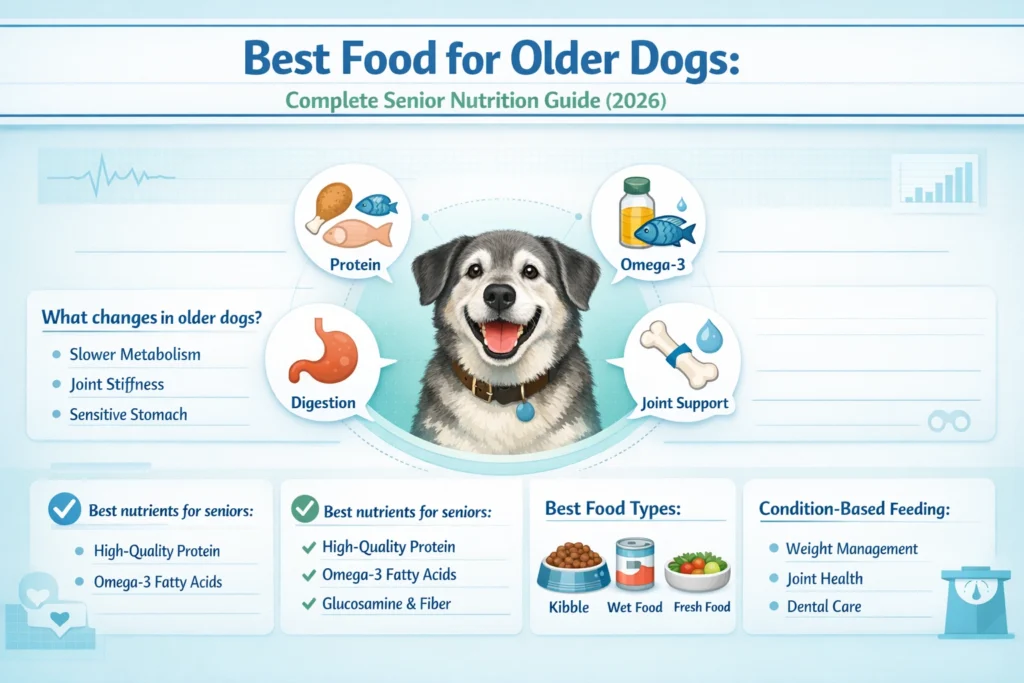
Condition-Based Feeding Guide for Senior Dogs
Aging dogs are often managed more effectively when food decisions are tied to the dog’s actual health condition.
For joint pain
Look for diets that provide omega-3 fatty acids, high-quality protein, and possibly joint-support ingredients. The goal is to support mobility, reduce unnecessary weight pressure, and provide the nutrients that help an older body stay active.
For dental problems
Soft food is usually the easiest solution. Wet food, softened kibble, and gently cooked meals can make eating much more comfortable. If your dog still likes kibble, you can often improve the experience by adding warm water or broth that is safe for dogs and free from harmful ingredients.
For overweight dogs
Weight gain in senior Dogs should never be ignored. The best approach is usually a high-protein, lower-calorie diet with portion control. Protein helps preserve muscle, while fewer calories help reduce excess body fat. Treat intake should also be managed carefully.
For sensitive stomachs
Older dogs with digestive sensitivity usually do better on simple recipes, moderate fat levels, and highly digestible ingredients. Foods with fewer unnecessary extras may reduce the chance of stomach upset. Consistency is important too; constant switching often makes digestive issues worse.
For picky eaters
Aging dogs that lose enthusiasm for meals may respond well to food that is slightly warmed, more aromatic, or soft in texture. Wet food and gently cooked meals are often effective because they smell stronger and may be more tempting. In some cases, the issue is not stubbornness but discomfort, so a reduced appetite should always be monitored.
What to Avoid in Food for Older Dogs
Choosing the right food is only part of the job. Avoiding the wrong foods is equally important.
Excess fatty human food
Human leftovers, greasy scraps, and rich table food can be hard on older dogs. These foods may contribute to weight gain, digestive distress, or pancreatitis risk in vulnerable dogs.
Toxic foods
Chocolate, grapes, raisins, onions, garlic, and related foods can be dangerous or poisonous to dogs. They should never be treated as small exceptions. Toxic exposure can be serious even in modest amounts.
Unbalanced homemade meals
A homemade meal may look healthy but still be nutritionally incomplete. A dog can eat enough calories and still be missing important vitamins or minerals. That risk is especially high in senior dogs, where health stability matters even more.
Overfeeding treats
Treats are easy to underestimate. Even small snacks can add up quickly, especially in a dog with lower calorie needs. Too many treats can interfere with weight management and appetite balance.
Constant food changes
Sudden changes in diet may upset an older dog’s stomach. A transition should usually be gradual so the digestive system has time to adapt.
European Feeding Considerations
For dog owners in Europe, feeding decisions should be grounded in recognized nutritional standards and practical daily realities. Many households in Europe also rely on indoor living, seasonal climate changes, and local veterinary guidance, which can all influence feeding needs.
A useful starting point is to choose food labeled as complete and balanced. That means the diet is intended to provide all necessary nutrients in the correct proportions for regular feeding. This is particularly important for senior dogs because they are often more sensitive to poor-quality nutrition or incomplete diets.
Lifestyle matters too. Dogs that live in urban environments may walk less than dogs with access to open outdoor spaces. Dogs in colder regions may have different energy demands than dogs in milder climates. A dog living an active countryside life may not need the same caloric structure as a mostly indoor companion.
Another key point is transparency. Good pet food brands should be clear about ingredient quality, feeding instructions, and nutritional purpose. A vague label is not enough.
When choosing a diet, European owners should pay attention to:
complete and balanced claims,
life-stage suitability,
ingredient transparency,
and whether the food suits the dog’s actual activity level and health needs.
Pros and Cons Summary
Dry food
Dry food is affordable, easy to store, and often nutritionally complete. It works well for many healthy senior dogs. Its main limitation is texture, especially for dogs with oral discomfort or weak chewing ability.
Wet food
Wet food is soft, highly palatable, and useful for hydration support. It is often ideal for seniors who struggle with appetite or dental issues. The biggest drawback is cost and shorter shelf life.
Fresh food
Fresh food can be very appealing and gentle on the mouth. It is often helpful for picky seniors or dogs that need softer meals. The main challenges are price, storage, and the need to ensure nutritional balance.
Homemade food
Homemade food gives owners full control over ingredients. That can be useful in certain cases, but it is also the easiest format to get wrong. Without proper formulation, homemade meals may not meet a senior dog’s nutritional needs.
Common Mistakes Dog Owners Make
Many feeding problems in older dogs come from well-intentioned mistakes rather than neglect.
Switching food too quickly
Older dogs often have sensitive stomachs, and abrupt changes can lead to digestive upset. Any transition should happen gradually.
Feeding the same amount as before
A dog’s caloric needs often Decline with age. Feeding the same amount as during younger, more active years can lead to weight gain.
Ignoring gradual weight gain
Small weight changes may not look dramatic, but they can have a real effect on joints, stamina, and internal health.
Assuming appetite loss is normal
Aging may change appetite slightly, but a sudden or significant loss of interest in food should not be dismissed. It may indicate pain, illness, or dental problems.
Feeding human leftovers
Table scraps are a common cause of weight gain and stomach upset. They may also encourage picky eating behavior.
Expert Tips for Feeding Older Dogs
The best senior feeding routine is usually simple, consistent, and easy to monitor.
Feed smaller meals more often if that suits your dog better. Many older dogs do well with two or three smaller meals a day rather than one large serving. Smaller meals can be easier to digest and may help with appetite.
Warm food slightly if your dog has lost interest in eating. Gentle warming can improve aroma and make a meal more appealing.
Watch body weight regularly. Even a small shift may signal that your dog needs a calorie adjustment.
Keep fresh water available at all times. Hydration becomes more important as dogs age.
Use raised bowls if recommended by your vet or if they improve comfort, especially for dogs with mobility issues. However, this should be based on the individual dog rather than assumed to be universally helpful.
Recheck your dog’s food every few months. Senior needs can change quickly, especially if the dog develops a new medical condition or becomes less active.
Most importantly, feed the dog in front of you, not the label on the package. A “senior” formula may be great for one dog and completely wrong for another.
FAQs
Soft wet Food or soaked kibble works best because it is easier to chew and digest.
Not always. But many benefit from lower calories and higher-quality protein.
Yes, especially for dogs with dental issues or low appetite.
Yes, but only if it is properly balanced by a veterinary nutritionist.
Usually 1–2 meals per day, but smaller meals may be better.
Contact a vet immediately. It can be a sign of illness.
Look for “complete and balanced” + FEDIAF compliance.
Conclusion
The best food for Older Dogs is not a single product, brand, or trend. It is a feeding approach built around the dog’s real needs: age, body condition, activity level, dental health, digestion, and medical status.
A healthy senior dog may thrive on a well-formulated dry food. A dog with oral pain may need wet food or softened meals. A picky eater may do better with fresh, gently cooked food. A dog with kidney disease, obesity, or another clinical issue may need a veterinary diet designed for that specific condition.
The overall goal is not simply to keep the bowl full. The goal is to support a longer, more comfortable, more active life. Good nutrition can help an older dog stay leaner, stronger, happier, and more mobile in the years that matter most.