Introduction
Every day, a dog stands by without needing words. Slowly, reliance grows between you two. Stillness speaks when paws rest near your feet. Companionship isn’t loud – just there, like morning light across the floor. Today’s worries push people to think harder about staying safe at home. Suburbs see quiet streets, rural spots stretch wide open, city blocks stay busy – all make families search differently for peace of mind.
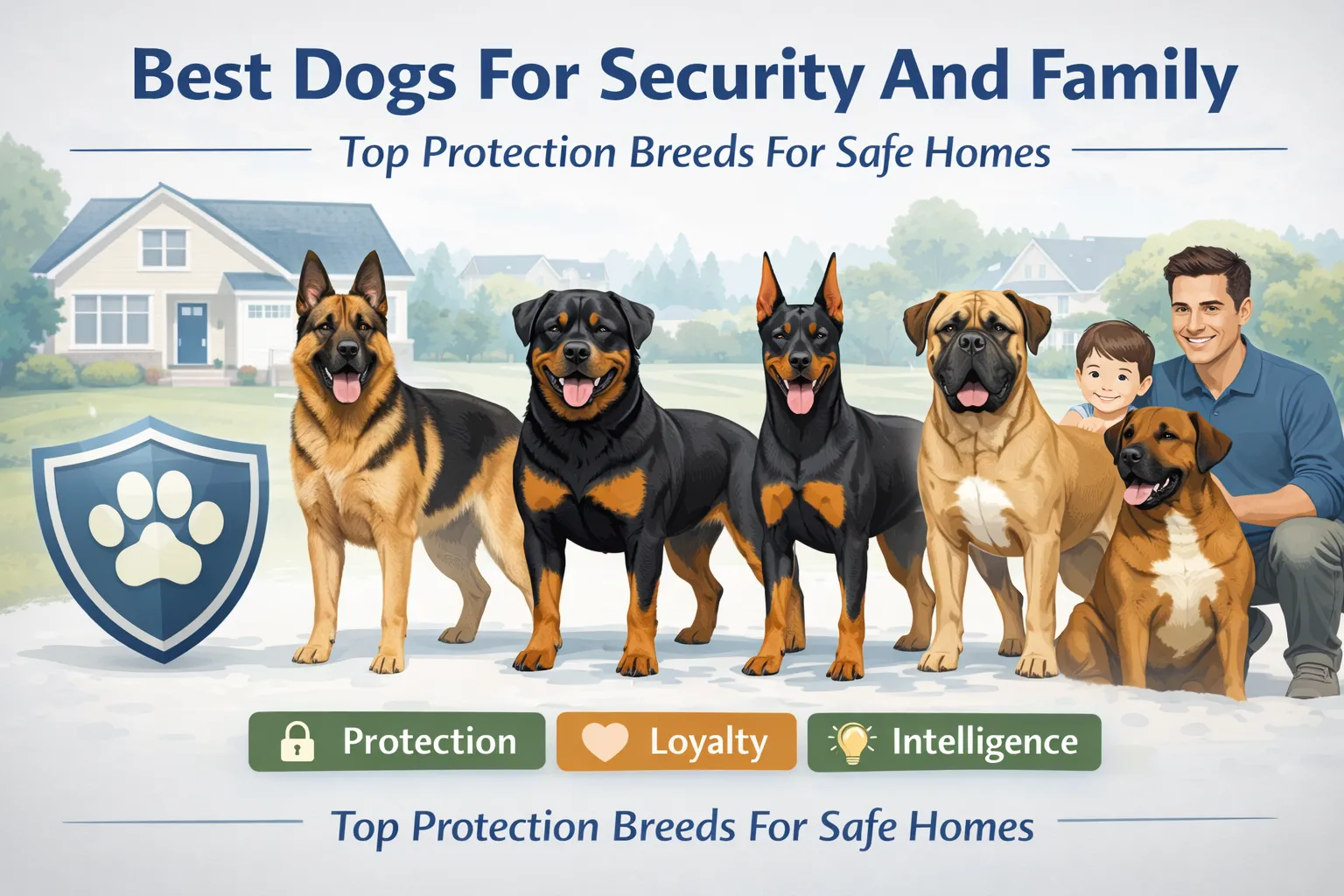
For this reason, plenty of people who own homes start looking into which dog breeds guard well while also being good around kids.
Choosing a Dog That Balances Family Love and Home Protection:
A well-trained guard Dog handles dual duties without missing a beat. A quiet presence on the grounds, it raises a warning when strangers draw close. Yet softens at the sight of familiar faces, gentle and steady near little ones without effort.
A large dog doesn’t always mean safety, no matter how strong it appears. Some Best Dogs For Security And Family act more like hosts than watchdogs. Certain breeds snap into defense mode easily yet need steady guidance from someone who knows how to handle them. Training can be tricky without prior experience around such strong-willed animals.
The best family protection dogs combine several essential characteristics:
- Strong protective instincts
- High intelligence and trainability
- Deep loyalty toward their owners
- A stable and calm temperament around family members
- Alertness toward unfamiliar people and unusual situations
In this comprehensive guide, you will learn:
- The best dogs for security and family protection
- Which breeds are safest for children
- The top watchdog breeds for homes
- Training strategies for protection dogs
- Common mistakes people make when choosing guard dogs
Finding the right guard dog depends on where you live – city flat, suburbs, or countryside. Out here, safety ties closely to routine and space. A small yard changes needs compared to wide open land. Apartment walls echo sounds differently than farm fences do. This plan fits households wherever they stand. Matching breed traits to daily patterns matters most. Each living situation shifts what works well. From dense blocks to remote spots, one size never fits all.
Why Families Need Protective Dogs
A home today might have cameras watching every corner, alarms ready to sound, yet still find something missing. Motion detectors can trigger lights or alerts; a dog brings awareness no gadget copies. Machines respond to signals – dogs sense changes in the air, in silence, in scent. One relies on power and programming; the other wakes before danger arrives.
Dogs possess natural abilities that humans simply do not have.
Far beyond our own abilities, their ears catch even the faintest noise. While we might miss it entirely, they pick up on odd smells without effort. Because of these gifts, disturbances register early – often before people notice anything wrong.
Beside safety, some households choose dogs just for having another loyal presence around. While guarding spaces matters, so does sharing days with a creature who pays attention.
1. Natural Home Security
A protective dog acts as a powerful deterrent against potential intruders.
A bark in the night often spells trouble for thieves. Homes with dogs see fewer break-in attempts simply because noise raises danger. The sound of a dog can mean getting noticed when you do not want it. Criminals tend to skip these places just to stay safe. A loud animal changes plans fast.
A big dog built like a guard might just make trouble think twice before showing up.
A sudden shout might do it, yet often just a dog’s sharp cry stops someone fast. A noise that cuts through silence works quicker than most expect.
2. Emotional Protection
Dogs also provide emotional security for their owners.
Fur on the floor means someone’s always awake, even when the lights go out. A steady breath near your feet reminds you that company doesn’t need words. What matters most is having one who stays alert, even if everyone else is asleep. Nights seem less empty with paws near the door, waiting. When footsteps echo too loud, a familiar presence eases the mind. This kind of company shifts how space feels – less hollow, more held.
A pup close by helps kids stand taller, breathe easier, settle faster. Sometimes it’s the quiet presence that steadies their steps through each day.
A sense of calm often comes quietly with having a dog trained to guard the home. That quiet confidence? It shows up more than people realize.
3. Early Warning System
Many of the best watchdog breeds alert their owners instantly when someone approaches the house.
Instead of attacking immediately, most well-trained guard dogs first:
- Bark loudly
- Observe the stranger carefully
- Alert their owner
This early warning system gives homeowners valuable time to react or investigate the situation.
4. Family Bonding
Even though they’re built to protect, plenty of these guard dogs shower their families with love. A surprising softness hides behind that tough look. Not all bark comes with bite here – warmth often leads instead.
Playing games with kids comes naturally to them. Time shared alongside relatives feels meaningful. Bonds built on trust grow strong between owner and pet.
What you get with these Dogs – loyalty tied to watchful presence, mixed with steady friendship – is why they fit so well into family life. A strong bond forms, not just through guarding instincts but by being there day after day.
What Makes a Dog Good for Security and Family Protection
A few dogs simply lack what it takes to act as dependable protectors. Certain types greet unfamiliar people just like they’re old friends.
The best dogs for security and family protection share several important characteristics.
1. Protective Instinct
Certain dogs naturally feel responsible for protecting their territory and their family.
Out of nowhere, a dog might start barking if someone new comes near. Strangers often trigger their attention fast.
Known for sharp alertness, German Shepherds often watch closely. Protection comes naturally to a Rottweiler, its presence alone shaping safety. Instinct runs deep in these dogs, built through years of role and routine. Their reputation grows not from noise but quiet readiness. A glance from one may signal what words cannot. Trust forms easily when danger nears. These traits appear again across litters and lines.
2. Intelligence
Smart enough, a guard dog learns what it’s told. Depending on circumstances, reactions matter just as much. Following directions well means handling surprises without confusion. Training sticks best when the animal thinks through each moment.
Highly intelligent breeds learn quickly and can reliably follow commands during stressful situations.
3. Loyalty
Loyalty is one of the most important qualities in a protection dog.
A bond grows strong when trust builds over time. Protecting loved ones often feels like second nature to a devoted pet.
Bonded by instinct, dogs feel a pull to protect their home. Their loyalty grows from shared days under one roof.
4. Alertness
Effective security dogs remain aware of their surroundings at all times.
Home alerts trigger fast when odd noises occur. Motion outside sets off signals just as soon. Strangers appearing nearby get noticed right away.
Because they notice more, pets can tip off their people before danger shows up.
5. Trainability
Even naturally protective dogs require proper training.
A good guard dog must learn when to react and when to remain calm.
A well-trained dog shows restraint when guarding loved ones – acting only when truly needed. Protection comes with precision, never rash reactions. Some dogs hold back until it matters most, responding just in time. Not every bark means trouble; calm control defines real readiness. Actions follow purpose, not impulse or noise.
Top 15 Best Dogs For Security And Family
A handful of dog breeds stand out when it comes to guarding homes, thanks to their reliability across households everywhere. Security experts often choose these animals, not just for strength but instinct too.
Families in different countries lean on them quietly every day. Trust builds over time, yet these dogs earn it fast through behavior, not talk. Their presence alone shapes how safe a place feels. Worldwide, few names come up more than these do.
1. German Shepherd
The German Shepherd is one of the most famous protection dogs on the planet.
Police forces, military units, and rescue teams frequently rely on this breed because of its intelligence and dedication.
Key Traits
- Extremely intelligent
- Highly trainable
- Loyal and protective
- Strong working instincts
Why Families Love Them
Starting strong with loyalty, German Shepherds form close ties to their people. Not just guard dogs, they bring fun into the home while showing love easily.
With proper training, they can become outstanding companions for children.
2. Rottweiler
The Rottweiler is a powerful breed known for its strong guarding instincts.
These dogs are naturally confident and fearless, which makes them excellent home security companions.
Key Traits
- Strong and muscular
- Calm but protective
- Loyal to family
A Rottweiler might surprise you, growing into calm devotion if brought up with care. Quiet affection usually follows when home life is steady.
3. Doberman Pinscher
The Doberman Pinscher was originally bred specifically for personal protection.
They are fast, intelligent, and extremely loyal.
Key Traits
- Highly intelligent
- Fast and agile
- Naturally protective
Known for sticking close to their people, dobermans bring sharp awareness plus a steady presence. Their watchful nature shows up quietly, yet it runs deep. Protection comes naturally, not forced. Trust builds easily between them and household members. These Dogs stand out where safety and devotion overlap.
4. Bullmastiff
The Bullmastiff was historically used to guard large estates.
They are often described as “silent guardians.”
Key Traits
- Quiet but alert
- Strong and powerful
- Gentle with family
Bullmastiffs usually remain calm but react quickly if they sense danger.
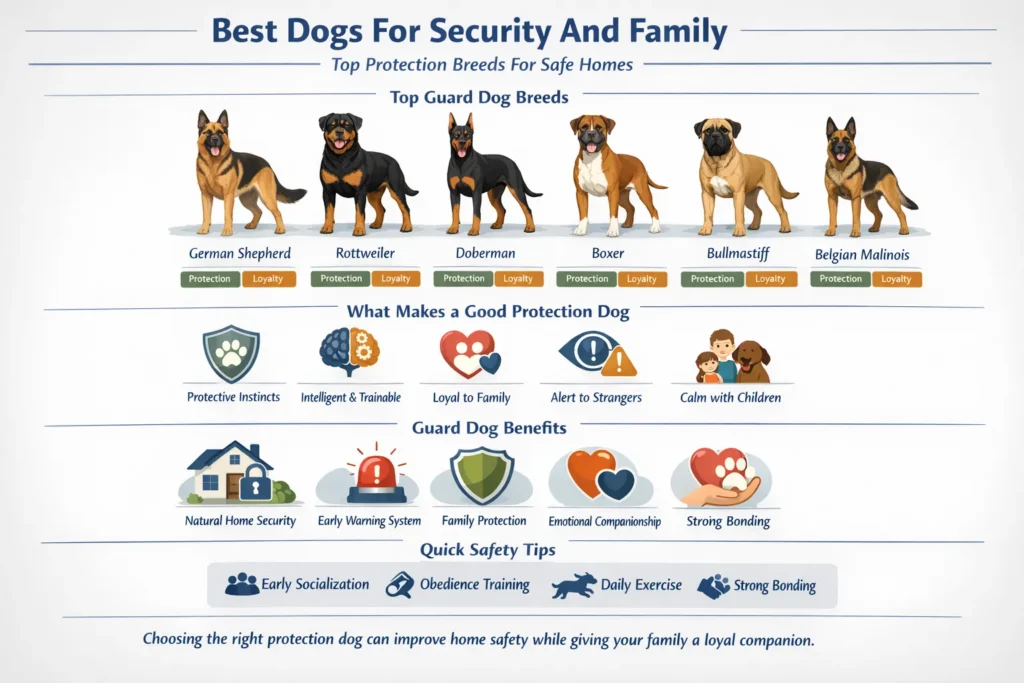
5. Boxer
The Boxer (dog) is an energetic and playful breed.
They are also highly protective of their families.
Key Traits
- Friendly personality
- High energy
- Protective instincts
Folks often pick Boxers to watch over little ones, seeing how much they adore kids. Yet their protective streak stands out just as much.
6. Belgian Malinois
The Belgian Malinois is one of the most capable working dogs in the world.
Military and law enforcement agencies frequently use them for specialized tasks.
Key Traits
- Extremely intelligent
- High energy
- Exceptional trainability
However, they require experienced owners and plenty of exercise.
7. Cane Corso
The Cane Corso is a powerful Italian mastiff with strong guarding instincts.
Key Traits
- Confident personality
- Loyal to family
- Highly protective
Early training and proper socialization are essential for this breed.
8. Great Dane
The Great Dane is often called a gentle giant.
Despite their calm personality, their enormous size alone can discourage intruders.
Key Traits
- Massive size
- Calm temperament
- Protective presence
They are affectionate and usually great with families.
9. Akita
The Akita is famous for loyalty and bravery.
Key Traits
- Independent personality
- Quiet but alert
- Deep loyalty
Akitas often form extremely strong bonds with their family.
10. Giant Schnauzer
The Giant Schnauzer combines intelligence with strong protective instincts.
Key Traits
- Energetic
- Intelligent
- Protective
They need regular mental stimulation and consistent training.
11. Rhodesian Ridgeback
The Rhodesian Ridgeback was originally bred to hunt lions in Africa.
Key Traits
- Athletic build
- Loyal nature
- Protective instincts
They are calm indoors but alert toward strangers.
12. Tibetan Mastiff
The Tibetan Mastiff is one of the most powerful guardian breeds.
Key Traits
- Strong territorial instincts
- Independent temperament
- Exceptional guarding ability
They are best suited for experienced dog owners.
13. Bernese Mountain Dog
The Bernese Mountain Dog is affectionate and gentle.
Key Traits
- Gentle personality
- Loyal nature
- Protective when needed
They are excellent family-friendly guard dogs.
14. Great Pyrenees
The Great Pyrenees was historically used to protect livestock from predators.
Key Traits
- Calm temperament
- Strong guarding instincts
- Loyal companions
They are especially good for rural homes.
15. Anatolian Shepherd
The Anatolian Shepherd is a powerful livestock guardian Dog.
Key Traits
- Independent thinker
- Strong territorial instincts
- Highly protective
They are best suited for large properties.
Comparison Table: Best Guard Dogs For Families
| Breed | Protection Level | Trainability | Family Friendly | Best For |
| German Shepherd | Very High | Excellent | High | Active families |
| Rottweiler | Very High | High | Medium | Experienced owners |
| Doberman | High | Excellent | High | Security-focused homes |
| Boxer | Medium | High | Very High | Families with kids |
| Bullmastiff | High | Medium | High | Calm households |
| Belgian Malinois | Very High | Very High | Medium | Experienced handlers |
Best Guard Dogs For Families With Kids
When children live in the home, selecting a balanced dog becomes extremely important.
The dog must be protective yet patient and gentle.
Recommended Breeds
- Boxer
- German Shepherd
- Bernese Mountain Dog
- Bullmastiff
- Great Pyrenees
These breeds usually display strong loyalty and patience with children.
Best Guard Dogs For First-Time Owners
Some protection dogs require experienced handlers.
First-time owners should select breeds that are easier to train.
Good Options
- Boxer
- Great Dane
- German Shepherd
- Bernese Mountain Dog
These breeds tend to be more adaptable and forgiving for beginners.
Best Small Dogs For Home Security
Small dogs may not physically stop intruders, but they can still be excellent watchdogs.
Best Small Security Dogs
- Miniature Schnauzer
- Chihuahua
- Jack Russell Terrier
- Dachshund
These dogs bark loudly and quickly alert owners when strangers approach.
How Guard Dogs Protect Your Home
Protection dogs defend homes in several ways.
1. Early Threat Detection
Dogs can detect suspicious sounds or movements quickly.
Their hearing and smell abilities are far stronger than humans.
2. Warning Bark
A loud bark often scares intruders away before anything happens.
3. Territorial Defense
Many protective dog breeds naturally defend their home territory.
4. Physical Protection
In rare cases, trained protection dogs may physically stop a threat.
However, responsible training ensures they only react when necessary.
Guard Dog Training Guide
Training is essential for any family protection dog.
Without proper training, even a loyal dog may behave unpredictably.
Step 1: Early Socialization
Puppies should meet different people, animals, and environments.
This helps them develop a stable temperament.
Step 2: Basic Obedience Training
Important commands include:
- Sit
- Stay
- Heel
- Leave it
Obedience training builds control and trust.
Step 3: Professional Protection Training
Advanced protection training should be conducted by experienced trainers.
These programs teach dogs to protect responsibly without unnecessary aggression.
Safety and Health Considerations
Owning a protection dog comes with serious responsibility.
Families must provide proper care and attention.
Important Responsibilities
- Provide regular exercise
- Maintain proper nutrition
- Schedule veterinary checkups
- Follow local Dog ownership laws
Some regions require licensing or insurance for certain breeds.
Common Mistakes When Choosing Guard Dogs
Many families make mistakes when selecting protection dogs.
Choosing a Dog Only for Size
Large dogs are not always effective guards.
Temperament matters more than size.
Ignoring Training Needs
Even the best home security dogs require training.
Without training, protective instincts may become problematic.
Poor Socialization
Dogs that are not socialized may become overly aggressive or fearful.
Underestimating Exercise Needs
Working breeds require regular physical and mental stimulation.
Expert Tips For Raising A Family Protection Dog
Professional trainers recommend the following strategies.
Start Training Early
Puppy training builds strong obedience habits.
Use Positive Reinforcement
Reward calm and obedient behavior with treats and praise.
Provide Mental Stimulation
Puzzle toys and training exercises keep intelligent dogs engaged.
Build a Strong Bond
Dogs protect people they trust and love.
Spending time together strengthens the protective bond.
Pros and Cons of Family Guard Dogs
Pros
- Natural home security
- Loyal and protective companions
- Early warning against threats
- Strong family bond
Cons
- Require consistent training
- High exercise needs for some breeds
- Possible legal restrictions
- Not suitable for every household
Frequently Asked Questions
German Shepherds and Rottweilers are widely considered the best dogs for security and family protection because of their intelligence and loyalty.
Yes. When properly trained and socialized, many guard dogs are gentle and protective with children.
No. Most trained guard dogs warn first by barking and only react if they sense real danger.
German Shepherds and Boxers are among the easiest protection dogs to train.
Some breeds like Boxers and Dobermans can adapt to apartment living if they receive enough exercise and mental stimulation.
Conclusion
Choosing the best dogs for security and family protection requires careful research and thoughtful planning.
The ideal protection dog should be:
- Loyal
- Intelligent
- Naturally protective
- Safe around family members
Breeds like German Shepherd, Rottweiler, Doberman Pinscher, and Boxer (dog) consistently rank among the best guard dogs because they combine strength, intelligence, and loyalty.
However, even the best protection dog requires training, socialization, and responsible ownership.
When raised properly, these dogs become more than guardians — they become trusted companions that protect the people they love.
For families seeking both companionship and safety, a well-trained protection dog can bring peace of mind, security, and lifelong friendship.